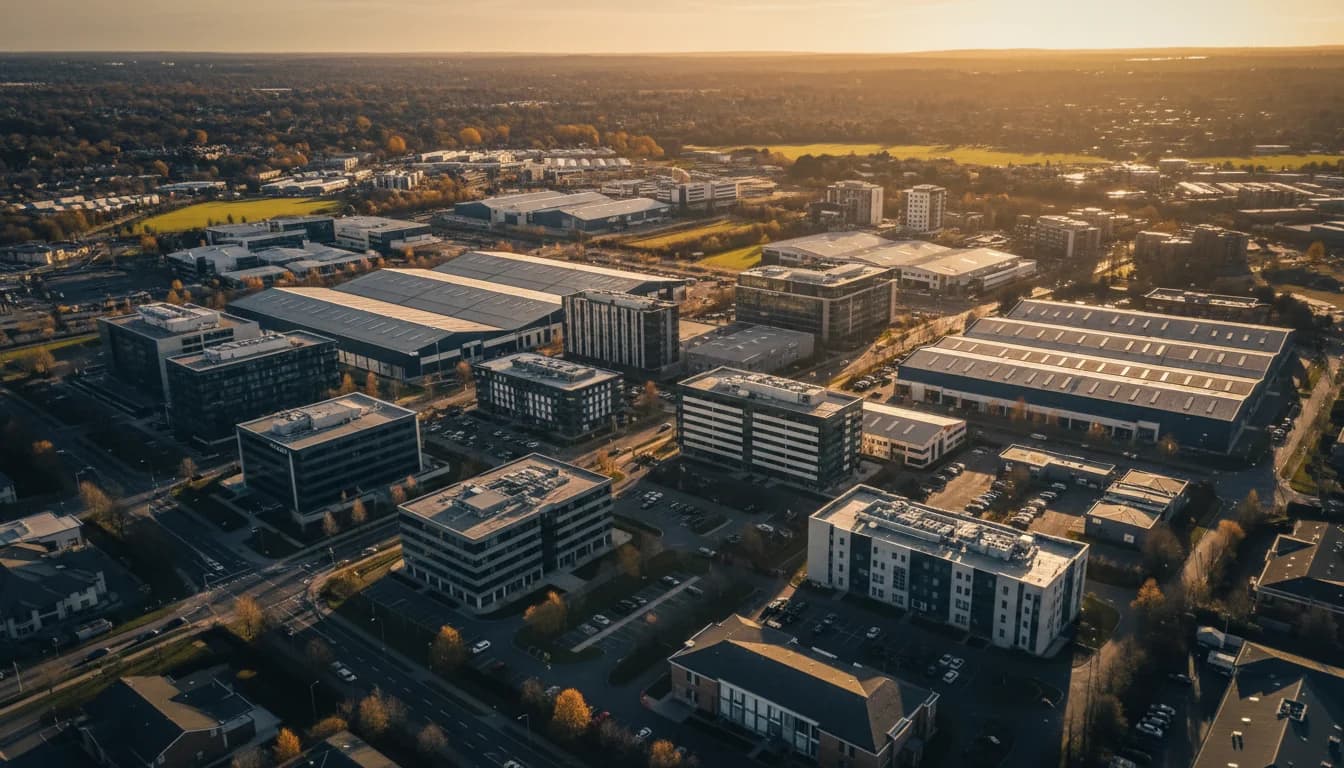
Why Car Parks and Storage Are Compelling SIPP Assets
Car parks and self-storage facilities have emerged as popular SIPP investments for good reason. Both asset types are unambiguously commercial — there is no residential property risk — and both offer characteristics that suit a pension investment context: relatively low management intensity, strong occupier demand, resilient income streams, and yields that typically exceed those available from more conventional commercial property.
The institutional investment market has recognised the attractions of both sectors, with significant capital flowing into commercial car parks and self-storage at the portfolio level. Individual SIPP investors can access similar assets at a smaller scale through direct property investment, benefiting from the same income and capital growth characteristics within a tax-free pension environment.
Car Parks as SIPP Investments
Commercial car parks — both surface level and multi-storey — are permitted SIPP investments. They are clearly commercial assets, they generate rental income (directly or through operator agreements), and they are widely accepted by SIPP providers and, for the better-quality assets, by SIPP mortgage lenders.
Car parks can be structured in different ways for SIPP investment. The most straightforward approach is to lease the car park to a commercial car park operator under a full repairing and insuring lease, with the SIPP receiving a market rent. This provides passive income with minimal management involvement. Alternatively, the SIPP can operate the car park directly or appoint a management agent — though this is more complex and may not be acceptable to all SIPP providers.
Good quality car parks in town centres, near hospitals, railway stations, or commercial hubs tend to command the strongest rents and attract the best lender interest. Remote or poorly located car parks with thin demand may struggle to attract SIPP mortgage finance.
Self-Storage Facilities as SIPP Investments
Self-storage facilities — buildings divided into lockable storage units let to individuals and businesses — are an increasingly attractive SIPP investment. The sector has demonstrated strong demand growth driven by urbanisation, downsizing, and the growth of small businesses needing flexible storage. Yields for well-operated self-storage facilities typically range from 6% to 9% and above on good quality assets.
A self-storage facility in a SIPP can be structured as a straightforward property investment — the SIPP owns the building and leases it to a self-storage operator under a commercial lease. The operator manages the day-to-day letting of individual units, and the SIPP receives a market rent for the building. This structure is well-understood by SIPP providers and specialist lenders.
Use our Rental Yield Calculator to model the income potential from a self-storage SIPP investment alongside your financing costs.
Financing These Assets in a SIPP
SIPP mortgage finance is available for car parks and self-storage facilities, though the lender pool for these specialist asset types is more limited than for mainstream commercial property. Lenders will assess the quality of the asset, the operator's covenant strength, the lease structure, and the income sustainability. Town centre or transport hub car parks let to established operators are more fundable than suburban surface car parks without commercial operators.
Self-storage facilities let to established operators on commercial leases attract the broadest lender interest. Facilities operating on a direct-let basis (without an operator lease) may be harder to finance as lenders find it more difficult to underwrite the income stream. Use our SIPP Mortgage Calculator to model the financing for a specific acquisition, and our SIPP LTV Calculator to check your maximum borrowing.
Due Diligence Considerations
The due diligence considerations for car parks and self-storage are largely the same as for other commercial property, with a few sector-specific additions. For car parks, check for any planning conditions that restrict hours of use, any adopted highway or access obligations, and whether any part of the car park is subject to an easement or public right of way that could affect its commercial value.
For self-storage facilities, the key issues are the building structure (many self-storage facilities are in converted industrial buildings — check for asbestos, structural issues, and any landlord's works obligations), any planning conditions on the use, and the terms of any operator lease. Environmental contamination on former industrial sites is also a consideration for converted buildings.
Both asset types benefit from a RICS valuation carried out by a valuer with specific experience of the relevant sector — specialist valuers will have access to more relevant comparable evidence than general commercial valuers.