SSAS Care Home Investment: Healthcare Property in Your Pension Scheme
Written by Matt Lenzie
Former Banker & Corporate Finance Partner
SSAS Care Home Investment: Healthcare Property as a Pension Asset
Care home and healthcare property has attracted growing interest from SSAS pension investors in recent years. The combination of demographic tailwinds — an ageing UK population creating sustained demand for residential care — strong income yields, and the potential for long-term capital growth makes this sector genuinely compelling for pension scheme trustees.
However, care home investment within a SSAS requires careful consideration of the asset classification (given the residential nature of the occupants' use), the regulatory framework governing care home operations, and the specialist nature of the assets themselves.
The Care Home Investment Case
Several factors drive the appeal of care home property for SSAS investors:
- Demographic demand: The UK's ageing population creates structural and growing demand for residential care capacity, providing a long-term demand driver that is independent of economic cycles
- Strong income yields: Care home properties typically offer higher initial income yields than mainstream commercial property sectors
- Long lease terms: Specialised healthcare leases are often structured as long leases (20-30 years) with index-linked rent reviews, providing a reliable and growing income stream
- Operational complexity as a barrier: The complexity of care home operation means that care home properties are not interchangeable with other commercial uses, creating barriers to competitive supply
Is a Care Home Residential Property for SSAS Purposes?
The most important question for SSAS trustees considering care home investment is whether the property constitutes "residential property" for HMRC's taxable property rules. This is a nuanced area:
- Care homes and nursing homes that are registered and operated as commercial businesses are generally treated as commercial properties for SSAS purposes — the residents are customers, not occupiers in the residential property sense
- HMRC's guidance recognises that "residential property" in the taxable property context means property used as a dwelling, not property used commercially to provide accommodation as a service
- However, any staff or management residential accommodation within the care home may constitute a residential element — this should be assessed carefully
Given the nuance in this area, specialist pension law advice is essential before any SSAS care home acquisition.
Matt Lenzie notes: "Care homes sit in an interesting grey area — they are buildings where people live, but they are operated as businesses and are treated as commercial for most tax and planning purposes. The key is understanding how HMRC's specific taxable property rules apply, which requires specialist advice rather than a general commercial property analysis."
Types of Care Home Investment Available to SSAS Schemes
SSAS trustees can access care home property in several ways:
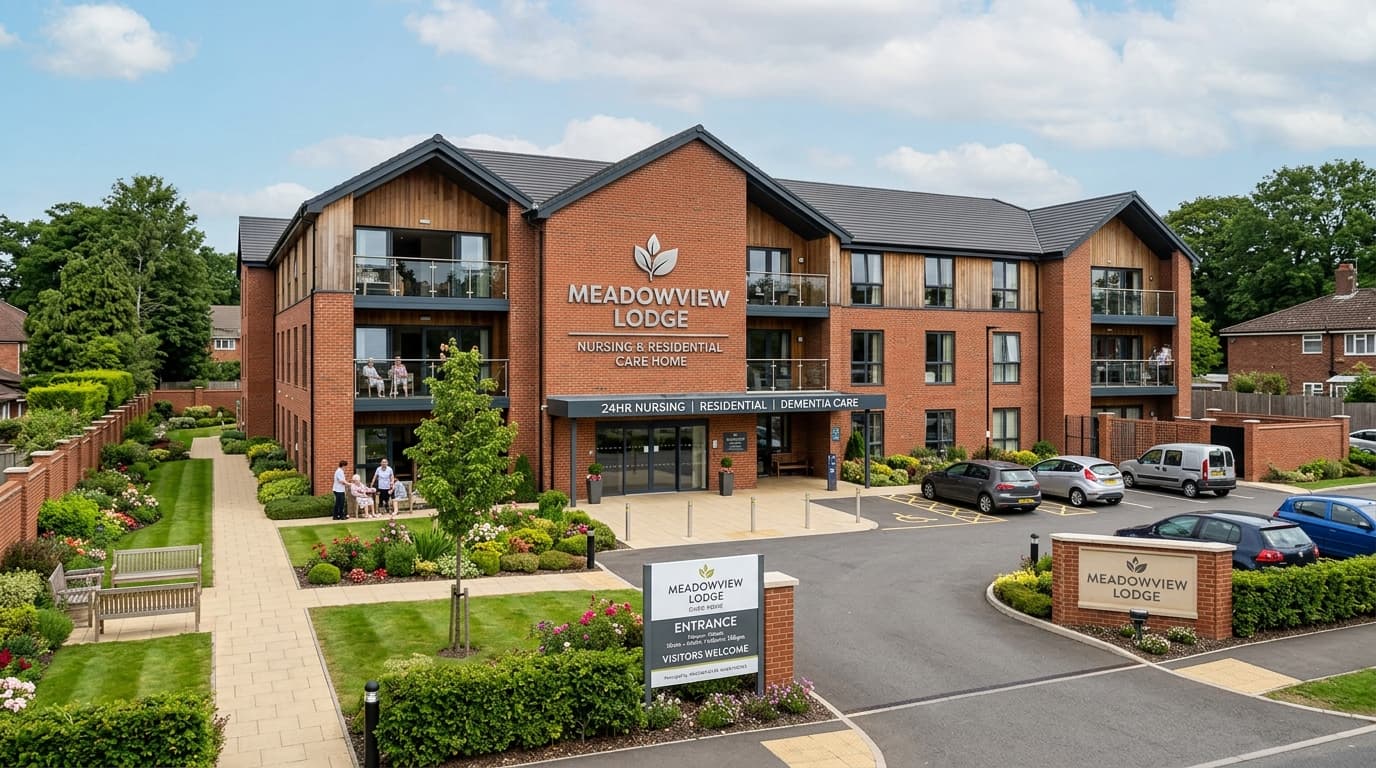
- Purpose-built care home properties: Modern, purpose-built facilities let to established care operators on long FRI leases. Higher capital values but strong income security and minimal management responsibility
- Converted residential properties: Larger houses or institutional buildings converted to care home use. More accessible price points but potentially more management-intensive and more prone to regulatory risk
- Day care and specialist healthcare facilities: Non-residential healthcare facilities (physiotherapy clinics, dental practices, diagnostic imaging) are straightforwardly commercial and are well-suited to SSAS investment
Regulatory Considerations
Care homes are subject to regulation by the Care Quality Commission (CQC). As a property investor (landlord), the SSAS is not itself a regulated entity — regulation applies to the care home operator. However, the CQC's assessment of the operator has direct implications for the property investment:
- A poor CQC rating can lead to the care home being required to close or reduce capacity, impacting the operator's ability to pay rent
- Operators who regularly achieve "Good" or "Outstanding" CQC ratings are preferred tenants for care home property investment
- Changes in CQC registration requirements or staffing ratios can affect operators' cost bases and profitability
Tenant due diligence for care home property should include an assessment of the operator's CQC history and current rating.
Financing Care Home Property Through a SSAS
Specialist commercial property lenders are needed for care home finance within a SSAS. Not all mainstream SSAS mortgage lenders are active in the healthcare property sector, but the market has specialist participants.
Key financing considerations:
- Lenders will want to assess the care home operator's financial strength as well as the property itself
- Long lease terms with index-linked rents generally support good LTV ratios
- Purpose-built modern facilities attract more lender interest than older converted properties
Use our SSAS mortgage calculator to model financing scenarios and contact us for an introduction to specialist healthcare property lenders.
Key Takeaways
- Care home property can be held in a SSAS as a commercial investment, with specialist legal advice confirming the taxable property position
- Demographic demand for care capacity provides a structural long-term demand driver
- Long FRI leases with index-linked rents provide reliable, growing, tax-free income for the SSAS
- CQC operator quality assessment is an essential component of tenant due diligence
- Specialist lenders are required for care home property finance within a SSAS
Explore Care Home Investment for Your SSAS
Contact our team to discuss care home and healthcare property investment within your SSAS. Also see our guides on hotel property investment and choosing the right property type.
About the Author
Matt Lenzie
Former Banker & Corporate Finance Partner
Matt Lenzie is a former banker and corporate finance partner with extensive experience in pension-backed property transactions. He founded SSAS Property Finance to help company directors and trustees navigate the complexities of commercial property acquisition through Small Self-Administered Schemes.