SSAS Mixed-Use Property Investment: Navigating the Commercial and Residential Rules
Written by Matt Lenzie
Former Banker & Corporate Finance Partner
SSAS Mixed-Use Property: Understanding the Risks
Mixed-use property — buildings that contain both commercial and residential elements — is one of the most complex and potentially risky areas of SSAS property investment. While commercial property is freely permitted in pension schemes, residential property (or even a residential element within a predominantly commercial building) can trigger HMRC's taxable property rules, resulting in severe scheme sanction charges and personal tax liabilities.
This does not mean SSAS schemes can never hold any property with a residential connection — but it does mean that any potential mixed-use acquisition requires extremely careful due diligence and specialist advice before proceeding.
The HMRC Rules on Residential Property in SSAS
HMRC defines "taxable property" in the Finance Act 2004, and this category includes residential property. If a SSAS holds taxable property, the amount invested is treated as an unauthorised payment to the member, triggering an unauthorised payment charge (40%), potentially a surcharge (15%), and a scheme sanction charge (up to 40%).
The key question for mixed-use properties is: does the SSAS's ownership include a residential element? If the answer is yes, the residential element is taxable property.
In our experience, the mixed-use problem most commonly arises in the following scenarios:
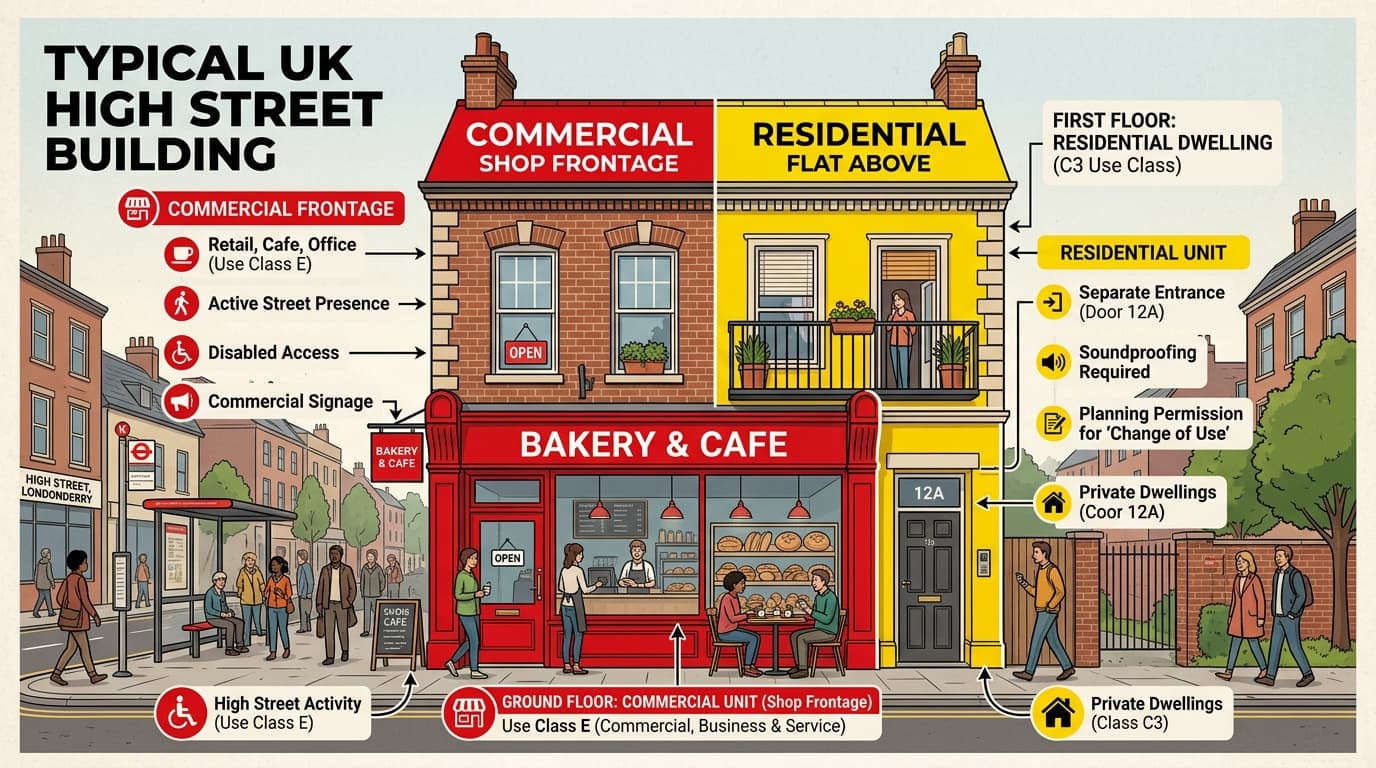
- A shop with a flat above it (very common on UK high streets)
- A pub or hotel with staff accommodation or owner's quarters
- Agricultural land with a farmhouse
- An office building with a caretaker's flat
- A care home with staff residential quarters
- A converted barn or farm building that retains residential planning consent
Structuring Mixed-Use Acquisitions: What May Be Possible
In some cases, it may be possible to structure a mixed-use acquisition so that the SSAS only acquires the commercial element, with the residential portion held separately (by the member personally, by the company, or by another party). This requires:
- The commercial and residential elements to be legally separable — i.e., capable of being held under separate title
- A separate title registered at HM Land Registry for the commercial element
- Clear demarcation of the two elements (separate entrances, utilities, etc.)
- The SSAS to acquire only the commercial title
Where a clean separation is possible, the SSAS can hold the commercial part and enjoy the full tax advantages of pension scheme ownership, while the residential element is held outside the scheme.
However, not all mixed-use properties are capable of this separation — many older buildings on the UK high street have a single freehold title encompassing both the shop and the flat above. In these cases, the entire property would be acquired by the SSAS, including the residential element.
The "Predominantly Commercial" Argument: Caution Required
Some advisers have argued that where a property is "predominantly commercial" — perhaps with only a small residential flat — the SSAS can hold the whole property. This argument is not supported by HMRC's published guidance, which is clear that any residential element constitutes taxable property.
"We take a conservative approach to mixed-use properties and would never advise a client to acquire a property with a residential element within their SSAS on the basis of a 'predominantly commercial' argument. The financial consequences of getting it wrong are too severe. If there's any residential element, we explore whether it can be separated before the SSAS acquires anything." — Matt Lenzie
Shops with Flats Above: The Commonest Issue
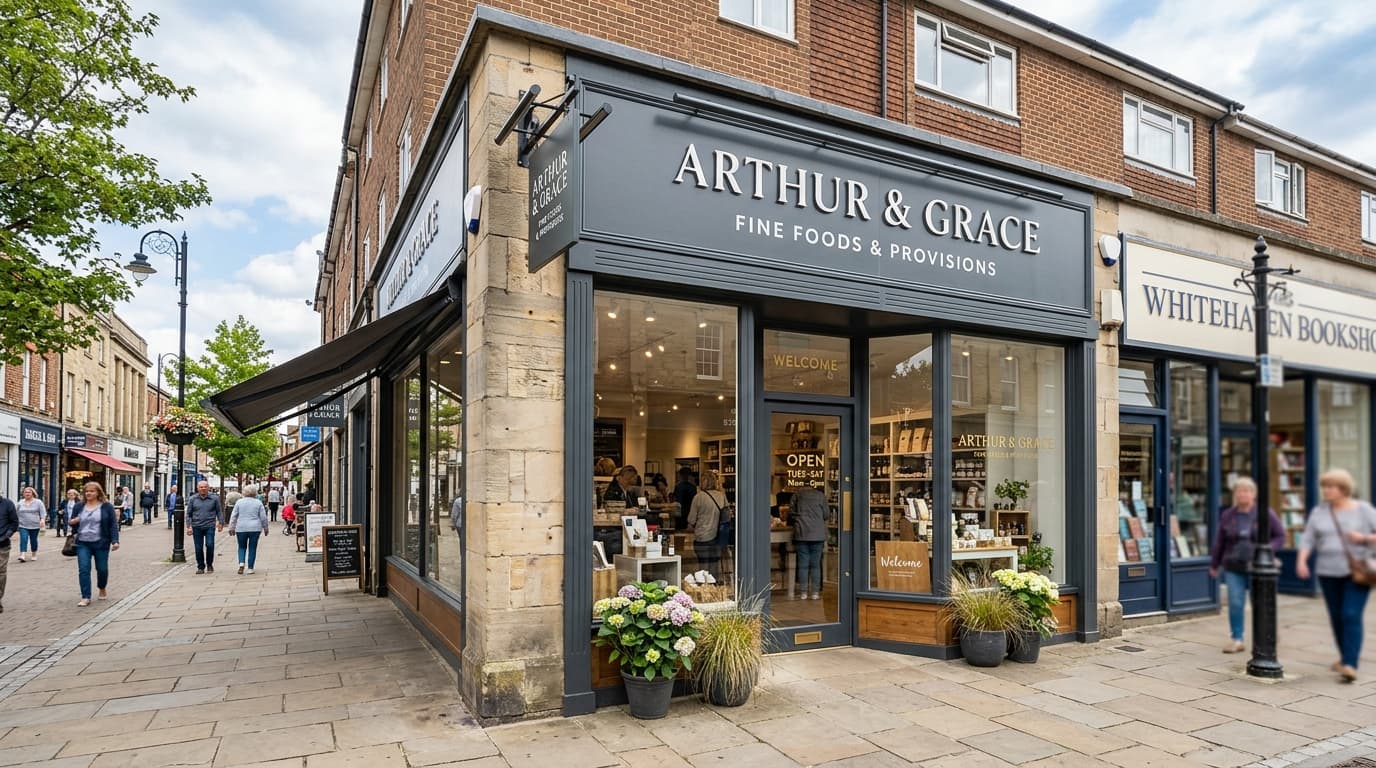
The most frequently encountered mixed-use challenge in SSAS property is the traditional UK high street shop with a flat above. These properties are extremely common, often available at attractive prices (due to the complexity they present for institutional investors), and naturally appealing to SSAS trustees who might otherwise view them as good-value commercial investments.
The risk is clear: the flat is residential property, and its inclusion in the SSAS acquisition would constitute holding taxable property. The only safe routes are:
- Splitting the title so the SSAS acquires only the commercial ground floor
- Excluding the property from the SSAS entirely and acquiring it outside the pension scheme
If a title split is not possible (which is often the case), the property is simply not suitable for SSAS investment.
Agricultural Land with a Farmhouse
Agricultural land is a permitted SSAS investment, but a farmhouse or any other residential dwelling on the land creates the same taxable property problem. Options for SSAS trustees interested in agricultural land with a residential element include:
- Purchasing the agricultural land without the farmhouse (where the seller will accept this)
- Arranging a title split so the SSAS acquires the land separately from the dwelling
- Acquiring the land and farmhouse, but immediately selling the farmhouse separately (complex and carries risk during the transition period)
For more detail on agricultural land investment, see our guide on SSAS agricultural land investment.
Hotels and Care Homes: Specialist Advice Essential
Hotels and care homes sometimes contain residential accommodation for staff or management. The same taxable property rules apply, but there are specific exemptions and carve-outs in HMRC's rules for certain types of institutional accommodation. These cases are complex and require specialist pension law advice before any acquisition is made.
See our dedicated guides on SSAS hotel property investment and SSAS care home investment for more detail.
Key Takeaways
- Mixed-use properties containing a residential element present serious HMRC compliance risks for SSAS schemes
- Any residential element within a SSAS property constitutes taxable property, potentially triggering charges of 55%+
- Where possible, a title split to isolate the commercial element may allow the SSAS to proceed
- The "predominantly commercial" argument is not a safe basis for SSAS mixed-use acquisition
- Specialist advice is essential before any mixed-use property acquisition is considered
Get Expert Advice on Mixed-Use Property and SSAS
Mixed-use property and SSAS require expert guidance to navigate safely. Our team will help you assess whether a target property can be structured for SSAS ownership, and if not, explore alternative approaches. Contact us to discuss your specific property.
For related reading, see our guides on SSAS HMRC compliance, unauthorised payments, and choosing the right property type.
About the Author
Matt Lenzie
Former Banker & Corporate Finance Partner
Matt Lenzie is a former banker and corporate finance partner with extensive experience in pension-backed property transactions. He founded SSAS Property Finance to help company directors and trustees navigate the complexities of commercial property acquisition through Small Self-Administered Schemes.