SSAS HMRC Compliance Guide: What Every Trustee Needs to Know
Written by Matt Lenzie
Former Banker & Corporate Finance Partner

SSAS HMRC Compliance: The Essential Trustee Guide
Being a trustee of a Small Self-Administered Scheme (SSAS) carries substantial legal and tax responsibilities. Unlike members of a large corporate pension scheme, SSAS trustees are directly involved in managing the scheme and bear personal responsibility for compliance with HMRC rules. A failure to comply can result in significant financial penalties — and in extreme cases, the loss of the scheme's registered status.
This guide provides a comprehensive overview of the compliance obligations that every SSAS trustee should understand, from scheme registration through to annual reporting and investment restrictions.
Scheme Registration with HMRC
Before any contributions can be made or investments undertaken, a SSAS must be registered with HMRC as a pension scheme. Registration is made through HMRC's Pension Schemes Online service and results in the scheme being given a Pension Scheme Tax Reference (PSTR) number.
Registration requirements include:
- The scheme must have a trust deed and rules that comply with the Finance Act 2004 requirements for a registered pension scheme
- A scheme administrator must be appointed — typically a professional pension administrator authorised by The Pensions Regulator
- The scheme must have a principal employer (the sponsoring company)
- All trustees must be identified and their details provided to HMRC
In our experience, using a reputable SSAS administrator who understands the registration process is essential. Errors at the registration stage can create compliance problems that are difficult and expensive to unwind.
Annual Reporting Obligations
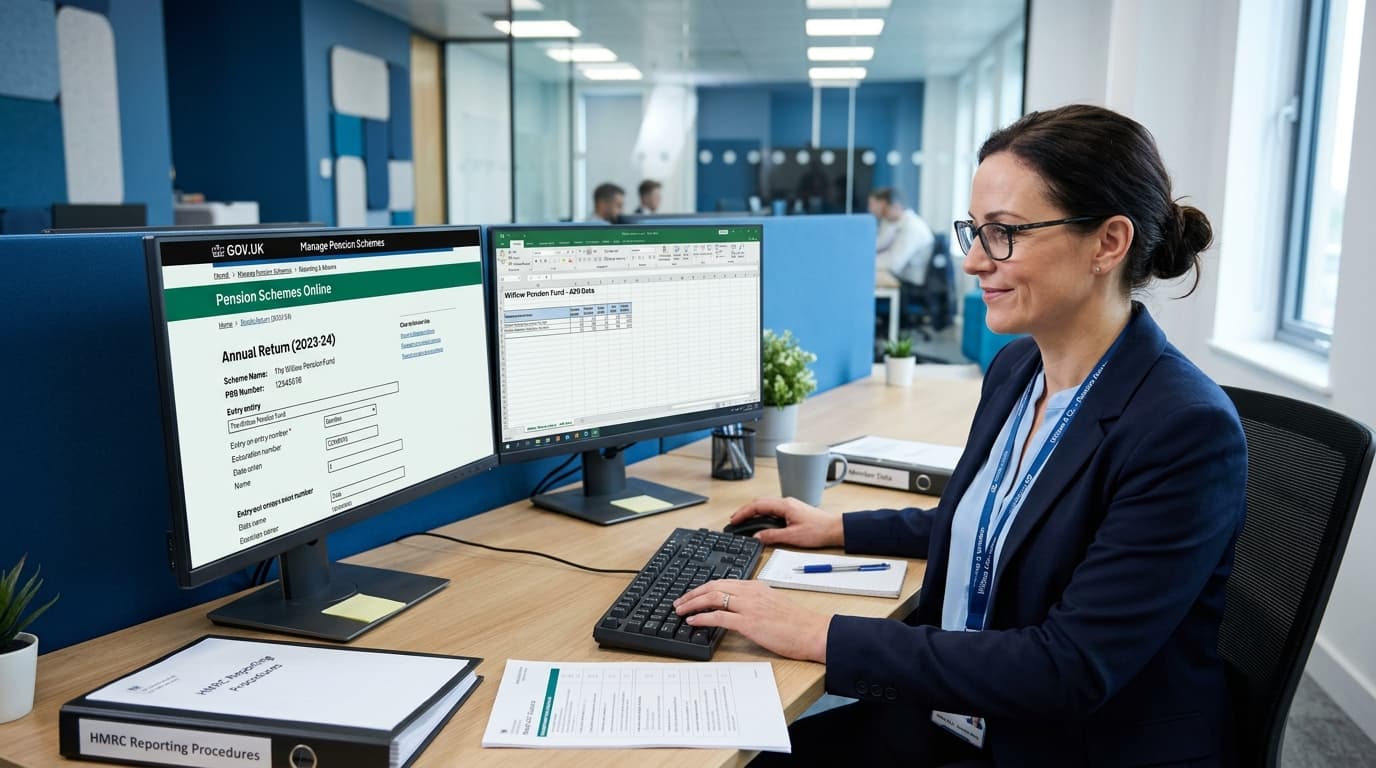
Registered pension schemes must submit annual returns to HMRC, even if there is no tax to pay. For SSAS schemes, this involves:
- Event reports: Certain scheme events must be reported to HMRC within 90 days of occurrence — including transfers in or out, benefit crystallisation events, and any unauthorised payments
- Accounting for Tax (AFT) returns: If the scheme has any tax charges to report (e.g., unauthorised payment charges, annual allowance charges), these must be reported quarterly via AFT returns
- Scheme return: An annual scheme return providing information about membership, contributions, and scheme assets
SSAS schemes must also maintain proper accounts and have these prepared by a qualified professional. The accounts must be available for HMRC inspection and should accurately reflect the scheme's financial position including the value of all assets.
For detailed information on reporting obligations, see our guide on SSAS HMRC reporting requirements.
Investment Rules and Restrictions
One of the most important compliance areas for SSAS trustees is the investment rules. Not all investments are permitted within a registered pension scheme, and certain investments attract immediate and severe tax charges.
Permitted investments include:
- Commercial property (not residential)
- Equities, bonds, and collective investment schemes
- Cash deposits
- Loans to the sponsoring employer (subject to strict conditions)
- Some alternative assets (subject to specific rules)
Prohibited investments that would constitute "taxable property" include:
- Residential property (including holiday lets and student accommodation)
- Tangible moveable property (artwork, jewellery, classic cars, wines)
- Any asset that provides a "benefit in kind" to a scheme member
If a SSAS acquires a prohibited investment, an immediate unauthorised payment charge applies. See our guide on SSAS unauthorised payments for the full implications.
The Connected Party Rules
SSAS trustees must pay particular attention to transactions involving "connected parties" — typically the scheme members, their associates, and the sponsoring employer. While connected party transactions are not prohibited, they are subject to additional scrutiny and must be conducted on arm's length terms.
Connected party rules apply to:
- Property transactions (purchases and sales) between the SSAS and connected parties
- Loan arrangements between the SSAS and the sponsoring employer
- Service contracts between the SSAS and connected parties
- Rental arrangements between the SSAS and connected parties
For property transactions, HMRC requires that the price reflects genuine market value, supported by an independent professional valuation. For rental arrangements, the rent must be at a market rate confirmed by an independent valuation.
"The connected party rules exist to prevent pension schemes being used as a way to funnel money to members outside the normal pension benefit rules. When you're dealing with a transaction involving a connected party, always get an independent valuation first. It's the best protection a trustee can have." — Matt Lenzie
The Borrowing Limit
SSAS schemes are permitted to borrow money to fund investments, but borrowing is capped at 50% of the scheme's net asset value. Exceeding this limit — even inadvertently — can constitute an unauthorised payment with significant consequences.
Key points on SSAS borrowing:
- The 50% limit applies to the total borrowing of the scheme, not just borrowing for property
- Net asset value means the gross asset value less existing liabilities
- The limit must be assessed at the time borrowing is taken out — subsequent movements in asset values may cause the scheme to drift above the limit
- Trustees should monitor the loan-to-value ratio regularly and take action if it approaches the limit
Use our SSAS mortgage calculator to understand how borrowing limits affect your purchasing power.
Authorised Benefit Payments
When members reach the point of drawing benefits, payments must be made in one of the authorised ways prescribed by HMRC. Payments made outside these authorised forms constitute unauthorised payments and attract penal tax charges.
Authorised benefit payment types include:
- Pension commencement lump sum (tax-free cash) — up to 25% of fund value (subject to the lump sum allowance)
- Lifetime annuity purchased from an insurance company
- Drawdown pension (flexible access drawdown or capped drawdown for existing arrangements)
- Small pot lump sums (for small funds under certain conditions)
Death benefits must also be paid in authorised forms, and the scheme rules must specify how they are to be paid. SSAS schemes often have flexibility in how death benefits are structured, which is one of their advantages over other pension types.
The Role of the Scheme Administrator
Every SSAS must have a scheme administrator who is responsible for the scheme's relationship with HMRC. In many SSAS arrangements, a professional pension administrator takes on this role, though member trustees remain responsible for investment decisions and scheme management.
The scheme administrator is personally liable for:
- Submitting accurate and timely returns to HMRC
- Paying any tax charges that arise under the scheme
- Notifying HMRC of scheme changes (e.g., new members, change of sponsoring employer)
- Maintaining registration in good standing
Given this personal liability, scheme administrators take their role seriously and will typically decline to facilitate transactions that appear non-compliant. This is an important safeguard for trustee members.
Penalties for Non-Compliance
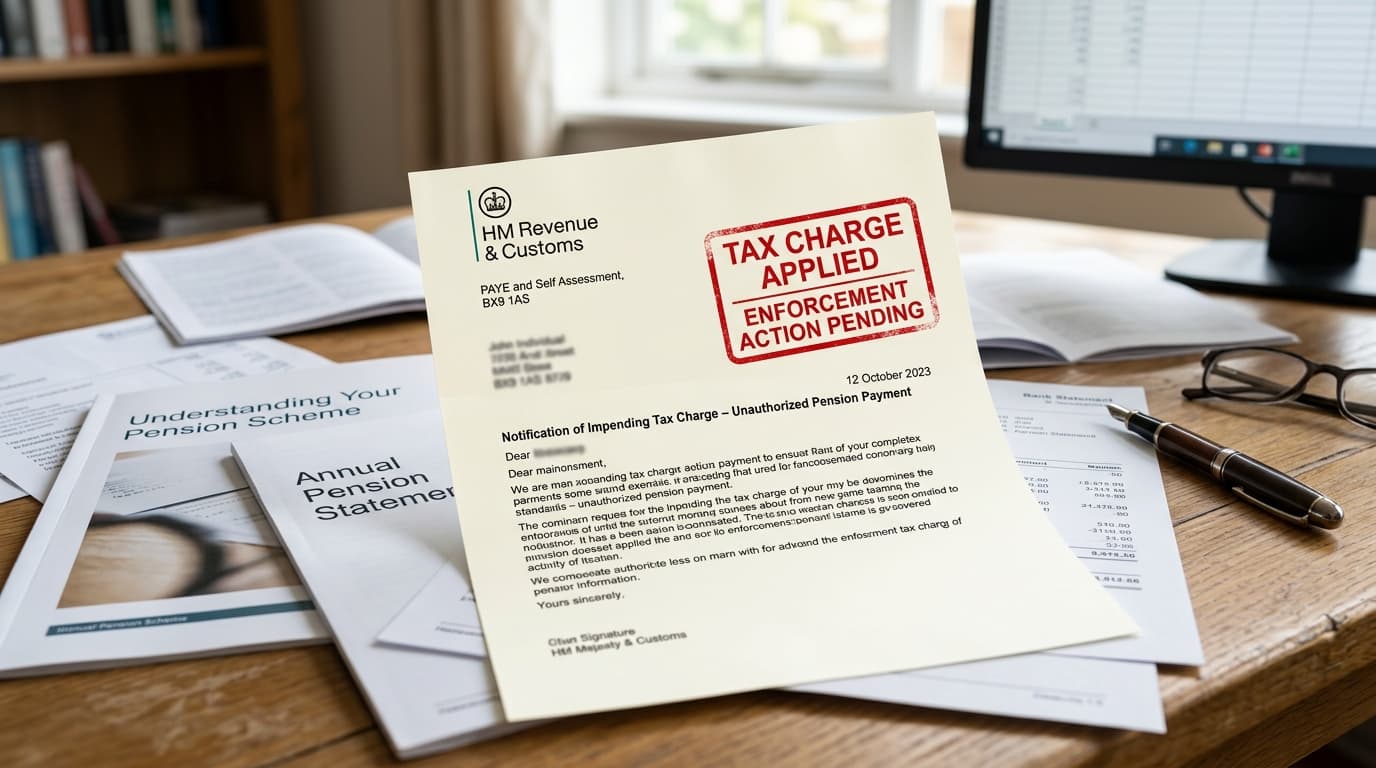
The penalties for SSAS non-compliance can be severe:
- Unauthorised payment charges: 40% tax charge on the member receiving the benefit
- Unauthorised payment surcharge: Additional 15% where the payment exceeds 25% of the fund
- Scheme sanction charge: 40% tax charge on the scheme itself
- De-registration: In serious cases, HMRC can deregister the scheme, causing an immediate 40% tax charge on the full scheme value
- Fixed and daily penalties for late or inaccurate returns
For detail on specific charges, see our guides on unauthorised payments and scheme sanction charges.
Practical Compliance Checklist for SSAS Trustees
- Ensure the scheme is registered with HMRC and the PSTR is on file
- Appoint a professional scheme administrator
- Obtain independent valuations for all connected party transactions
- Monitor the 50% borrowing limit regularly
- Review investment decisions against the permitted investment list before committing
- Ensure all benefit payments are in an authorised form
- Submit event reports within 90 days of qualifying events
- Maintain proper scheme accounts prepared by a qualified professional
Get Expert SSAS Compliance Support
Navigating SSAS compliance is complex, and the consequences of error are disproportionate. Our team works alongside specialist SSAS administrators and pension lawyers to ensure clients' schemes remain fully compliant while achieving their investment objectives.
Contact us to discuss your SSAS compliance requirements, or explore the lenders we work with for SSAS property finance. For related reading, see our guides on HMRC reporting requirements and SSAS tax planning strategies.
About the Author
Matt Lenzie
Former Banker & Corporate Finance Partner
Matt Lenzie is a former banker and corporate finance partner with extensive experience in pension-backed property transactions. He founded SSAS Property Finance to help company directors and trustees navigate the complexities of commercial property acquisition through Small Self-Administered Schemes.