SSAS Tax Planning Strategies: A Comprehensive Guide for Business Owners
Written by Matt Lenzie
Former Banker & Corporate Finance Partner
SSAS Tax Planning: The Integrated Strategy Guide
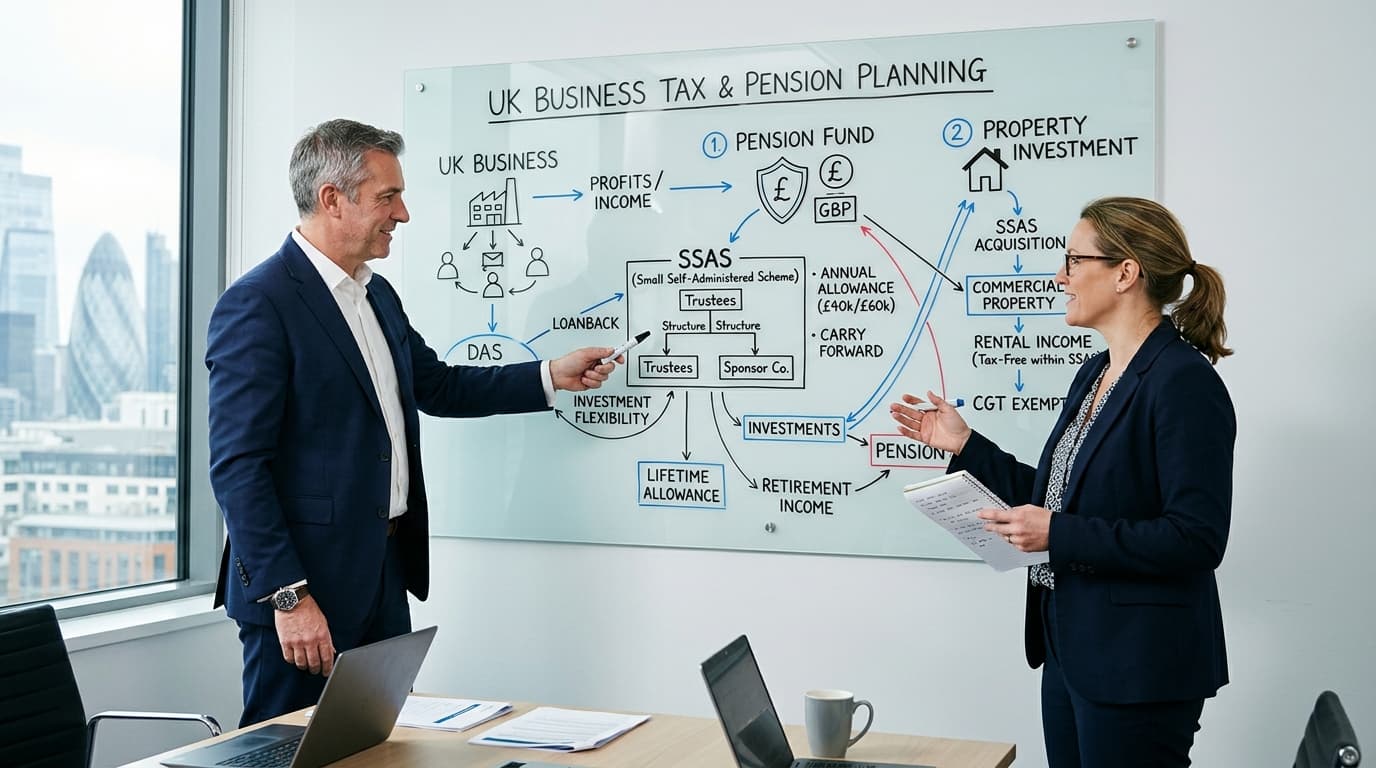
For UK business owners and company directors, the Small Self-Administered Scheme (SSAS) offers a uniquely powerful combination of tax advantages that, when deployed together, can produce outcomes far superior to any single planning strategy. This guide brings together all the key SSAS tax planning levers and explains how they work in combination.
In our experience, the most successful SSAS strategies are those where the client and their advisers take an integrated view — combining commercial property investment, contribution planning, remuneration strategy, and estate planning into a coherent long-term framework. This guide provides the foundation for that kind of integrated thinking.
The Four Pillars of SSAS Tax Efficiency
SSAS tax planning rests on four interconnected pillars:
- Tax-free rental income: Commercial property rental income received within the SSAS is free from income tax, compounding the fund more rapidly than a personally-held equivalent
- Capital gains tax exemption: Disposals of commercial property within the SSAS attract no CGT, allowing full reinvestment of proceeds
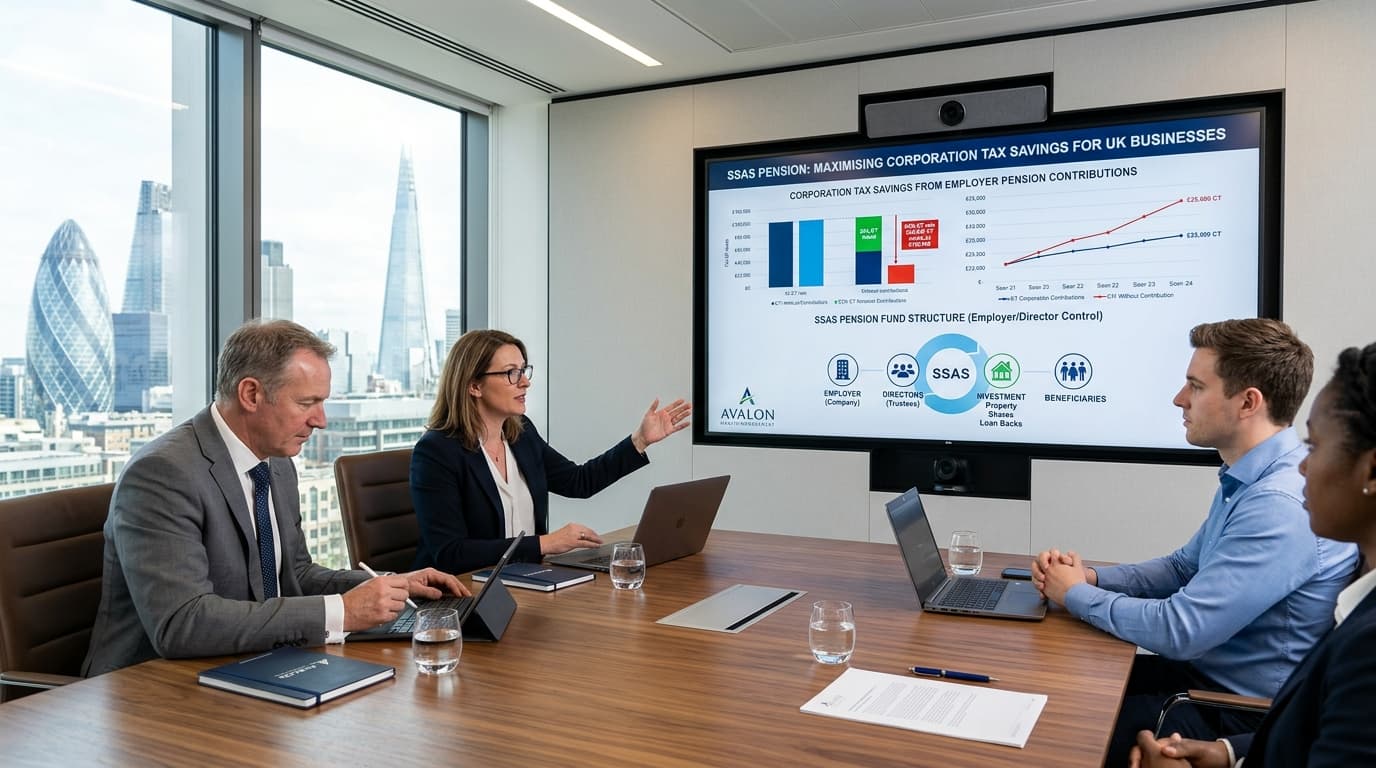
- Employer contribution tax relief: Employer pension contributions reduce the company's corporation tax liability, making pension funding cheaper in real terms
- Estate planning advantages: SSAS assets typically fall outside the estate for inheritance tax purposes and can be passed to beneficiaries in a tax-efficient manner
The power comes from combining all four pillars simultaneously. Employer contributions (made at a real cost of 75p per £1 after corporation tax relief) build a fund that then generates tax-free rental income and CGT-exempt capital growth — all in an environment where the eventual inheritance tax outcome is also favourable.
Strategy 1: The Employer Premises Model
The most common and most powerful SSAS strategy for owner-managed businesses is what we call the "employer premises model":
- The SSAS acquires the commercial premises from which the business operates (or purchases new premises)
- The business pays a market rent to the SSAS — deductible against corporation tax
- The SSAS receives the rent tax-free
- Over time, any mortgage on the property is repaid from rental income, and the property becomes unencumbered
- Capital growth on the property accrues tax-free within the pension fund
- When the business is eventually sold, the property (held separately in the SSAS) is not part of the sale — preserving its value for the director's retirement
This model is particularly compelling for business owners who may be tenants in commercial premises and paying rent to a third-party landlord. Every pound of rent paid to an external landlord is a pound leaving the business permanently. With the SSAS model, the rent stays within the business owner's financial ecosystem.
"The employer premises model is the strategy I explain to almost every owner-managed business client. It's not complex, it's well-established, HMRC-approved, and the numbers work brilliantly over a 10-20 year horizon. The only question is why more business owners aren't already doing it." — Matt Lenzie
Strategy 2: The Accelerated Funding Approach
For business owners with the ability to make significant pension contributions — either through a highly profitable year or via carry forward of unused allowances — the accelerated funding approach can rapidly build a SSAS fund capable of making a substantial commercial property acquisition.
The approach works as follows:
- Identify the target property and determine the required fund size (considering any SSAS mortgage financing available)
- Assess available annual allowances, including carry forward from previous three years
- Make large employer contributions (at a real cost of 75p per £1 after corporation tax relief) to rapidly build the fund
- Arrange SSAS mortgage financing for the balance required
- Acquire the property and establish the rental structure
This approach requires careful annual allowance management to avoid exceeding the limit in any single year. See our annual allowance guide for detailed rules on carry forward.
Strategy 3: The Connected Party Rental Optimisation
Where the business already occupies premises owned by the SSAS (or is about to), the rental rate can be a significant planning lever. The rent must be set at a genuine market rate — HMRC will not accept artificially inflated rents. However, within the market rate range, there is often flexibility.
Factors to consider when setting the rental rate include:
- The rent must be sufficient to cover the SSAS's mortgage obligations (if any) with an appropriate buffer
- Higher rents reduce the company's corporation tax bill but may affect the company's cash position
- Rent reviews should be scheduled in line with market practice (typically every 3-5 years)
- An upward-only rent review clause protects the SSAS's income stream as the property market rises
Strategy 4: Employer Loan Optimisation
SSAS schemes can lend up to 50% of their net asset value to the sponsoring employer, subject to strict conditions. This is a unique feature not available to SIPP holders and can be a valuable source of business finance for growth, acquisition, or working capital.
Used strategically, employer loans can:
- Provide business financing at agreed interest rates (minimum the HMRC official rate)
- Generate interest income for the SSAS (tax-free within the pension wrapper)
- Replace external business financing that would carry higher interest costs
However, the conditions governing employer loans are strict and must be maintained throughout the loan period. See our SSAS compliance guide for the detailed requirements.
Strategy 5: Estate Planning Through SSAS
SSAS assets generally fall outside the deceased member's estate for inheritance tax (IHT) purposes, as the assets are held in a discretionary trust (the pension scheme). Upon a member's death, the trustees have discretion as to how to distribute the death benefits — they are not bound to follow the member's will.
Key estate planning advantages of SSAS include:
- Pension assets are typically outside the IHT estate (subject to the rules on death benefit nominations)
- Death benefits can be paid as a lump sum or income to a wide range of beneficiaries, including children and grandchildren
- Benefits can pass tax-free (subject to the LSDBA limit) if the member dies before age 75
- If the member dies after age 75, death benefits are subject to income tax at the recipient's marginal rate, but still no IHT applies
- Commercial property held in the SSAS can be retained as an investment for the benefit of surviving members or dependants
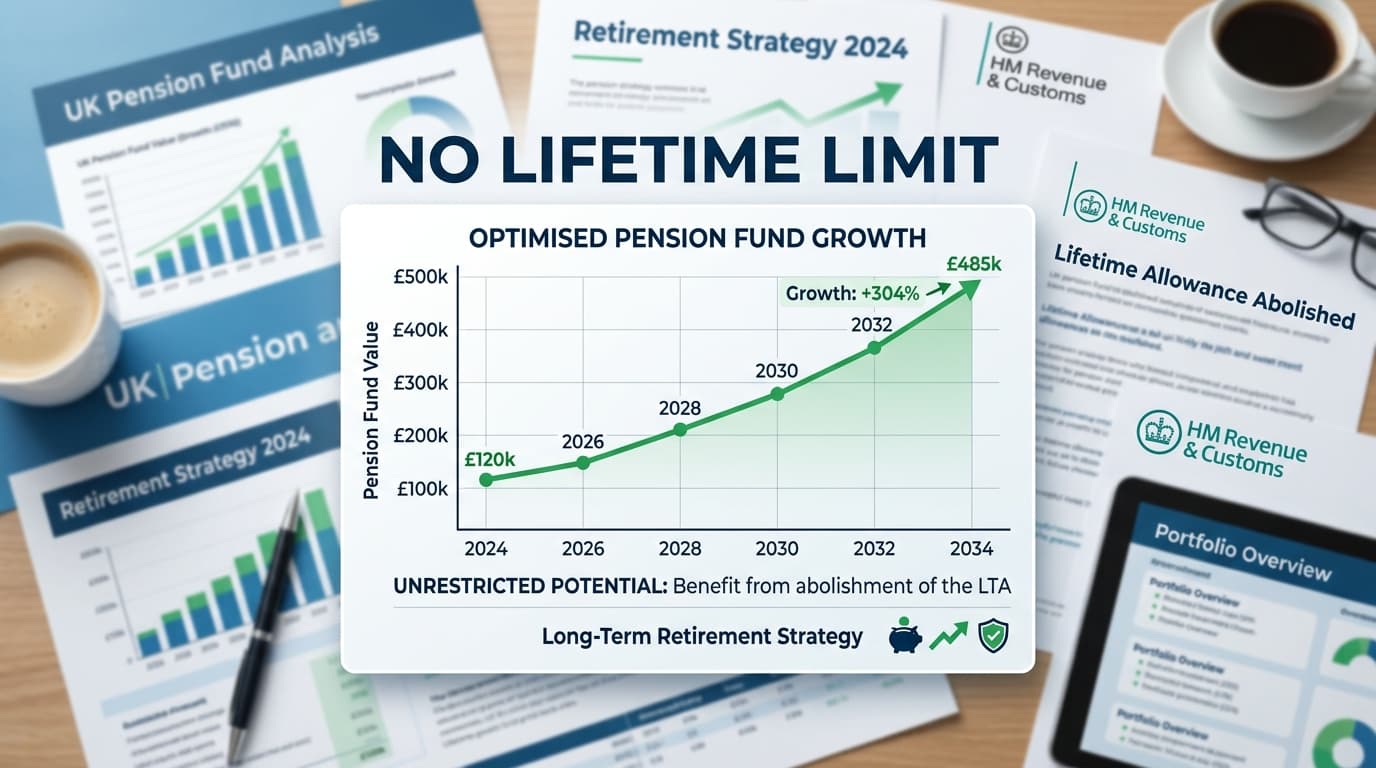
For detail on the allowances governing death benefits, see our guide on SSAS lifetime allowance changes.
Integrating SSAS Into the Business Sale Strategy
One of the most powerful — and often overlooked — SSAS planning opportunities arises when a business owner is planning to sell their company. By separating the commercial property from the business:
- The property is not included in the business sale, preserving its value for retirement
- The business may be valued more appropriately as a trading entity without the property asset distorting the valuation
- Post-sale, the SSAS continues to generate rental income from the new business owner
- The vendor's pension fund is significantly enhanced at retirement
This is a strategy that requires careful planning well in advance of any planned business sale. Early engagement with advisers — ideally 3-5 years before a planned exit — is essential.
Key Takeaways
- SSAS tax efficiency comes from combining four pillars: tax-free rental income, CGT exemption, employer contribution relief, and estate planning advantages
- The employer premises model is the most widely applicable and powerful strategy for owner-managed businesses
- Accelerated funding using carry forward can rapidly build a SSAS fund for property acquisition
- Employer loans provide a unique source of business finance at controlled interest rates
- SSAS assets typically fall outside the IHT estate, making them powerful estate planning tools
- Business sale planning should integrate the SSAS property strategy well in advance of any exit
Start Your Integrated SSAS Tax Planning
The strategies outlined in this guide work best when implemented as part of a coherent long-term plan, developed with specialist advisers who understand both the pension and tax dimensions. Our team has the expertise to help you design and implement an integrated SSAS strategy.
Contact us to discuss your situation, or explore our other guides on tax-free rental income, CGT exemption, and employer contribution relief. You can also explore the range of SSAS mortgage lenders we work with.
About the Author
Matt Lenzie
Former Banker & Corporate Finance Partner
Matt Lenzie is a former banker and corporate finance partner with extensive experience in pension-backed property transactions. He founded SSAS Property Finance to help company directors and trustees navigate the complexities of commercial property acquisition through Small Self-Administered Schemes.