SSAS Tax-Free Rental Income: How Pension Property Generates Tax-Efficient Returns
Written by Matt Lenzie
Former Banker & Corporate Finance Partner
SSAS Tax-Free Rental Income: The Complete Guide
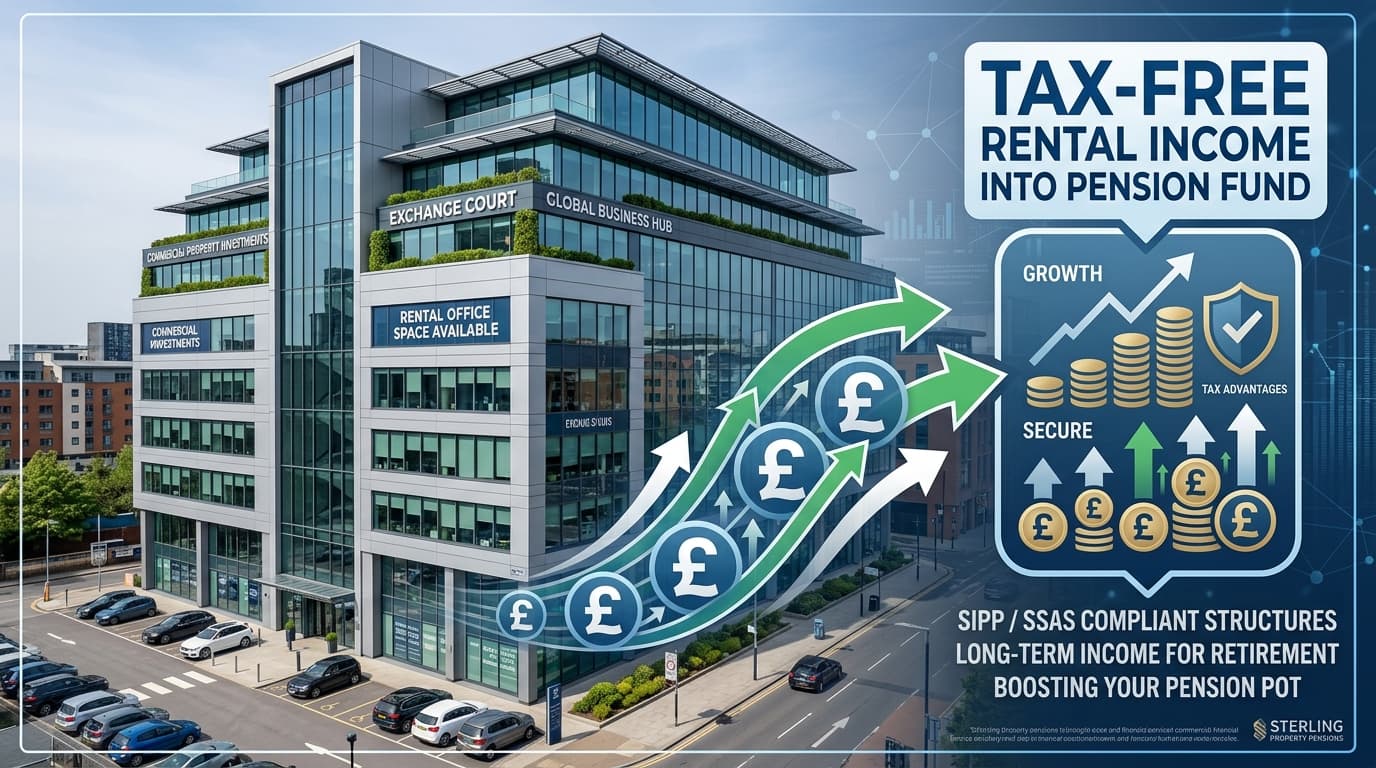
For business owners and company directors building wealth through their pension, few strategies are as powerful as holding commercial property inside a Small Self-Administered Scheme (SSAS). At the heart of this strategy lies one of the most significant tax advantages available to UK investors: rental income received within the pension wrapper is entirely free from income tax.
In our experience working with clients across the UK, many business owners are unaware of just how transformative this tax treatment can be over a 10-20 year investment horizon. What might look like a modest yield on paper becomes dramatically more valuable when you consider that every pound of rental income stays within the scheme, compounding tax-free until benefits are drawn.
How Tax-Free Rental Income Works Inside a SSAS
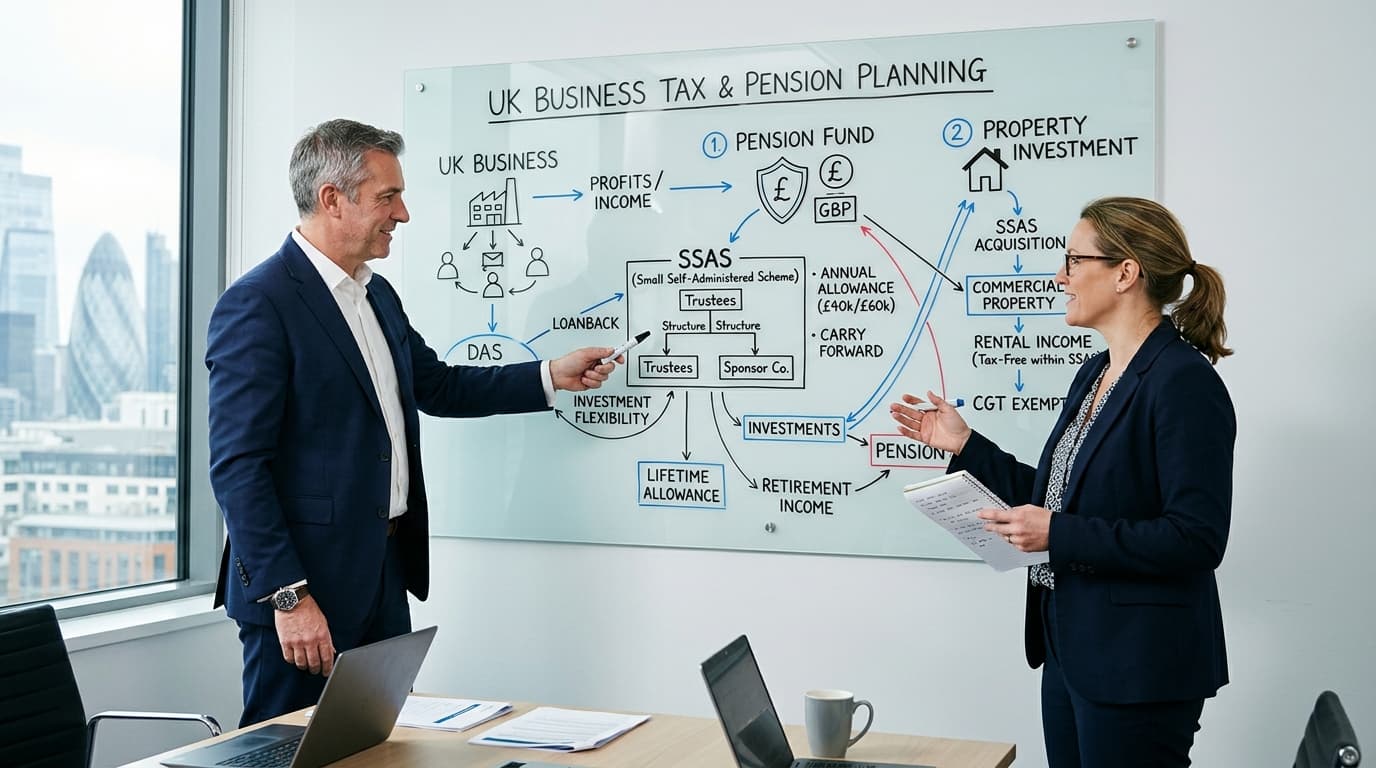
When a SSAS pension scheme owns commercial property and receives rent from a tenant — including the sponsoring employer — that rental income flows directly into the pension fund without any income tax deduction. This is in stark contrast to a personal property investment, where rental profits are subject to income tax at rates of 20%, 40%, or 45% depending on the investor's tax band.
The mechanics are straightforward:
- The SSAS trustees (who include the scheme members) hold the legal title to the commercial property
- A tenancy agreement is established between the SSAS and the tenant at a market rent
- The tenant pays rent directly into the SSAS bank account
- No income tax is deducted at source or payable on receipt
- The rental income becomes part of the pension fund, growing free of tax
Matt Lenzie notes: "The compounding effect of tax-free rental income is something that genuinely surprises clients when we model it out over a 15 or 20-year period. A £50,000 annual rental income that would net a 40% taxpayer only £30,000 after tax outside a pension becomes £50,000 working for them inside the SSAS. Over two decades, the difference in fund value is substantial."
The Connected Party Rental Advantage
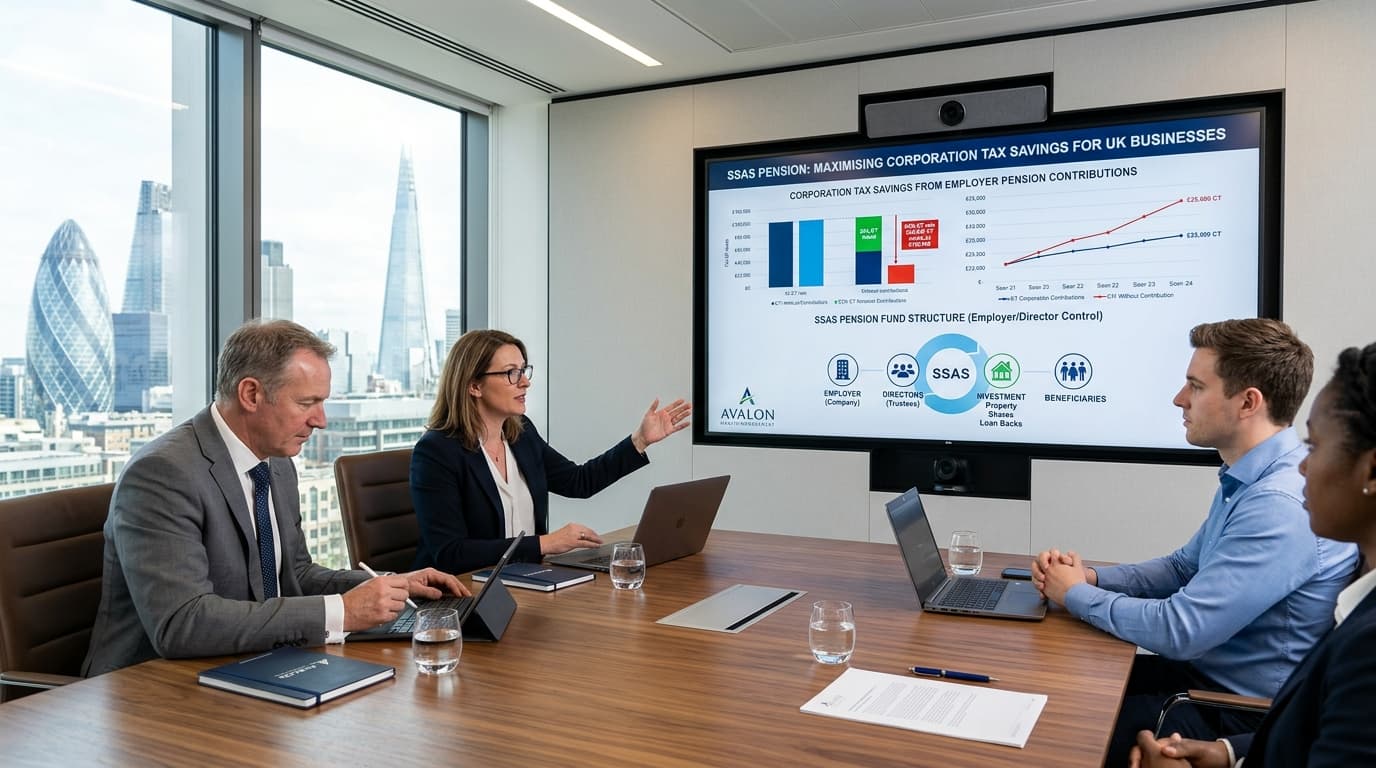
Perhaps the most strategically powerful feature of SSAS property investment is the ability to rent property back to the sponsoring employer — what HMRC calls a "connected party" transaction. This creates a genuinely unique situation where:
- The business pays rent to the SSAS at a market rate
- The rent is a legitimate business expense, reducing corporation tax
- The same rent enters the pension tax-free
- The business owner benefits on both sides of the transaction
This dual tax efficiency is rare in UK tax planning and entirely legitimate when structured correctly. The key requirement is that rent must be set at a genuine market rate — HMRC will scrutinise transactions between connected parties and any rent that appears artificially inflated or suppressed will attract penalties.
"We always commission an independent RICS valuation of the rental rate before establishing a connected party tenancy. This protects our clients from HMRC challenge and gives them confidence that the arrangement will withstand scrutiny." — Matt Lenzie, Former Banker & Corporate Finance Partner
Qualifying Property Types for SSAS Rental Income
Not all property qualifies for this tax treatment. SSAS schemes can only hold commercial property — residential property is explicitly excluded under HMRC rules and would constitute an unauthorised payment, triggering severe tax charges.
Qualifying commercial property types include:
- Industrial units and warehouses
- Office buildings and business parks
- Retail premises and high street shops
- Restaurants and hospitality venues
- Agricultural land (without a residential element)
- Care homes and healthcare facilities
- Hotels and guest houses (subject to conditions)
For a detailed breakdown of qualifying property types, see our guide on choosing the right property type for your SSAS.
Rental Income and SSAS Mortgage Finance
Many SSAS schemes use borrowing to enhance their property purchasing power. When a SSAS takes out a SSAS property mortgage, the rental income from the property is used to service the loan. This creates an efficient structure where:
- The tenant's rent payments cover the mortgage repayments
- Over time, the property becomes unencumbered within the pension fund
- All the while, capital growth accrues tax-free within the scheme
Lenders will typically want to see rental income comfortably covering debt service, usually at a ratio of 125-150%. Use our SSAS mortgage calculator to model different scenarios and understand how rental income relates to borrowing capacity.
VAT Considerations on SSAS Rental Income
One area that often catches clients by surprise is VAT. Commercial property transactions can be subject to VAT, and SSAS schemes need to navigate this carefully:
- Commercial property is generally exempt from VAT by default
- However, the SSAS may elect to "opt to tax" the property, making rental income subject to VAT at 20%
- Opting to tax allows the SSAS to recover input VAT on purchase costs and improvements
- If the tenant is VAT-registered and can recover input VAT, opting to tax is often beneficial
- If the tenant cannot recover VAT (e.g., a VAT-exempt business), the VAT charge becomes an additional cost
The decision to opt to tax requires careful analysis and usually requires advice from a specialist tax adviser. Our team can help you think through the VAT implications as part of the overall structuring of your SSAS property investment — contact us to discuss your specific situation.
Record-Keeping and HMRC Requirements
To maintain the tax-free status of SSAS rental income, proper documentation and record-keeping are essential. HMRC expects SSAS schemes to maintain:
- A properly executed commercial lease agreement at market rent
- Evidence of the market rent valuation (ideally from an independent RICS surveyor)
- Regular rent reviews in line with the lease terms
- Separate SSAS bank account with clear audit trail for rental receipts
- Annual scheme accounts prepared by a professional administrator
- Annual returns submitted to HMRC via the Pension Scheme Tax Reference (PSTR)
For more detail on HMRC compliance requirements, see our comprehensive SSAS HMRC compliance guide.
Rental Income and Pension Contributions
An important distinction to understand is that rental income earned within the SSAS does not count as a pension contribution for annual allowance purposes. The rental income is simply a return generated by a pension fund asset — it does not affect the £60,000 annual allowance limit that applies to contributions.
This means that even a SSAS generating substantial rental income is not "using up" the scheme members' annual allowance, which remains available for employer and employee contributions that attract full tax relief.
Case Study: Manufacturing Business in the West Midlands
To illustrate the power of SSAS rental income, consider a client we worked with who operated a manufacturing business from premises they owned personally. The property had a market value of £750,000 and generated annual rent of £60,000.
Before restructuring, the client received this rent personally and paid income tax at 40%, netting £36,000 per year. After establishing a SSAS and transferring the property into the scheme (via a sale at market value, with the SSAS borrowing to fund the purchase), the rental income of £60,000 flowed directly into the pension fund — a saving of £24,000 per year in income tax.
Over a 15-year investment period, this differential alone — ignoring capital growth and investment returns — equated to £360,000 of additional pension fund value.
Key Takeaways
- SSAS rental income from commercial property is received entirely free of income tax within the pension wrapper
- Connected party rentals (to the sponsoring employer) are permitted at market rates, creating dual tax efficiency
- Only commercial property qualifies — residential property is excluded
- VAT treatment requires careful consideration, particularly around the option to tax
- Proper documentation and market rent evidence are essential to withstand HMRC scrutiny
- Rental income does not count towards annual allowance limits
Get Expert Advice on SSAS Rental Income
Structuring a SSAS property investment to maximise tax-free rental income requires expertise across pension law, commercial property, and tax planning. Our team has helped numerous business owners and company directors establish SSAS arrangements that generate substantial tax-free rental returns.
To discuss your specific situation and understand the potential of SSAS rental income for your business, contact our team or explore the range of SSAS mortgage lenders we work with to fund commercial property purchases.
For further reading, see our guides on SSAS capital gains tax exemption and employer contributions and tax relief.
About the Author
Matt Lenzie
Former Banker & Corporate Finance Partner
Matt Lenzie is a former banker and corporate finance partner with extensive experience in pension-backed property transactions. He founded SSAS Property Finance to help company directors and trustees navigate the complexities of commercial property acquisition through Small Self-Administered Schemes.