SSAS Development Finance: Funding Property Development Through Your Pension
Written by Matt Lenzie
Former Banker & Corporate Finance Partner
SSAS Development Finance: What Is Possible?
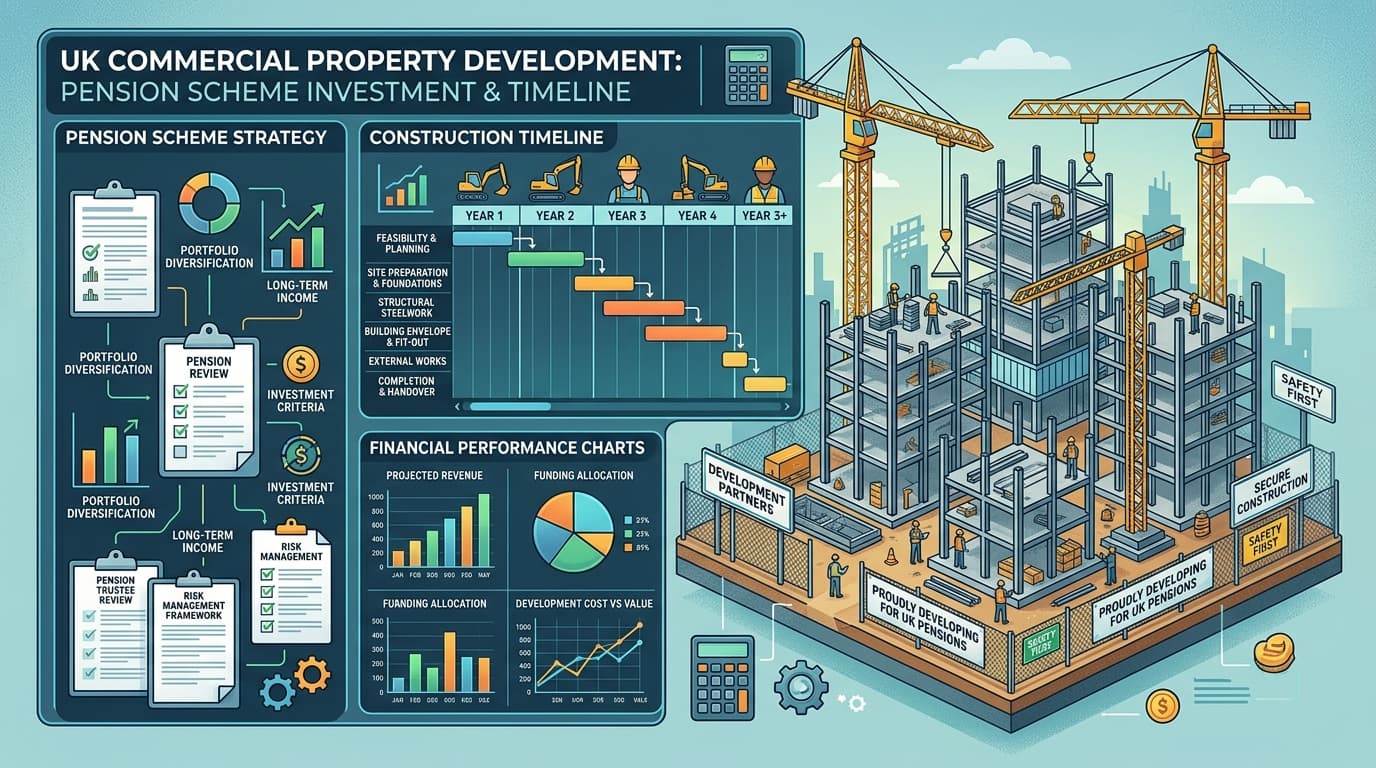
The question of whether a SSAS can participate in commercial property development is one that comes up increasingly as business owners look to maximise the return from their pension funds. The short answer is: yes, with important qualifications. SSAS development finance is a specialist area that offers real opportunity but demands careful structuring to remain within HMRC's permitted investment rules.
This guide explores the types of development activity that are permitted within a SSAS, how development finance is structured, and the key risks and considerations to be aware of.
What Types of Development Are Permitted?
A SSAS can engage in commercial property development provided the development activity results in an asset that the SSAS is permitted to hold. The key distinction is between:
Permitted Development Activities
- Refurbishment and renovation of commercial property already held by the SSAS
- Development of commercial premises on land held by the SSAS (e.g., constructing a warehouse, office, or industrial unit)
- Change of use conversions that result in commercial property (e.g., converting redundant agricultural buildings to commercial use)
- Extension or improvement of commercial premises to enhance their commercial value or rental income
Prohibited Development Activities
- Residential development — SSAS schemes cannot hold residential property, so developing residential units within the scheme is prohibited
- Mixed-use development with a significant residential element — take specialist advice on where the line falls
- Development activities that provide a direct personal benefit to members or connected parties
How SSAS Development Finance Is Structured
Commercial property development finance for SSAS schemes can be structured in several ways, depending on the scale and nature of the development:
Development Lending Direct to the SSAS
The most straightforward approach is for the SSAS to borrow development finance directly from a specialist lender. The loan is secured on the land or property being developed and is drawn down in tranches as the development progresses. This structure requires the SSAS to have sufficient net assets to support the borrowing within the 50% of net scheme assets limit.
Joint Venture with the Sponsoring Employer
In some cases, the SSAS and the sponsoring employer may co-invest in a development — the SSAS providing the land (or a proportion of the funding) and the employer managing the development and contributing to funding. This joint venture structure must be on arm's length terms, with the SSAS's share of costs and returns reflecting its proportionate contribution. HMRC scrutinises these arrangements carefully.
Third-Party Development Finance
Where the development is significant in scale, the SSAS may bring in a third-party development finance lender who specialises in construction funding. These lenders are accustomed to the complexities of pension scheme borrowing and can structure facilities that draw down in line with construction milestones.
"Development within a SSAS is genuinely viable, but it requires more planning and more careful structuring than a straightforward property purchase. The planning permission, the construction programme, the funding structure, and the end product all need to be considered together — ideally before any land is purchased." — Matt Lenzie, Former Banker & Corporate Finance Partner
Key Considerations for SSAS Development Finance
Planning Permission
Lenders will require planning permission to be in place (or at least resolution to grant) before advancing development finance. Speculative land banking — purchasing land in the hope of obtaining planning permission — is a high-risk strategy for a SSAS, as it ties up scheme assets in an unproductive, illiquid investment with no certainty of return.
Borrowing Limits
The 50% of net scheme assets borrowing limit applies to development finance as it does to all SSAS borrowing. For a development with a large total funding requirement, this may constrain the SSAS's ability to fund the project alone, making joint ventures or co-investment structures necessary.
Construction Risk
Development projects carry construction risk — cost overruns, delays, contractor insolvency, and planning complications. A SSAS that takes on significant development risk exposes its pension assets to these outcomes. The trustees must satisfy themselves that the risk is appropriate for a pension fund investment.
Monitoring and Drawdown
Development lenders typically appoint an independent monitoring surveyor to certify progress before each drawdown. This is standard practice in development finance but adds to the cost and complexity of the process.
Exit Strategy
As with bridging finance, development finance is short-term and requires a clear exit strategy. For SSAS development, the most common exit strategies are:
- Refinancing onto a commercial mortgage once the development is complete and tenanted
- Retaining the completed property within the SSAS for long-term investment income
- Selling the completed development (though sales within SSAS are generally preferable to avoid creating a trading activity)
Costs of SSAS Development Finance
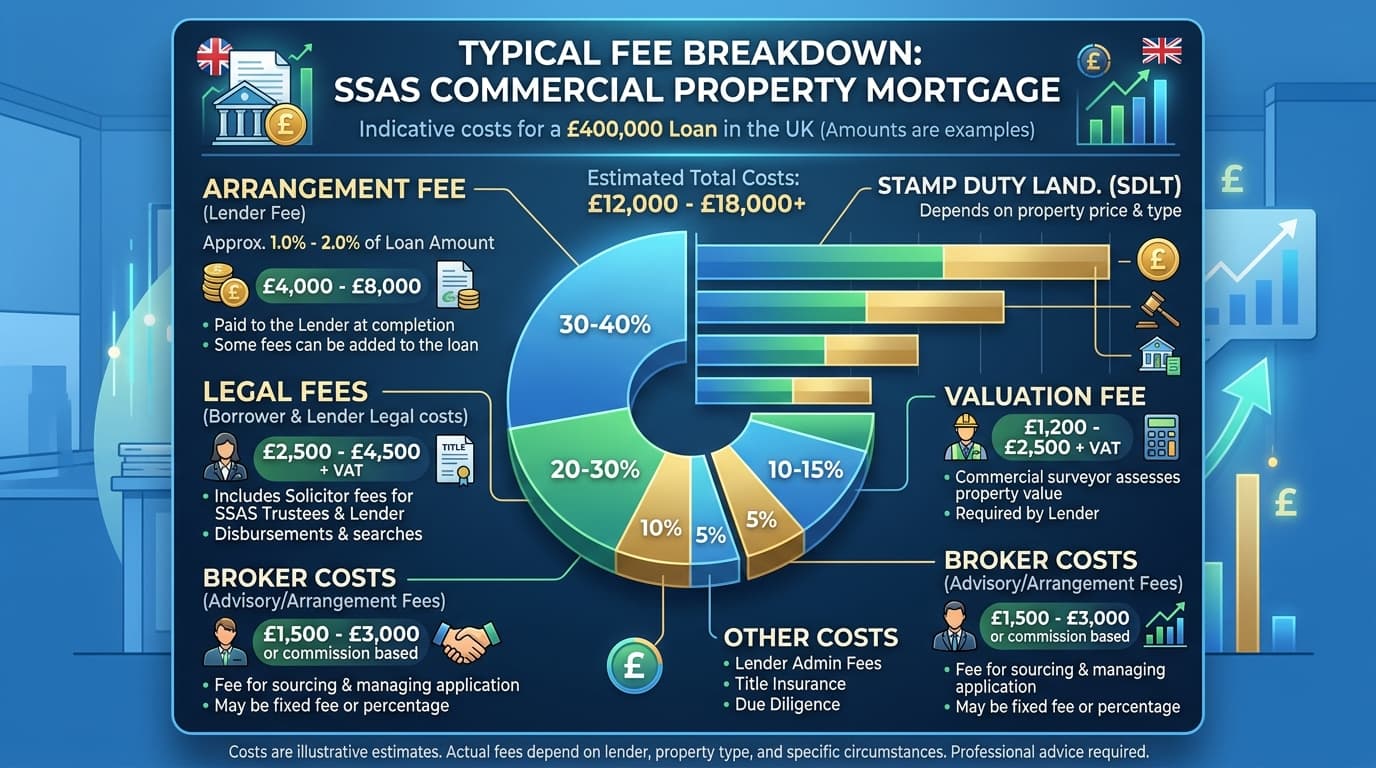
Development finance for SSAS schemes is typically priced at a premium over standard commercial mortgage rates, reflecting the construction risk. Typical costs include:
- Interest: 1.0-1.5% per month on drawn amounts
- Non-utilisation fee: 0.3-0.5% per month on undrawn amounts
- Arrangement fee: 1-2% of total facility
- Monitoring surveyor fees: Variable depending on project size
Key Takeaways
- SSAS can fund commercial property development, but not residential development
- Development finance is typically structured as a staged drawdown facility secured on the development site
- Borrowing must remain within the 50% of net scheme assets limit
- A clear exit strategy — typically refinancing onto a long-term commercial mortgage — is essential
- Development carries construction risk that trustees must assess against their fiduciary duty to scheme beneficiaries
Explore SSAS Development Finance
Our team has experience arranging development finance for SSAS schemes and can guide you through the structuring, funding, and compliance requirements.
Contact us to discuss your development plans, or explore our SSAS lender panel for specialist development finance providers.
About the Author
Matt Lenzie
Former Banker & Corporate Finance Partner
Matt Lenzie is a former banker and corporate finance partner with extensive experience in pension-backed property transactions. He founded SSAS Property Finance to help company directors and trustees navigate the complexities of commercial property acquisition through Small Self-Administered Schemes.