SSAS Pension Transfers: Consolidating Your Pensions for Property Investment
Written by Matt Lenzie
Former Banker & Corporate Finance Partner
Why Transfer Pensions into an SSAS?
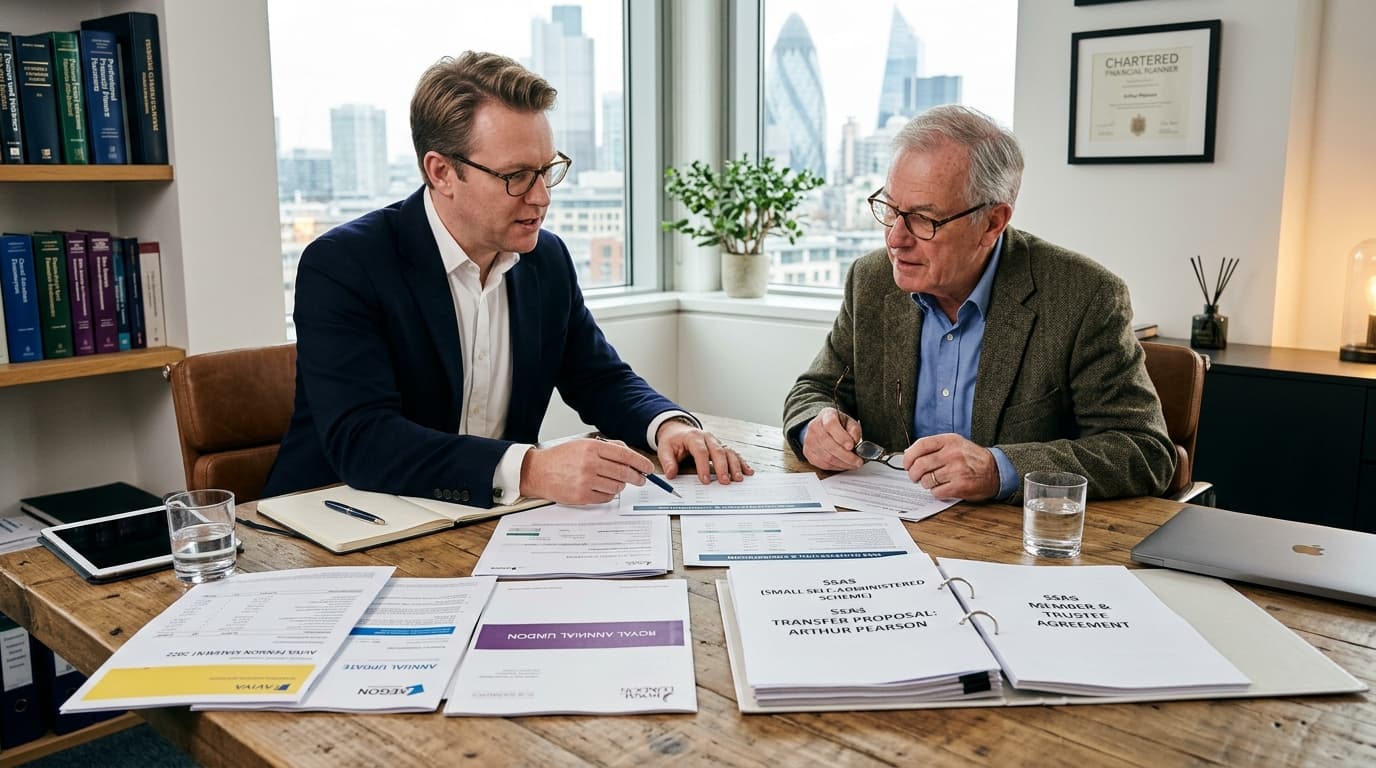
Directors who establish a new SSAS often have pension funds scattered across various providers — workplace pensions from previous employers, personal pensions, SIPPs, and possibly older defined benefit (final salary) schemes. Consolidating these funds into the SSAS serves several purposes:
- Increases the SSAS's total fund size, enabling larger property purchases or higher loanback capacity
- Simplifies pension management — one scheme, one set of trustees, one investment strategy
- Removes assets from restrictive provider platforms with limited investment options
- Potentially reduces overall administration fees
- Enables the pooled investment strategy that makes the SSAS structurally unique
In our experience, pension consolidation is one of the most underutilised tools available to SSAS members. Funds sitting in old workplace pensions — often investing in default funds with mediocre returns — can be transferred into an SSAS where they can generate commercial property rental income within a tax-efficient wrapper.
Types of Pension Transfer
Defined Contribution to SSAS Transfers
Transferring from a defined contribution arrangement (a workplace pension, SIPP, or personal pension) into an SSAS is generally straightforward. The process involves:
- The member requests a transfer value statement from the existing provider
- The SSAS scheme administrator (pensioneer trustee) provides transfer-in paperwork to the receiving scheme
- The member completes any required authority forms with the transferring provider
- The transferring provider makes a cash payment to the SSAS bank account
- The SSAS updates its member records to reflect the transferred funds
Transfer timescales vary by provider — some complete within two weeks, others take two to three months. Chasing providers who are slow to process transfers is sometimes necessary.
Defined Benefit to SSAS Transfers
Transferring from a defined benefit (final salary or career average) pension to an SSAS is a more complex and higher-risk decision. Key considerations include:
- Transfer value analysis: The critical factor is whether the transfer value (cash equivalent transfer value, or CETV) represents fair value for the guaranteed income being given up
- Regulated financial advice requirement: Where the CETV exceeds £30,000, the member must take regulated financial advice and the IFA must provide a transfer advice report before the transfer can proceed
- Loss of guarantees: Transferring out of a DB scheme means giving up a guaranteed, inflation-linked income for life. This is a permanent and irreversible decision
- HMRC reporting: Transfers from DB schemes may trigger HMRC reporting obligations if the transfer value exceeds the standard Annual Allowance
Matt Lenzie notes: "I would always encourage anyone considering a DB to SSAS transfer to take the regulated financial advice very seriously. The adviser must believe the transfer is in the member's best interests — and there are many cases where it simply is not. Commercial property investment ambitions should not drive a decision that permanently sacrifices a valuable guaranteed income."
In Specie Transfers
An in specie transfer allows the transfer of an asset (rather than cash) from one pension to another. For example, if a member holds a commercial property in a SIPP and wishes to transfer it into an SSAS, an in specie transfer allows the property itself to move between schemes without being sold first.
Requirements for in specie transfers include:
- Both the transferring and receiving schemes must permit in specie transfers under their rules
- An independent RICS valuation must be obtained to establish the transfer value
- Stamp Duty Land Tax (SDLT) may apply to the property transfer, depending on its structure
- Any existing mortgage on the property must be dealt with — transferred with the property (with lender consent) or repaid first
In specie transfers are complex and require specialist legal and tax advice. They can be an elegant solution where a member has a well-performing property investment in a SIPP that they want to bring into the pooled SSAS environment.
Pension Transfer Due Diligence
Before accepting a transfer into an SSAS, the pensioneer trustee will conduct due diligence to ensure the transfer is legitimate and does not introduce any compliance risks. This typically includes:
- Confirming that the transferring scheme is a registered pension scheme
- Checking that there are no signs of pension liberation or scam activity
- Ensuring the transfer does not breach Annual Allowance limits
- Confirming the member's entitlement to the transfer value
The Pension Scams Industry Group (PSIG) code of good practice provides a framework for pension transfer due diligence that reputable pensioneer trustees follow.
Transfer Values and Timing
Transfer values fluctuate with investment markets and, for DB schemes, with interest rates. The value of a DC transfer is the current market value of the member's fund on the date of transfer. For DB schemes, the CETV is calculated by the scheme actuary based on the projected value of the member's guaranteed benefits.
There is no perfect time to transfer — attempting to time the market with pension transfers is generally inadvisable. However, large DB transfers during periods of elevated CETVs (which tend to be associated with low interest rate environments) have been common in recent years.
Building Fund Size for Property Investment
Where the primary motivation for consolidating into an SSAS is to build sufficient funds for a commercial property purchase, transfers should be coordinated with the SSAS's investment timeline. There is no point in transferring funds that will simply sit in cash for years while waiting for the right property — the opportunity cost of an underinvested fund is real.
A pragmatic approach is to:
- Establish the SSAS and make initial employer contributions
- Identify the target property and confirm the required purchase budget
- Model the combination of existing funds, contributions, transfers, and SSAS mortgage finance needed to complete the purchase
- Execute the transfer programme in parallel with progressing the property purchase
Our SSAS mortgage calculator can help you model how much borrowing you need given your available fund. For finance enquiries, contact our team.
"Pension consolidation into an SSAS is one of those decisions that can genuinely change the trajectory of a business owner's retirement planning. Funds that were languishing in default funds can become part of a real asset investment strategy within months of transfer."
— Matt Lenzie, Former Banker & Corporate Finance Partner
Key Takeaways
- Transferring existing pension funds into an SSAS builds investment capacity and simplifies pension management
- Defined contribution transfers are generally straightforward; defined benefit transfers require regulated advice and careful consideration
- In specie transfers allow property assets to move between pension schemes without being sold first
- The pensioneer trustee will conduct due diligence on all incoming transfers to protect scheme compliance
- Transfer programmes should be coordinated with the SSAS's investment timeline to minimise cash drag
- Never transfer a defined benefit pension solely to pursue property investment without proper regulated advice
About the Author
Matt Lenzie
Former Banker & Corporate Finance Partner
Matt Lenzie is a former banker and corporate finance partner with extensive experience in pension-backed property transactions. He founded SSAS Property Finance to help company directors and trustees navigate the complexities of commercial property acquisition through Small Self-Administered Schemes.