Winding Up an SSAS: What Trustees Need to Know
Written by Matt Lenzie
Former Banker & Corporate Finance Partner
When Does an SSAS Need to Be Wound Up?
An SSAS is established for the long term — to provide retirement benefits for its members over many years. However, circumstances arise where winding up the scheme is the appropriate course of action. Common triggers include:
- All members have drawn their full pension benefits and no further assets remain
- The last member has died and death benefits have been distributed
- All members have transferred their benefits to other registered pension schemes
- The sponsoring employer has ceased trading and members wish to consolidate into personal pensions
- A decision has been made to amalgamate the scheme with a SIPP or another pension arrangement
- The scheme has become uneconomical to run (e.g., a very small fund after most assets have been distributed)
Winding up should never be rushed or done informally. The process has specific legal and regulatory steps that must be followed to protect trustees from liability and to avoid unnecessary tax charges.
Trustee Decision to Wind Up
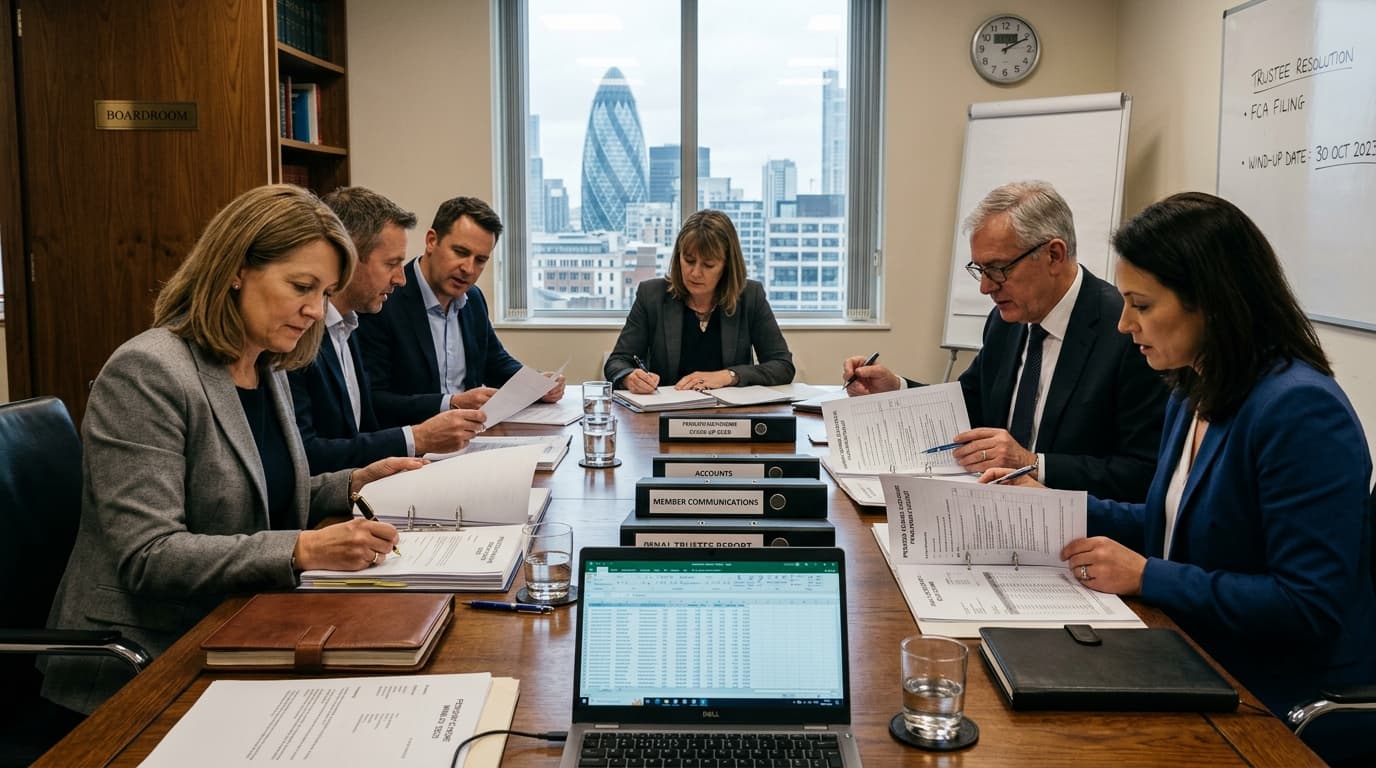
The decision to wind up an SSAS must be made by the trustees in accordance with the scheme's rules. Typically, this requires a formal trustee resolution, minuted and signed by all trustees (including the pensioneer trustee). The resolution should set out:
- The decision to wind up the scheme
- The intended date of wind-up
- The proposed treatment of scheme assets
- How member benefits will be secured or paid
Matt Lenzie notes: "Winding up an SSAS is often the end of a long and successful run of pension saving and investment. Doing it properly — with proper documentation and advice — is the last act of good trusteeship. Cutting corners at this stage can create problems for members and their estates."
Notifying HMRC
The scheme administrator must notify HMRC when the scheme begins to wind up, and again upon completion. HMRC must be informed within 90 days of the winding-up decision. Failure to notify HMRC can result in penalties.
HMRC will record the scheme as "in wind-up" status and will eventually de-register it once confirmed that all scheme assets have been distributed and all tax obligations met.
Dealing with Scheme Assets During Wind-Up
Cash and Investment Assets
Cash and liquid investment assets can be distributed relatively straightforwardly — as pension benefits to members, as death benefits to beneficiaries, or as transfers to other registered pension schemes. The tax treatment of each type of payment must be carefully managed by the scheme administrator.
Commercial Property
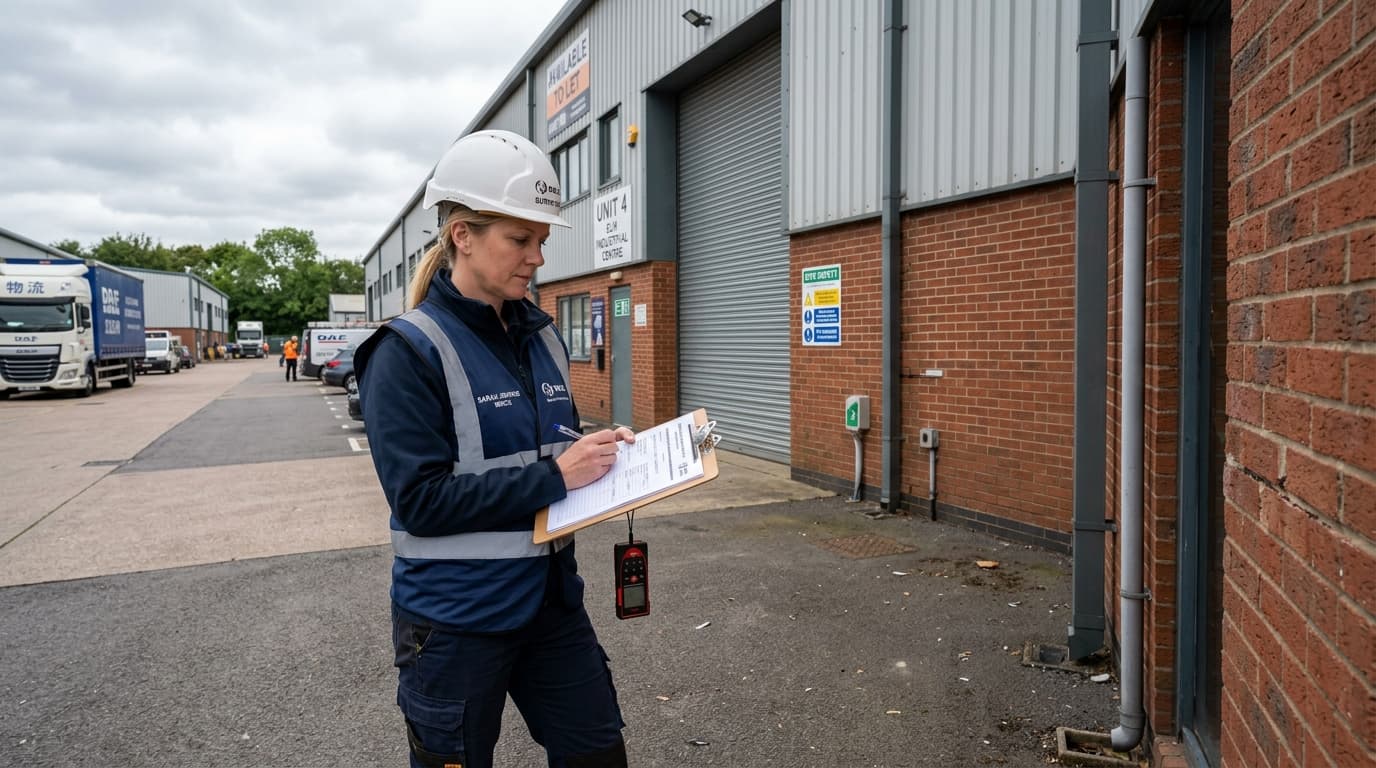
Where the SSAS holds commercial property, winding up becomes considerably more complex. The options are:
- Sell the property and distribute the cash proceeds as benefits or transfers
- Transfer the property in specie to a receiving pension scheme (e.g., a SIPP), which takes over ownership of the property within the new pension wrapper
- Transfer the property to members/beneficiaries as a benefit in kind — though this triggers an unauthorised payment charge unless done as a recognised transfer
In specie transfers of property to another pension scheme require specialist legal advice and an independent RICS valuation. The receiving scheme must be willing and able to accept property assets. For more on property valuation requirements, see our guide on SSAS property valuation requirements.
Mortgaged Property
If the SSAS has an outstanding mortgage on its property at the time of winding up, this must be repaid or transferred as part of the wind-up process. Lenders must be notified of the wind-up and their consent obtained for any property transfer. Selling the property is typically the most straightforward route where a mortgage remains outstanding.
Distributing Member Benefits
During wind-up, members may be entitled to:
- Take their benefits immediately (PCLS plus drawdown or annuity) if they are at, or approaching, retirement age
- Transfer their pension fund to another registered pension scheme (e.g., a SIPP), which then holds their benefits until retirement
Members below the minimum pension age (currently 55, rising to 57 in April 2028) cannot take benefits directly — their funds must be transferred to another registered scheme. Trustees should allow sufficient time for transfers to be completed before completing the wind-up.
Death of the Last Member
Where an SSAS is wound up following the death of the last surviving member, the trustees must distribute death benefits to nominated beneficiaries in accordance with the expression of wishes (or at their discretion where no valid nomination exists). The tax treatment depends on whether the member died before or after age 75.
After distributing all assets, the trustees should formally wind up the trust by completing a deed of discharge and notifying HMRC.
Cessation of the Sponsoring Employer
If the sponsoring company goes into liquidation or ceases trading, this does not automatically trigger wind-up of the SSAS — the pension trust is a separate legal entity from the company. Members' pension rights are protected. However, the loss of the sponsoring employer may make the SSAS unviable going forward, and members may choose to wind up and transfer to individual SIPPs.
HMRC De-Registration
Once all assets have been distributed and tax obligations settled, the scheme administrator notifies HMRC to de-register the scheme. HMRC will then remove the scheme from the register of pension schemes and close out the scheme's tax records. All scheme documentation should be retained for at least six years following de-registration.
Professional Advice for Wind-Up
Winding up an SSAS is not a DIY exercise. Professional support should include:
- The pensioneer trustee, who will manage the HMRC notification process and documentation
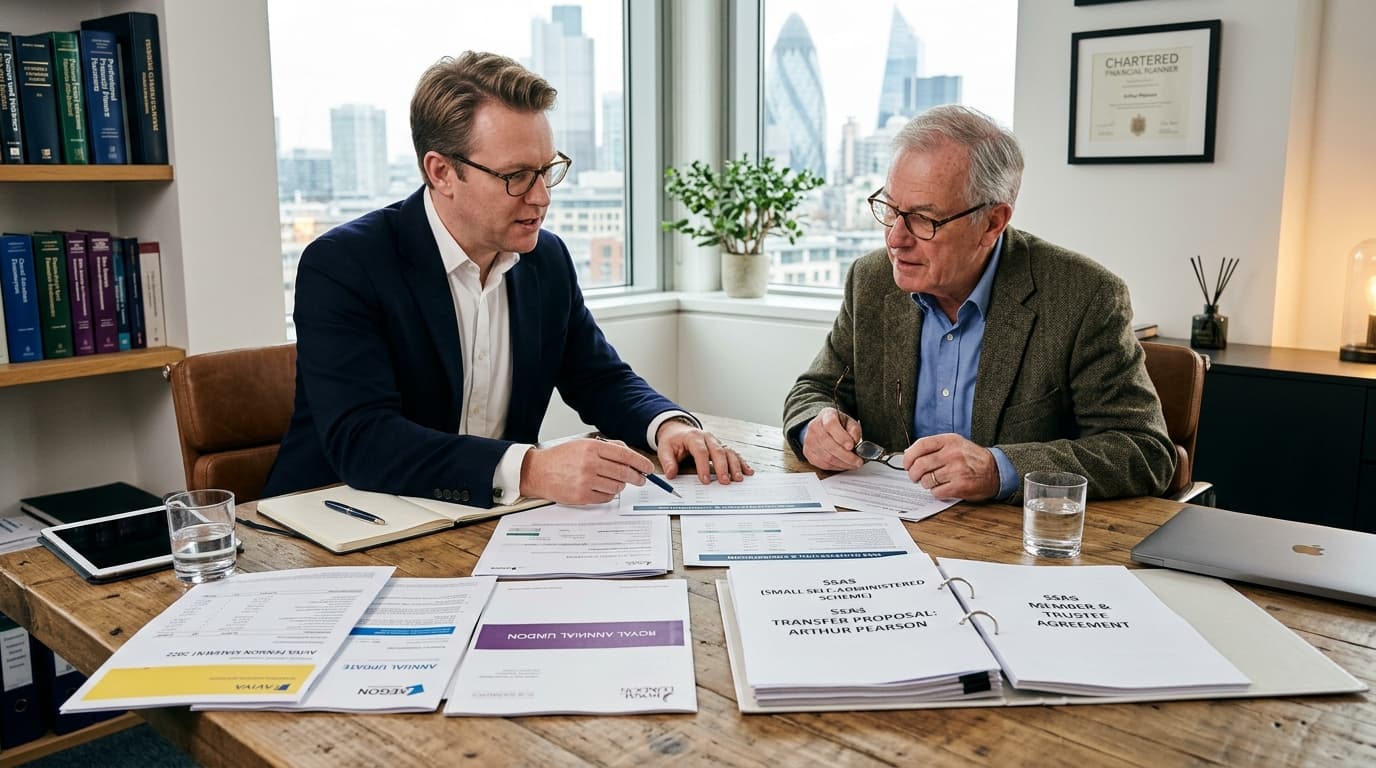
- A regulated IFA, to advise members on their options (benefits vs transfer)
- A solicitor, particularly where property assets are involved
- An accountant, to prepare final scheme accounts and manage any VAT obligations
If your SSAS holds commercial property that will be sold as part of the wind-up, and you need to understand the finance implications, contact our team for guidance.
"Winding up an SSAS should be seen as the successful conclusion of a long-term strategy — not a problem to be solved. With the right professional support, it is a straightforward process. The key is to start the planning early and not to leave property or other illiquid assets to the last moment."
— Matt Lenzie, Former Banker & Corporate Finance Partner
Key Takeaways
- An SSAS may be wound up when members have drawn all benefits, transferred to other schemes, or the sponsoring employer has ceased trading
- A formal trustee resolution and HMRC notification (within 90 days) are required to begin wind-up
- Commercial property must be sold or transferred in specie to a receiving scheme — it cannot simply be handed to members
- Outstanding mortgages must be repaid or transferred before property can be disposed of
- Members below minimum pension age must transfer to another registered scheme, not take direct benefits
- Professional advice (pensioneer trustee, IFA, solicitor, accountant) is essential throughout the wind-up process
About the Author
Matt Lenzie
Former Banker & Corporate Finance Partner
Matt Lenzie is a former banker and corporate finance partner with extensive experience in pension-backed property transactions. He founded SSAS Property Finance to help company directors and trustees navigate the complexities of commercial property acquisition through Small Self-Administered Schemes.