SSAS Succession Planning: Protecting Wealth Across Generations
Written by Matt Lenzie
Former Banker & Corporate Finance Partner
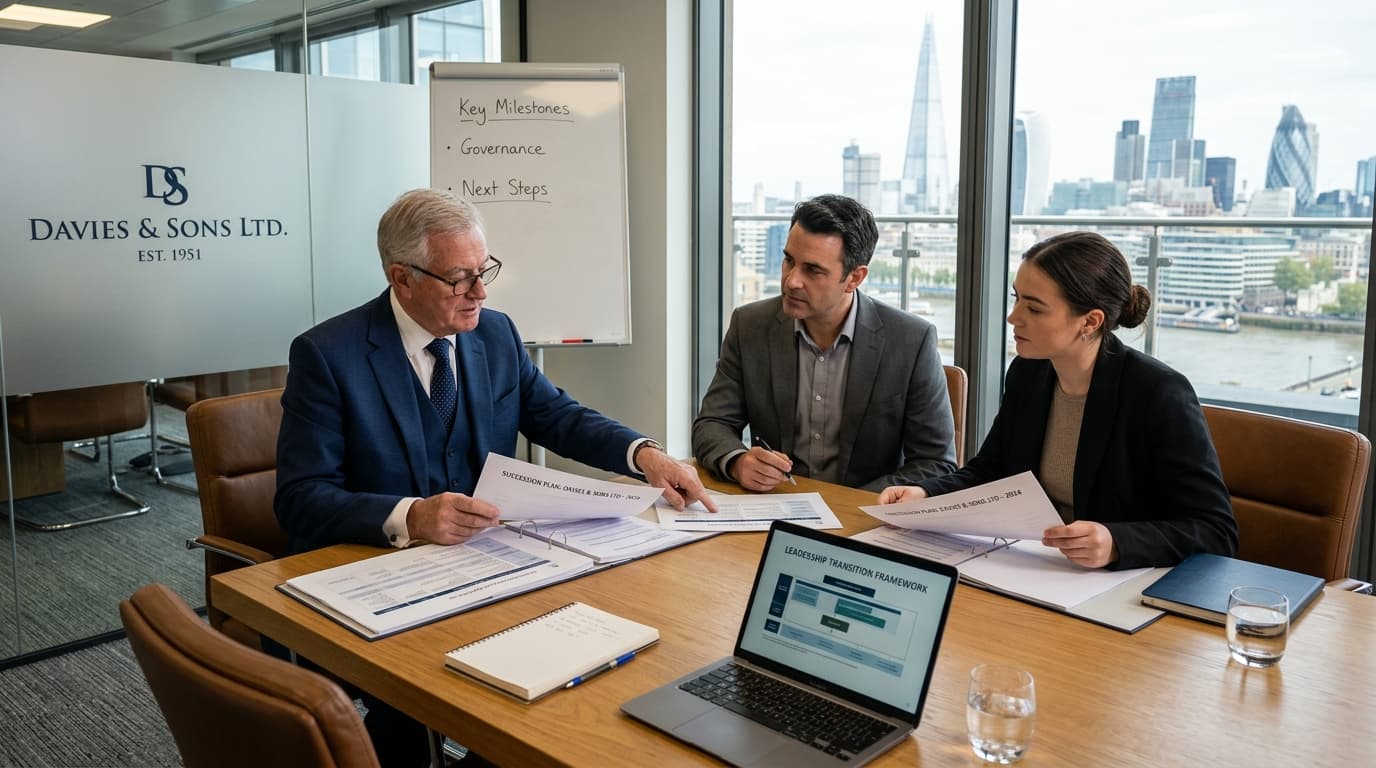
SSAS Succession Planning: Passing the Pension Wealth to the Next Generation
For many business owners, their SSAS is one of their largest assets — potentially worth millions by the time they retire. Planning what happens to this wealth upon death is a critical element of overall estate planning that is often left too late. An SSAS has uniquely favourable treatment from an inheritance tax perspective, and understanding how to optimise this treatment can make an enormous difference to the wealth passed to the next generation.
The Inheritance Tax Position of an SSAS
One of the most powerful features of a pension scheme — including an SSAS — is its position outside the member's estate for inheritance tax (IHT) purposes. Unlike most other assets, the value of pension scheme funds does not form part of the member's estate on death. This means that, subject to the rules in force at the time of death, pension funds can pass to beneficiaries free from the 40% inheritance tax charge that applies to most estates above the nil-rate band.
Important note: the government has announced changes to the IHT treatment of pension funds, with reforms planned from 2027 that will bring some pension death benefits within the scope of IHT. The detail and implementation of these changes remain subject to consultation and legislation. We recommend taking up-to-date professional advice on the current position.
"Even as the IHT rules around pensions evolve, the SSAS remains one of the most tax-efficient vehicles for intergenerational wealth transfer available to UK business owners. The combination of tax-free growth during life and favourable death benefit treatment is unmatched by almost any other legal structure." — Matt Lenzie
Death Benefits from an SSAS: The Options
When an SSAS member dies, the trustees have considerable flexibility in how the death benefits are paid. The options depend on whether the member had started drawing pension benefits (crystallised funds) or not (uncrystallised funds).
Uncrystallised funds (member has not started taking pension):
- A lump sum death benefit can be paid to any nominated beneficiary, free of income tax (if the member was under 75 at death)
- The funds can be designated into a beneficiary drawdown arrangement, allowing the beneficiary to draw income over time
- If the member was over 75, income tax applies to benefits drawn by the beneficiary
Crystallised funds (member had started drawing pension via drawdown):
- Remaining drawdown funds can be paid as a lump sum or designated into a beneficiary drawdown arrangement
- If the member was under 75 at death, no income tax applies to a lump sum
- If the member was over 75, income tax applies at the beneficiary's marginal rate
Nomination of Beneficiaries
Every SSAS member should complete and keep up to date a "nomination of beneficiaries" (also called an "expression of wishes") form. This document advises the trustees — who have discretion over death benefit payments — of the member's preferred beneficiaries.
Crucially, the trustees are not legally bound to follow the nomination. The discretionary nature of death benefits is what keeps them outside the member's estate for IHT purposes. However, trustees will almost always follow a properly completed and up-to-date nomination unless there are compelling reasons not to.
Key practical points:
- Review and update your nomination whenever your personal circumstances change (marriage, divorce, birth of children, death of a nominated beneficiary)
- Ensure the nomination clearly identifies each beneficiary (full name, date of birth, relationship)
- Specify the proportions you wish to be paid to each beneficiary
- Consider including a "longstop" beneficiary in case all primary beneficiaries predecease you
Bringing Family Members into the SSAS
One of the most powerful succession planning tools available to SSAS trustees is the ability to add family members — including adult children — as members of the scheme. A director's adult children who work in the business can become SSAS members, allowing the scheme to span generations.
Adding the next generation to the SSAS serves several purposes:
- Future employer contributions can build up the younger generation's sub-funds within the same scheme
- Death benefits can be designated directly into the children's drawdown funds, creating a "cascading pension" that may remain within the pension tax wrapper across multiple generations
- The younger generation becomes involved in SSAS trustee governance, building familiarity with the scheme before they need to manage it as the older generation retires
SSAS Property and Succession: Specific Considerations
Where the SSAS holds commercial property, succession planning requires additional thought:
- Connected party leases: If the SSAS property is leased to the family business and the next generation is taking over the business, the connected party relationship continues — but the lease must remain on commercial terms throughout
- In specie transfer on death: In some circumstances, it may be possible to transfer SSAS property directly to beneficiaries rather than selling — avoiding the need for a potentially disadvantageous sale
- Continuity of trustees: When a trustee-member dies, the other trustees continue to manage the scheme. Ensure there are sufficient trustees to continue scheme management and consider appointing successor trustees in advance
- Scheme wind-up timeline: If the intention is to wind up the SSAS on the death of the last member, ensure the scheme's property assets can be sold or transferred within the required timeframe
Coordinating SSAS Succession with Overall Estate Planning
SSAS succession planning should not be done in isolation. It must be coordinated with the member's overall estate plan, including:
- Will and trust arrangements for assets outside the pension scheme
- Business succession plans (shareholder agreements, business wills)
- IHT planning strategies for assets within the estate
- Life insurance arrangements (often held in trust outside the estate)
A comprehensive estate plan — coordinated across the SSAS, the business, and personal assets — is the gold standard of succession planning for business owners. For a broader view of SSAS long-term strategy, read our guide on SSAS long-term wealth strategy. For guidance on the retirement income transition, see our article on SSAS retirement income from property.
Key Takeaways
- SSAS funds fall outside the member's estate for IHT purposes (subject to ongoing rule changes — take current advice)
- Keep nomination of beneficiaries forms updated and clearly specified
- Adding adult children to the SSAS enables multi-generational pension planning
- SSAS property succession requires specific planning for connected party leases and trustee continuity
- Coordinate SSAS succession with the overall estate plan — do not plan in silos
Plan Your SSAS Succession Strategy
Succession planning for an SSAS with significant property assets requires expertise across pensions, property, and estate planning. Contact our team to discuss how to structure your scheme for the long term, or read our guide on SSAS property exit strategies.
About the Author
Matt Lenzie
Former Banker & Corporate Finance Partner
Matt Lenzie is a former banker and corporate finance partner with extensive experience in pension-backed property transactions. He founded SSAS Property Finance to help company directors and trustees navigate the complexities of commercial property acquisition through Small Self-Administered Schemes.