The SSAS 5-Year Repayment Rule Explained
Written by Matt Lenzie
Former Banker & Corporate Finance Partner
What the 5-Year Rule Requires
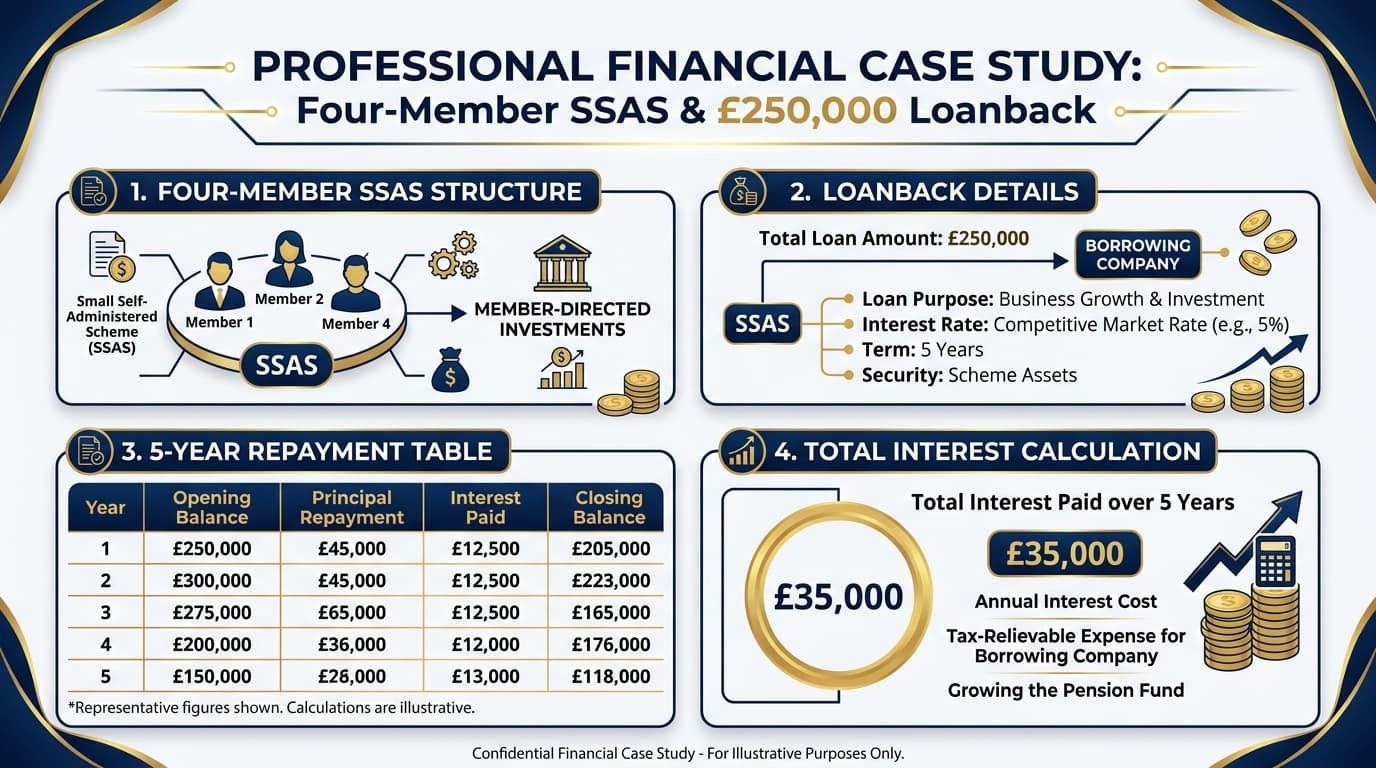
HMRC requires that any loanback from an SSAS to its sponsoring employer must be fully repaid within five years of the date the loan was made. This isn't just a commercial preference — it's a statutory condition for the loanback to qualify as a "permitted loanback" rather than an unauthorised payment.
The five-year period runs from the date the loan is first drawn down. If the loan is drawn in tranches, HMRC's position is that each tranche creates its own five-year repayment obligation — though in practice, administrators typically structure the overall loan agreement to expire within five years of first drawdown.
For a complete overview of all loanback compliance requirements, see our guide to SSAS loanback rules.
Why the 5-Year Limit Exists
The five-year maximum term reflects HMRC's policy that loanbacks should be short-term working capital tools, not permanent financing arrangements. The concern is that a long-term or indefinite loanback would effectively provide a permanent and potentially cheap source of capital to the employer at the expense of the scheme's investment performance.
By mandating repayment within five years, HMRC ensures that pension scheme assets are returned to the scheme relatively quickly and available for long-term investment for the benefit of pension members.
Equal Instalments: The Repayment Structure
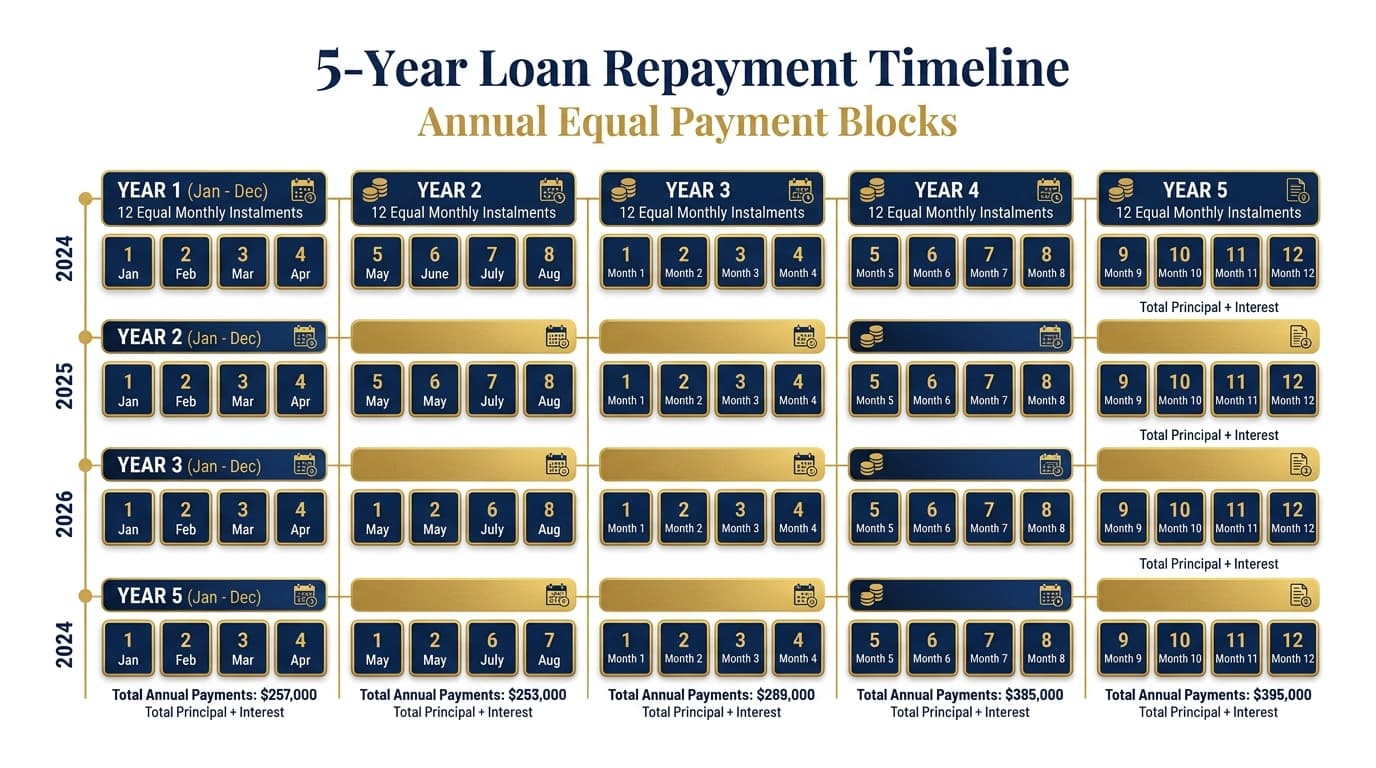
The five-year rule doesn't just require repayment within five years — it requires repayment in equal instalments. An interest-only loan with a balloon capital repayment at the end of year five is not compliant.
In practice, this means:
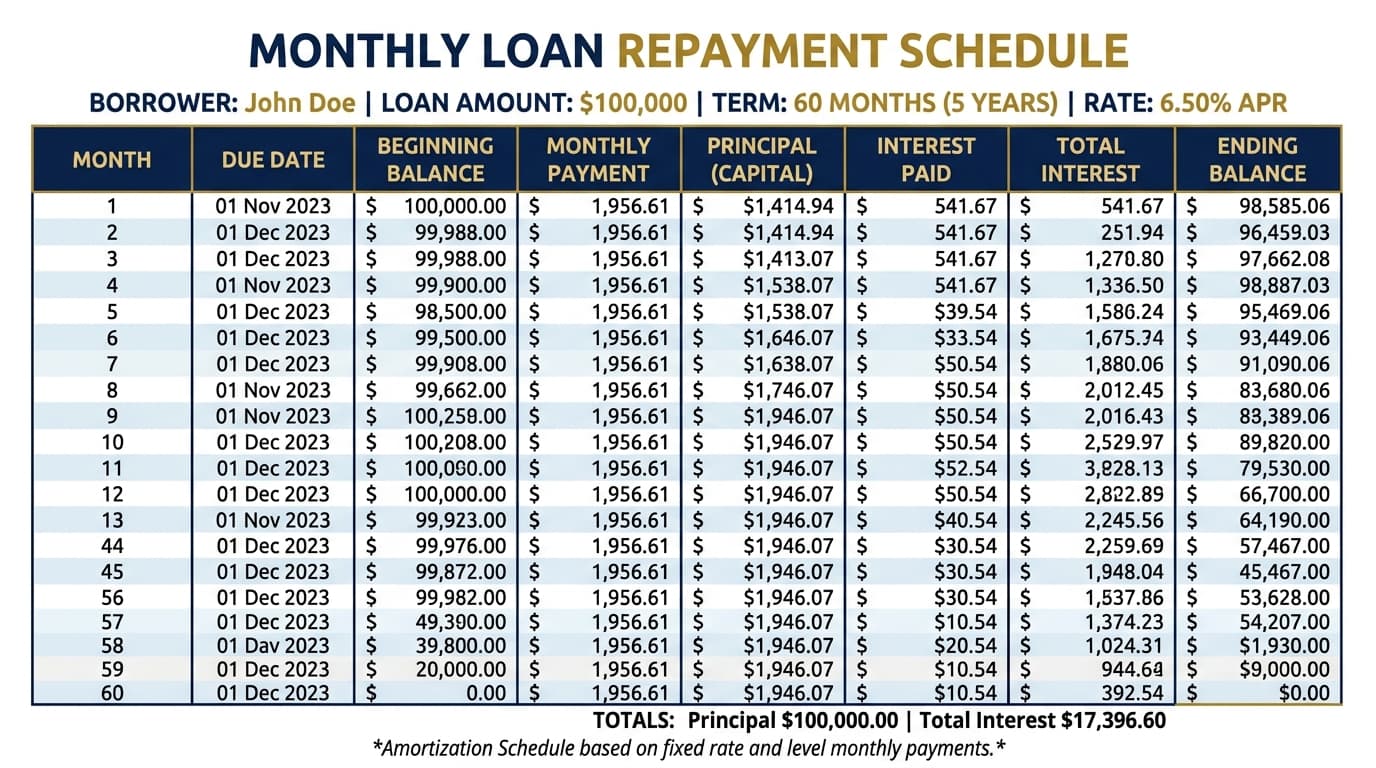
- A five-year loan of £120,000 requires capital repayments of £24,000 per year (or £2,000 per month)
- Plus interest on the reducing balance at a rate no less than base rate plus 1%
The instalments can be monthly, quarterly, or (in some cases) annual — the key requirement is that they are equal capital instalments, not purely interest payments.
For a detailed discussion of how to build the repayment schedule, see our guide to SSAS loanback repayment schedules.
Can the Loanback Be Extended Beyond 5 Years?
This is the question we're most frequently asked about the five-year rule. The strict answer from HMRC guidance is that the original loan must be for a maximum five-year term. However, a new loanback can be arranged when the original one is repaid — subject to the scheme having the assets to do so and all six compliance conditions being re-satisfied.
Matt Lenzie notes: "What we sometimes see is businesses repaying a loanback at year five and immediately drawing a new one. This is technically compliant provided the new loan is genuinely a new arrangement with fresh documentation, security, and compliance — not a simple 'roll-over' of the original loan."
HMRC is alert to loanbacks that are nominally repaid but immediately re-drawn — particularly where the "repayment" and "new drawdown" occur on the same day or within very close proximity. A genuine clean repayment followed by a properly documented new loan after a reasonable interval is preferable.
What Happens If the Business Cannot Repay?
If the sponsoring employer misses a loanback instalment or is unable to repay the loan within five years, the trustees must take action. Simply allowing the loan to run beyond five years without renegotiation turns the outstanding balance into a non-compliant loanback — triggering unauthorised payment charges.
Trustees' options when repayment is at risk:
Option 1: Enforce the Security
The loanback should be secured by a first charge over employer assets. If the business defaults, trustees have the legal right (and a fiduciary obligation to scheme members) to enforce that security to recover the scheme's funds. This is the nuclear option and would typically be a last resort.
Option 2: Formally Renegotiate Within the Term
If repayment difficulties are anticipated before the five-year term expires, the trustees and employer can renegotiate the terms — for example, by capitalising overdue interest or adjusting the instalment schedule. However, any renegotiation that effectively extends the loan beyond five years risks non-compliance.
Option 3: Treat the Balance as a Pension Contribution
In some distress scenarios, the employer may make an additional pension contribution equal to the outstanding loanback balance, which offsets the debt. This requires careful tax and legal advice and is not a simple fix.
Record-Keeping and Monitoring Requirements
Trustees are responsible for monitoring compliance with the five-year rule. Practical requirements include:
- A formal loan agreement signed by both parties, specifying the start date, term, instalment dates, and amounts
- A repayment schedule appended to the loan agreement
- Regular reconciliation of payments received against the schedule
- Trustee meeting minutes recording any variation to the original terms
- The loan balance maintained as an asset in the annual SSAS accounts
Your SSAS administrator should be providing this monitoring as a core service. If they are not, that's a governance red flag.
The Interaction with the 50% Cap
As the loanback is repaid over five years, the scheme's cash increases and the loanback receivable decreases. This doesn't directly change the net asset value (since the receivable is replaced by cash), but it does affect the scheme's liquidity profile.
If the business repays the loanback in full and the trustees want to make a new one, they need to check whether net scheme assets have changed sufficiently to affect the 50% cap calculation.
For the full calculation methodology, see our guide to the SSAS 50% LTV cap.
Loanback and Property Mortgages: Combined Timing
Where an SSAS has both a property mortgage and a loanback, timing the five-year repayment of the loanback alongside the mortgage term requires careful planning. If the loanback matures before the mortgage is paid down, the scheme will need to either:
- Reinvest the loanback repayments in other assets
- Make a new loanback (if compliant)
- Use the repaid capital as deposit for a new property
Building this timeline into the scheme's investment strategy from the outset avoids awkward choices later.
Key Takeaways
- Loanbacks must be fully repaid within five years — no exceptions under current HMRC rules
- Repayment must be in equal instalments — interest-only with a balloon payment is not permitted
- Consecutive loanbacks are possible (new loan after repaying the old one) but must be genuinely separate arrangements
- If the business can't repay, trustees must act before the five-year term expires to avoid non-compliance
- Robust documentation and ongoing monitoring by your SSAS administrator are essential
Get Help Structuring Your SSAS Loanback
Our team can help you structure a compliant loanback with appropriate repayment terms that work for both the business and the pension scheme.
Contact us today for a confidential discussion, or use our SSAS mortgage calculator to compare loanback and mortgage financing options.
About the Author
Matt Lenzie
Former Banker & Corporate Finance Partner
Matt Lenzie is a former banker and corporate finance partner with extensive experience in pension-backed property transactions. He founded SSAS Property Finance to help company directors and trustees navigate the complexities of commercial property acquisition through Small Self-Administered Schemes.