SSAS Loanback Rules Explained
Written by Matt Lenzie
Former Banker & Corporate Finance Partner
What Is an SSAS Loanback?
An SSAS loanback is a formal loan made by your Small Self-Administered Scheme pension trust to the sponsoring employer. It allows a business to access capital from its own pension scheme — subject to strict HMRC rules designed to ensure the transaction is genuinely commercial and protects the pension scheme's members.
Used correctly, the loanback is one of the most distinctive and valuable features of the SSAS structure. A business can access working capital, fund acquisitions, or finance property development by borrowing from its own pension scheme rather than from a bank — often at more competitive rates and with greater flexibility.
In our experience, loanbacks are most commonly used when a business needs capital quickly and the bank process would be too slow, or when the business cannot access conventional bank financing but the pension scheme has sufficient assets to lend against security.
The Six Core HMRC Loanback Requirements
HMRC specifies six conditions that must ALL be met for a loanback to be a "permitted loanback" rather than an unauthorised payment. Failing any one of them risks severe tax consequences.
1. The 50% Cap
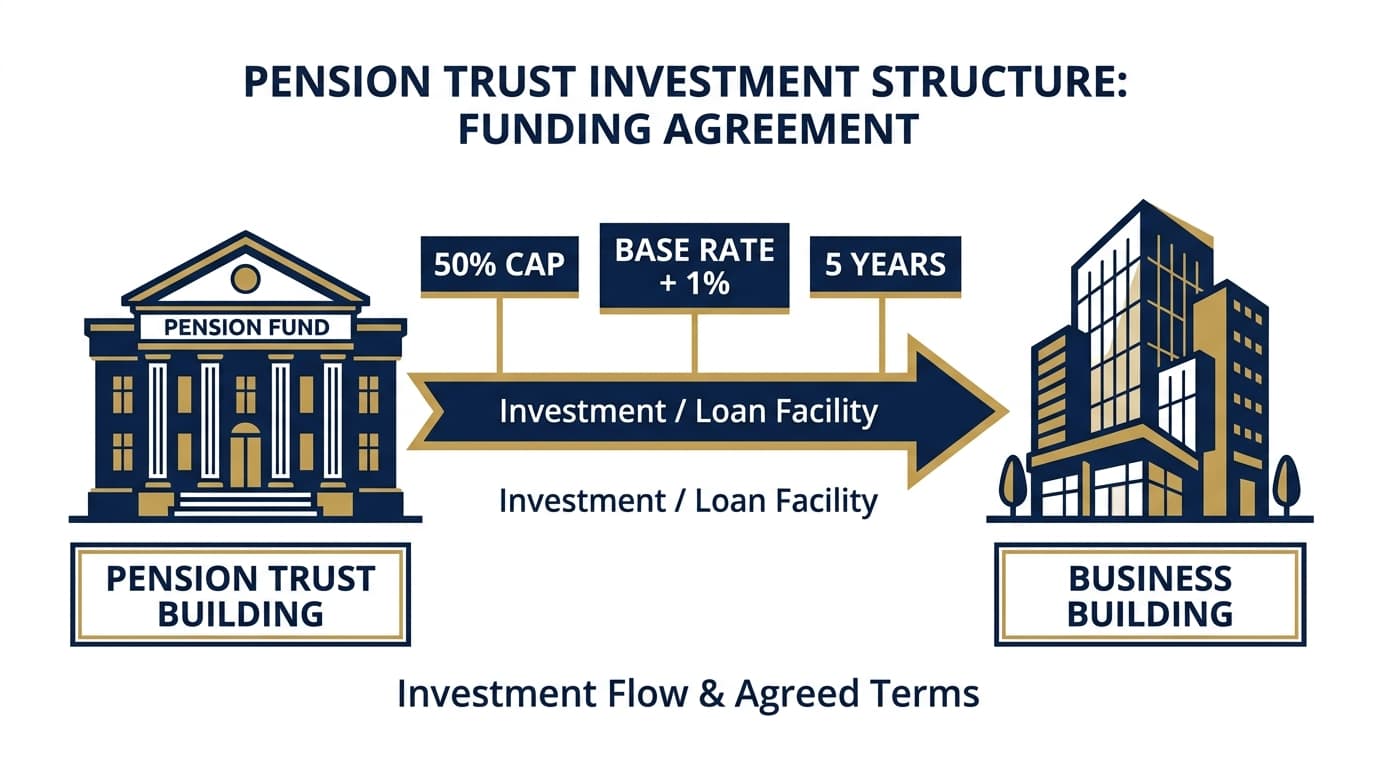
The total amount loaned to the employer must not exceed 50% of the net market value of the scheme's assets at the time of the loan. This is calculated in the same way as the SSAS borrowing cap — 50% of net asset value.
If your scheme has net assets of £800,000, the maximum loanback is £400,000. This is a hard limit.
2. The Loan Must Bear Interest
The loanback must charge interest at a rate no less than 1% above the official rate (also called "base rate plus 1%"). The official rate is set by HMRC — currently 2.25% (2025), making the minimum loanback interest rate 3.25%.
The interest rate cannot be "soft" or less than this minimum. Doing so would constitute an unauthorised benefit to the borrowing employer. For a detailed discussion of the interest rate rules, see our guide to base rate plus one percent SSAS rules.
3. Maximum 5-Year Term
The loan must be repaid within five years of the date it is made. It cannot be an indefinite facility or a revolving credit arrangement. Extensions beyond the initial five-year term may be possible but must be agreed in advance and documented properly — they do not automatically extend by default.
For more on managing the repayment timeline, see our guide to the SSAS 5-year repayment rule.
4. Repayment by Equal Instalments
The loan must be repaid in equal instalments across the term. You cannot structure it as interest-only with a bullet repayment at the end — the capital must be amortised equally throughout the loan period.
For example, a £200,000 loan over 5 years requires £40,000 of capital repayment per year, payable in monthly or quarterly instalments.
For a detailed look at how to structure the repayment schedule, see our guide to SSAS loanback repayment schedules.
5. Security Must Be Provided
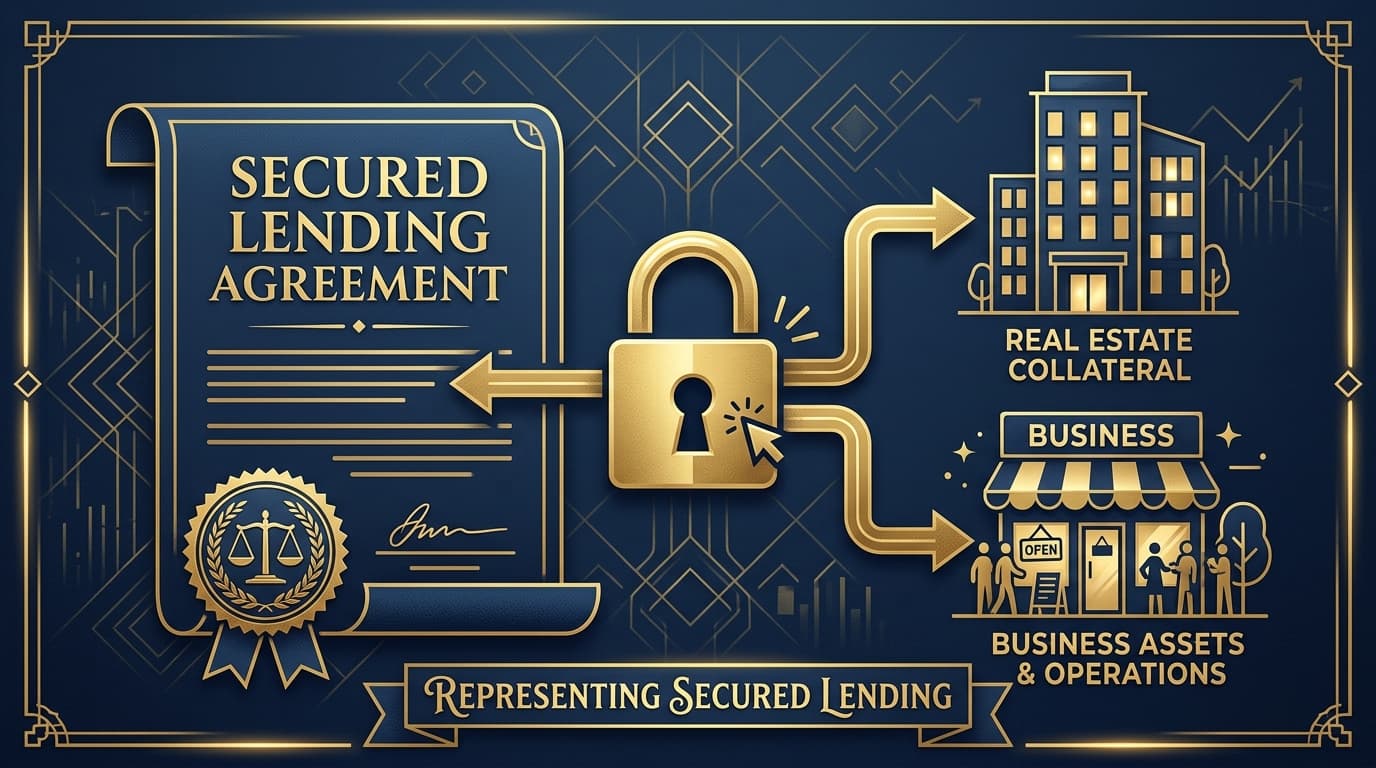
The loanback must be secured by a first charge over assets of the borrowing employer (or a connected person) with a value at least equal to the loan amount. The security must be genuine and realisable — not a nominal or worthless charge.
For a full discussion of acceptable security types, see our guide to SSAS loanback security requirements.
6. The Employer Must Be the Sponsoring Employer
Loanbacks can only be made to the "sponsoring employer" — the employer associated with the SSAS. Loans to unconnected third parties, personal loans to members, or loans to unconnected businesses are not permitted and would constitute unauthorised payments.
What Happens If You Breach the Rules?
Any loanback that fails to meet these six conditions is treated as an "unauthorised payment" by HMRC. The consequences are serious:
- Unauthorised payments charge: 40% tax on the value of the non-compliant payment
- Unauthorised payments surcharge: A further 15% charge if the payments exceed 25% of the scheme fund
- Potential scheme de-registration in extreme cases
- All trustees and the employer may be jointly liable
Matt Lenzie notes: "We've seen situations where a loanback was initially compliant but then fell out of compliance because the employer missed instalments and the trustees didn't take action. HMRC doesn't distinguish between accidental and deliberate breaches — the tax charge applies either way."
Loanback vs. Bank Borrowing: The Key Differences
Loanbacks offer several advantages over bank borrowing for the right business:
- Interest flows to the pension: Unlike bank interest (which is a cost to the business and income to the bank), loanback interest returns to the pension scheme where it grows tax-free
- No credit check on the business: The lender is the pension scheme, not a bank — the "credit decision" is made by the trustees
- Speed: A loanback can be arranged faster than bank finance once the trustees agree
- No bank covenants: The terms are set by the trustees within HMRC rules
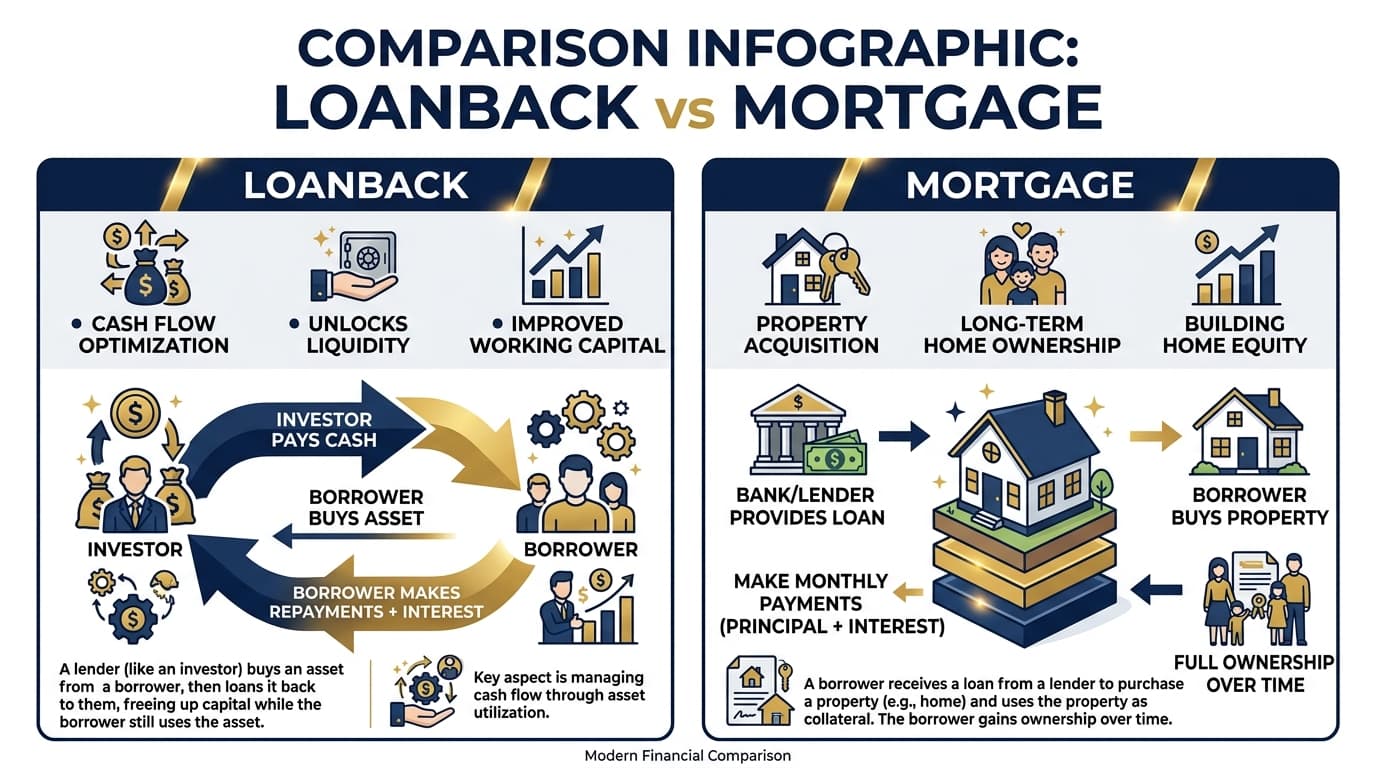
The key constraint is the 50% cap — your pension scheme may not have sufficient assets to lend the amount your business needs. For a detailed comparison, see our guide to SSAS loanback vs mortgage.
The Role of the SSAS Administrator
Every loanback should be set up and monitored with the involvement of your SSAS administrator. They will:
- Confirm the 50% cap calculation before the loan is made
- Prepare the loan documentation (loan agreement, charge documentation)
- Monitor repayments and flag any missed payments to trustees
- Maintain the loanback as a scheme asset in the annual accounts
Attempting to arrange a loanback without proper SSAS administrator involvement is a significant compliance risk.
Loanbacks and the Scheme's Investment Strategy
From the scheme's perspective, a loanback is an investment — the scheme is deploying its assets into a loan receivable that earns interest. Like any investment decision, trustees must satisfy themselves that it is appropriate for the scheme's overall investment strategy and risk profile.
SSAS trustees have a fiduciary duty to act in the interests of all members. If one member's business receives the loanback, other members' pension funds are exposed to that business's credit risk. This is why the security requirement and the 50% cap are so important — they protect the scheme from catastrophic loss on the loanback.
Key Takeaways
- A compliant loanback must meet all six HMRC conditions simultaneously — there's no "partial compliance"
- The 50% cap limits the total loanback to half the scheme's net asset value
- Interest must be charged at minimum base rate plus 1%
- Repayment must be in equal instalments over a maximum of five years
- First charge security over employer assets is mandatory
- Always involve your SSAS administrator and get the documentation right from the start
Arrange a Compliant SSAS Loanback
Our team has structured hundreds of SSAS loanbacks across a wide range of business types and transaction sizes. We can help you understand whether a loanback is the right tool for your needs and ensure it's structured in full compliance with HMRC rules.
Contact us today for a confidential consultation, or explore our SSAS property finance page to understand all the ways an SSAS can support your business.
About the Author
Matt Lenzie
Former Banker & Corporate Finance Partner
Matt Lenzie is a former banker and corporate finance partner with extensive experience in pension-backed property transactions. He founded SSAS Property Finance to help company directors and trustees navigate the complexities of commercial property acquisition through Small Self-Administered Schemes.