SSAS Loanback Security Requirements
Written by Matt Lenzie
Former Banker & Corporate Finance Partner

Why Security Is Required
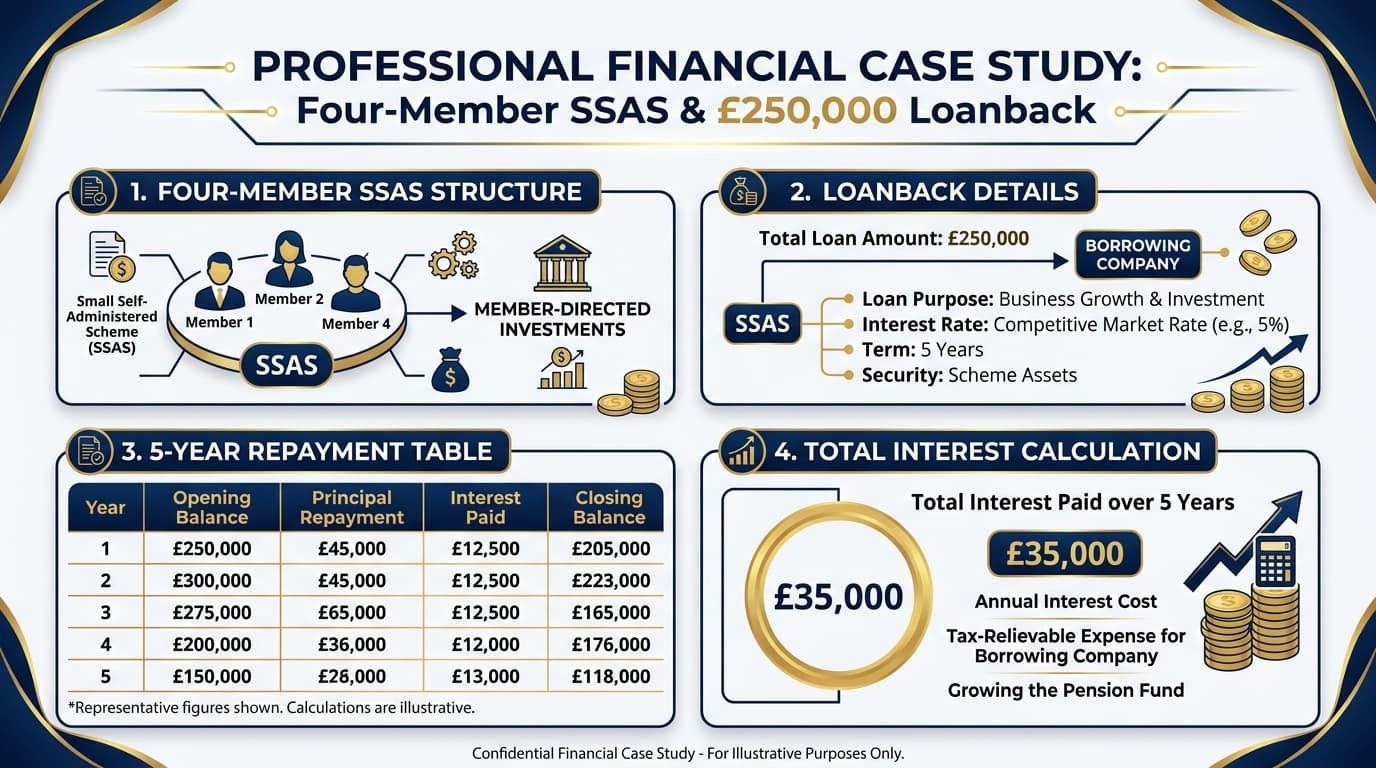
HMRC requires that every SSAS loanback be secured by a first charge over assets of the borrowing employer (or a connected person) to protect the pension scheme's members. This condition exists because the loanback is, in effect, a loan from pension fund members' retirement savings to the business of one or more of those members.
Without adequate security, a business failure could wipe out a significant portion of the pension scheme's assets — potentially devastating for all members, including those who had nothing to do with the decision to lend.
For a full overview of all loanback requirements, see our guide to SSAS loanback rules.
The First Charge Requirement
HMRC specifically requires that the security must be a first charge — not a second charge or debenture ranking behind other creditors. This means:
- The SSAS must have priority over other secured creditors in relation to the specific charged asset
- If the asset is already subject to a first charge (e.g., a commercial property with an existing mortgage), it cannot serve as first charge security for the loanback unless the existing charge is discharged first
- A second charge over a property would not satisfy HMRC's requirement
Matt Lenzie notes: "We regularly see businesses assume they can use their company premises as loanback security, not realising the bank already holds a first charge over it. Finding this out after agreeing the loanback terms causes significant delays and can jeopardise the transaction."
Acceptable Security Types
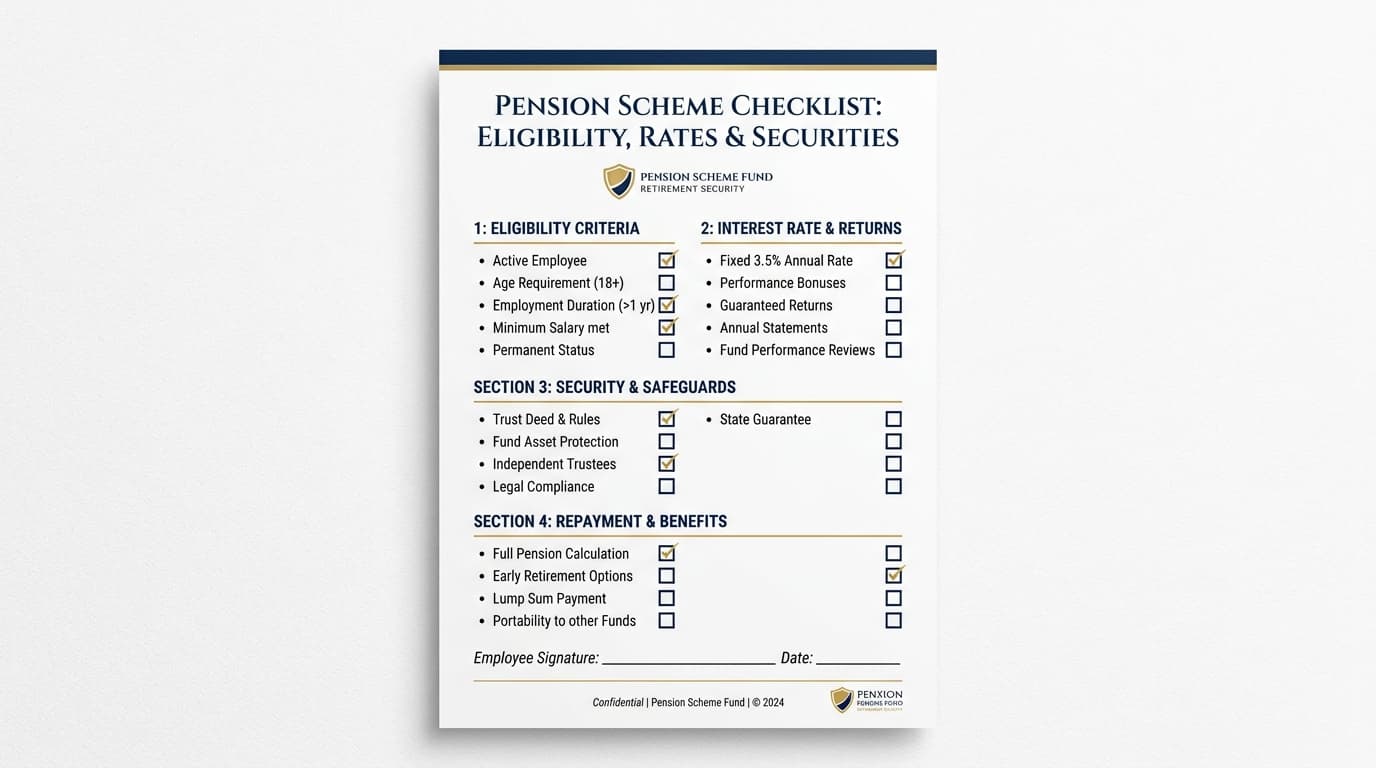
The security must be over an asset that is genuinely realisable and has a value at least equal to the loanback amount. Acceptable security types include:
Commercial Property
The most common and robust form of loanback security. A first legal charge is registered at Land Registry against a commercial property owned by the employer. The property must be free of prior charges or have sufficient equity above any existing charge to cover the full loanback value.
If the SSAS also holds the property under a sale-and-leaseback arrangement, using it as loanback security creates a circular structure that requires careful legal drafting to avoid conflicts between the mortgage and loanback documentation.
Residential Property (Business Owner's Home)
Less commonly used, but a first or second charge over a director/shareholder's residential property can be accepted in some circumstances. HMRC permits this provided the value of equity in the property equals or exceeds the loan value and the charge is properly documented. Note that Consumer Credit Act considerations may apply to residential property charges taken by private individuals.
Fixed and Floating Charges Over Business Assets
A debenture granting a fixed and floating charge over all the company's assets can serve as security, provided no prior ranking charge exists. However, floating charges are generally considered weaker security than fixed charges because the charged assets can change over time.
Other Fixed Assets
Plant, machinery, vehicles, and other significant fixed assets can in principle serve as security, though their use is less common due to depreciation, liquidity concerns, and valuation complexity.
Security Value Requirements
The security must be valued at least equal to the loanback amount. Trustees should obtain a professional valuation of the proposed security before the loan is made to ensure this requirement is satisfied. Key points:
- For property: A RICS-qualified surveyor should provide a formal market valuation
- For business assets: A qualified valuation by an accountant or specialist valuer may be required
- The valuation should be recent — ideally within the last 3-6 months
- The value of the security must be equal to or greater than the loanback amount (not just the initial drawdown)
Registering the Charge
Once agreed, the security must be formally registered:
- Property charges: Registered at HM Land Registry as a legal charge or mortgage
- Company debentures: Registered at Companies House within 21 days of creation
- Other charges: Documentation should be executed as a deed and dated before the loan is drawn
The SSAS trust, not an individual trustee, should be the chargee (the party in whose favour the charge is created). Legal documentation should clearly reflect the pension trust as the secured creditor.
What Happens to Security on Repayment
When the loanback is fully repaid, the security charge should be formally released and discharged:
- Property charges: Discharged at Land Registry
- Company debentures: Recorded as satisfied at Companies House
Failure to release charges after repayment creates unnecessary encumbrances on the employer's assets and can cause complications on future transactions.
Common Security Mistakes
In our experience, the most common security-related mistakes in SSAS loanbacks are:
- Assuming an unencumbered property exists when it doesn't: Always verify the title and existing charges before relying on a property for loanback security
- Undervaluing the security: A valuation that turns out to be too high means the security may not fully cover the loan in default
- Using personal assets without proper legal documentation: Oral arrangements or informal security won't satisfy HMRC's requirements
- Failing to register the charge: An unregistered charge may be unenforceable against third parties
- Not re-checking security value over the loan term: If asset values fall significantly, the security may no longer cover the outstanding loan
Security and the SSAS Administrator
Your SSAS administrator should review and approve the proposed security before the loanback proceeds. They will typically:
- Request evidence of the asset value (valuation report)
- Confirm no prior charges exist on the proposed security
- Oversee execution of the charge documentation
- Maintain a record of the security as part of the scheme's asset register
For a full compliance checklist covering security and all other loanback requirements, see our SSAS loanback compliance checklist.
Key Takeaways
- HMRC requires a first charge over employer assets as mandatory security for all SSAS loanbacks
- The most common security is commercial property, a debenture over business assets, or residential property
- Security value must equal or exceed the loan amount — obtain a professional valuation before proceeding
- Charges must be properly documented and registered to be enforceable
- Verify no prior charges exist on the proposed security before the loanback is agreed
Get Your Loanback Security Right from the Start
Incorrect or inadequate security can invalidate an otherwise compliant loanback. Our team can help you identify appropriate security, arrange valuations, and ensure documentation meets HMRC requirements.
Contact us today to discuss your loanback security requirements, or read our complete guide to SSAS loanback rules.
About the Author
Matt Lenzie
Former Banker & Corporate Finance Partner
Matt Lenzie is a former banker and corporate finance partner with extensive experience in pension-backed property transactions. He founded SSAS Property Finance to help company directors and trustees navigate the complexities of commercial property acquisition through Small Self-Administered Schemes.