SSAS Debt Service Coverage Ratios Explained
Written by Matt Lenzie
Former Banker & Corporate Finance Partner
What Is a Debt Service Coverage Ratio?
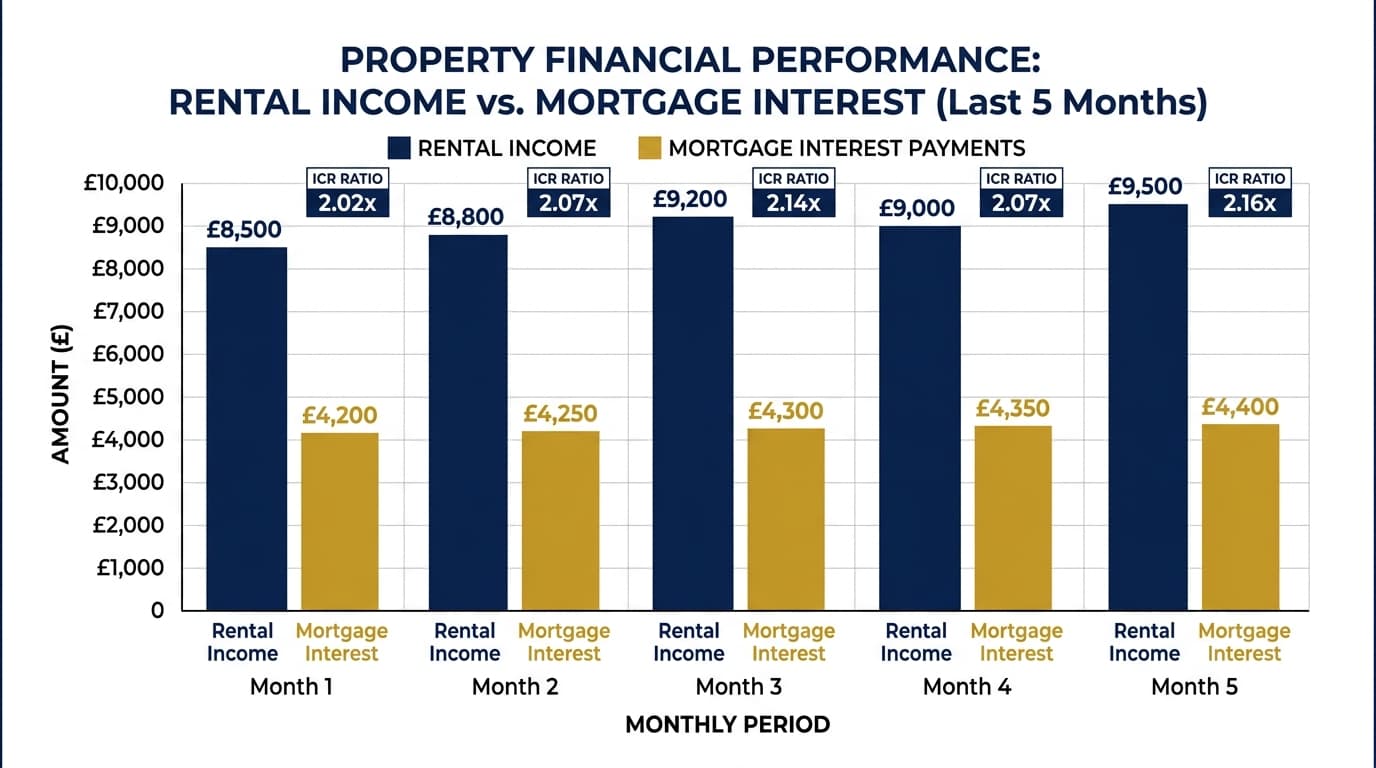
A debt service coverage ratio (DSCR) — more commonly called an interest coverage ratio (ICR) in SSAS and commercial mortgage contexts — measures how comfortably the income from a property covers its mortgage payments. It's one of the two primary underwriting tests for any SSAS mortgage (the other being the HMRC 50% LTV cap).
The ICR tells a lender: if this property's rent is the only income available to service this mortgage, how much of a buffer is there before the borrower can't meet payments?
In our experience, the ICR test is often the binding constraint on how much an SSAS can borrow against a particular property — especially in today's higher interest rate environment where higher rates reduce the maximum loan supportable by a given rent level.
How the ICR Is Calculated
The formula is straightforward:
ICR = Annual Net Rental Income ÷ Annual Interest Payments
Or rearranged to find the maximum loan:
Maximum Loan = Annual Net Rental Income ÷ (Interest Rate × Required ICR)
Example: A property generates £30,000 per year in rent. The lender requires a 1.25× ICR and will lend at 6.5% interest:
Maximum loan = £30,000 ÷ (6.5% × 1.25) = £30,000 ÷ 8.125% = £369,230
If the property is worth £450,000 at 70% LTV = £315,000, then in this case the LTV test (£315,000) is the binding constraint — the ICR would support a higher loan. But if the interest rate were 8%:
Maximum loan at 8%, ICR 1.25× = £30,000 ÷ 10% = £300,000 — now the ICR is the binding constraint.
What ICR Thresholds Do SSAS Lenders Use?
Different lenders apply different ICR thresholds. The most common range is 1.25× to 1.50×:
- 1.25× — Minimum threshold used by most SSAS lenders for standard property types with strong tenants
- 1.35-1.40× — Common for owner-occupied properties where the SSAS is letting to the sponsoring employer
- 1.50× — Applied by more conservative lenders, or for higher-risk property types (e.g., secondary retail)
Matt Lenzie notes: "In 2023-2024 as interest rates rose sharply, many SSAS deals became challenging on ICR tests even where they'd been straightforward at 2022 rates. Lenders held their ICR thresholds but the higher denominator compressed maximum loan sizes significantly."
What "Income" Does the Lender Use?
Different lenders may use different definitions of rental income for the ICR calculation:
Contracted Rent
The actual rent stated in the lease agreement. This is the most common basis for ICR calculation for properties with existing tenants and leases.
Estimated Rental Value (ERV)
For vacant properties or properties where the existing rent is above or below market, lenders may use the ERV as assessed by the RICS valuer. This is a more conservative approach when actual rent is above market (as it suggests the rent may not be sustainable).
Net vs. Gross Rent
Some lenders use gross rent (before deductions); others use net effective rent (accounting for rent-free periods, break clauses, and void assumptions). For properties with significant vacancy or upcoming lease events, this distinction can be material.
For SSAS schemes where the sponsoring employer is the tenant, lenders focus carefully on whether the rent level is genuinely arms-length and sustainable given the employer's financial profile.
The ICR in Today's Interest Rate Environment
With UK bank base rate stabilising at elevated levels compared to the historically low rates of 2015-2021, ICR tests have become more stringent in practice:
- At 3% rates with 1.25× ICR: Maximum loan supported per £1,000 of annual rent = £1,000 ÷ (3% × 1.25) = £26,667
- At 6% rates with 1.25× ICR: Maximum loan supported per £1,000 of annual rent = £1,000 ÷ (6% × 1.25) = £13,333
- At 8% rates with 1.25× ICR: Maximum loan supported per £1,000 of annual rent = £1,000 ÷ (8% × 1.25) = £10,000
This illustrates why higher rates don't just mean higher payments — they also reduce the maximum loan available from a given property's rental income.
Use our SSAS mortgage calculator to model the ICR test for your specific property and target loan amount.
Strategies When the ICR Is the Binding Constraint
If the ICR test is preventing you from borrowing as much as you'd like, there are several approaches:
Increase the Rent
If the existing rent is below market (common in older leases), negotiating an upward rent review or re-leasing at market rent increases the ICR-supportable loan. For owner-occupied properties, ensure the rent paid by the sponsoring employer genuinely reflects market rates.
Reduce the Loan
Borrowing less — and funding more from scheme cash — reduces the interest burden and improves the ICR. This requires more liquidity in the scheme.
Extend the Lease Term
A longer, secure lease improves lender confidence and may allow a lower ICR threshold to be applied, increasing the maximum loan.
Select a Lender With Lower ICR Requirements
ICR thresholds vary between lenders. A lender applying 1.25× will support a larger loan than one applying 1.50×. Our lender panel covers the range of SSAS specialist lenders with different ICR requirements.
DSCR vs. ICR: The Difference for Capital Repayment Mortgages
For interest-only mortgages, the ICR test covers just the interest element. For capital-and-interest mortgages, lenders may apply a full DSCR test that covers both interest and capital repayments. This is a higher hurdle and typically results in a lower maximum loan.
Most SSAS schemes prefer interest-only mortgages precisely because they allow a larger loan for a given rental income, preserving scheme cash flow and allowing the property asset to grow in value over the term.
Key Takeaways
- The ICR measures how many times the rental income covers mortgage interest — typically 1.25-1.50× required by lenders
- Higher interest rates reduce the maximum loan supportable by a given rental income
- Lenders may use contracted rent or ERV — know which your lender applies
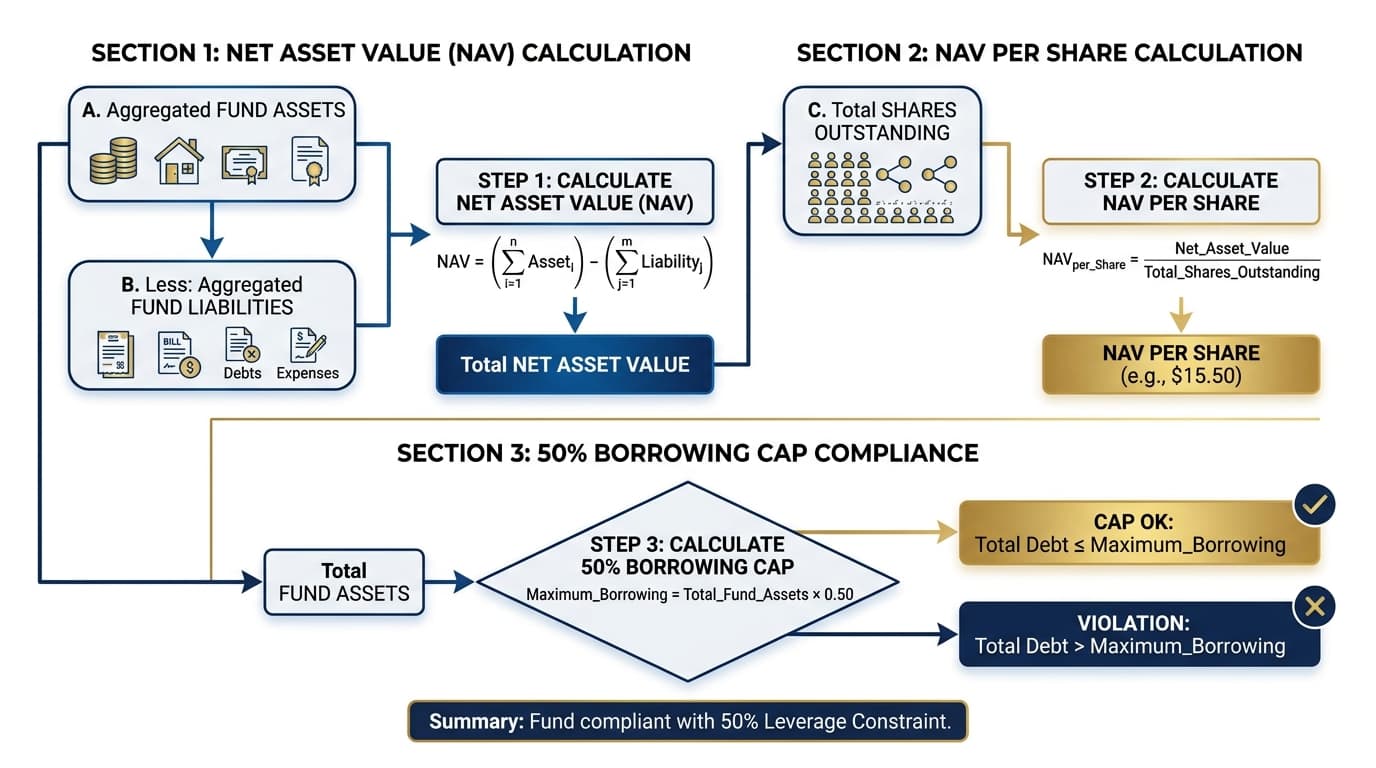
- The ICR test and the HMRC 50% cap are both binding — your effective maximum loan is the lower result
- Strategies to improve ICR include increasing rent, reducing the loan, extending the lease, or selecting a lower-threshold lender
Model Your Property's ICR
Our SSAS mortgage calculator includes ICR modelling for your specific property and loan. Or speak to our team directly to assess whether your target property meets lender affordability criteria.
Contact us today for a no-obligation assessment of your SSAS property financing options.
About the Author
Matt Lenzie
Former Banker & Corporate Finance Partner
Matt Lenzie is a former banker and corporate finance partner with extensive experience in pension-backed property transactions. He founded SSAS Property Finance to help company directors and trustees navigate the complexities of commercial property acquisition through Small Self-Administered Schemes.