SSAS Borrowing vs. Cash Purchase: Which Is Better for Your Pension Scheme?
Written by Matt Lenzie
Former Banker & Corporate Finance Partner

A Common Dilemma for Established SSAS Schemes
As an SSAS matures and accumulates assets, trustees sometimes face a choice that may seem obvious but is actually nuanced: should we take out a mortgage to buy this property, or use our existing cash?
In our experience, many trustees default to the cash purchase because it feels simpler and avoids the complexity of mortgage arrangements. But this instinct often leaves returns on the table. Equally, borrowing without clear strategic justification adds risk and cost. The right answer depends on your specific scheme circumstances.
The Case for Cash Purchase
Buying a property outright with scheme cash has genuine advantages:
Simplicity and Speed
A cash purchase can complete in weeks rather than months. No lender due diligence, no valuation commission, no legal work for mortgage documentation. For competitive opportunities, this speed can be decisive.
No Interest Cost
Cash purchases eliminate the monthly mortgage interest burden on the scheme. All rental income flows directly to scheme assets without a portion being allocated to debt service.
No HMRC Borrowing Cap Concerns
Cash purchases don't touch the HMRC 50% borrowing cap. For schemes that are already close to their limit, a cash purchase preserves headroom for loanbacks or future acquisitions.
No Lender Covenants
SSAS mortgages typically include lender covenants — requirements to maintain minimum insurance, restrictions on lease changes without lender consent, etc. Cash purchases are free of these obligations.
The Case for Borrowing
Despite its complexity, borrowing to purchase SSAS property has powerful financial logic:
Leverage Amplifies Returns
The core argument for borrowing is leverage. If a property generates a 6% gross yield and you borrow at 5.5% interest on 70% of the value, the return on your equity portion is substantially higher than the 6% yield on a cash purchase.
Example: £500,000 property, 6% yield = £30,000 rent
- Cash purchase: 6% return on £500,000 invested
- 70% LTV mortgage at 5.5%: Invest £150,000 equity + costs. Annual rent £30,000 less interest £350,000 × 5.5% = £19,250. Net income £10,750 on £150,000 equity = 7.2% return on equity. Plus capital gains accrue on the full £500,000
The return on equity is higher with borrowing when the property yield exceeds the mortgage interest rate — classic positive leverage.
Matt Lenzie notes: "When interest rates are high relative to property yields, the leverage benefit shrinks or disappears. In 2024, we saw many SSAS trustees rationally choose cash purchases because the interest rate environment made borrowing unrewarding on a yield basis."
Preserve Liquidity for Other Opportunities
Deploying cash into a property locks it up. A mortgage preserves liquidity in the scheme for contributions, other investments, loanbacks, or member benefit payments. Schemes that tie up all their liquid assets in property can find themselves cash-starved at inconvenient moments.
Preserve Borrowing Capacity for Loanbacks
If the sponsoring employer might need a loanback, preserving HMRC borrowing headroom (by using cash rather than a mortgage for property) keeps that option open. Conversely, using a mortgage for property preserves cash for a potential loanback.
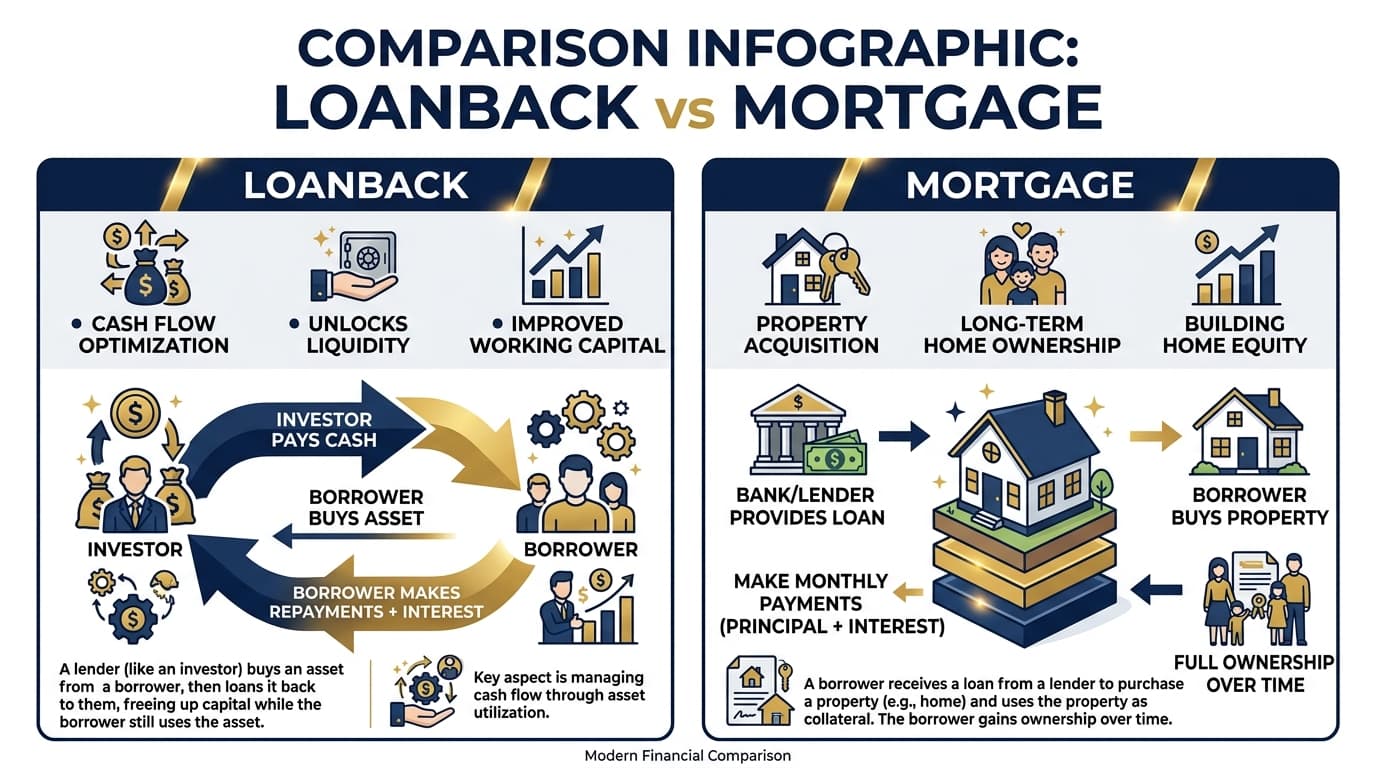
For more on loanbacks, see our guide to SSAS loanback vs mortgage.
Accelerate Growth via Multiple Properties
By borrowing to buy Property A, a scheme retains the cash needed to deposit on Property B. This is the core of a "rolling acquisition" strategy — using debt as the engine of portfolio growth rather than waiting to accumulate sufficient cash for each successive purchase.
See our guide to SSAS refinancing for how equity can be extracted from one property to fund the next.
The Break-Even Analysis
The core question is whether the net return from borrowing (property yield minus mortgage interest rate) justifies the cost, complexity, and risk of taking on debt.
At a property yield of 6.5% and a mortgage rate of 6.0%, the net "spread" is just 0.5%. On a £300,000 mortgage, that's £1,500 per year of additional return versus a cash purchase — which may not justify the arrangement fees, legal costs, and administrative burden.
At a yield of 7.5% and a mortgage rate of 5.5%, the spread is 2.0%. On £300,000, that's £6,000 per year — a more compelling case for borrowing.
Use our SSAS mortgage calculator to model the break-even analysis for your specific property and borrowing terms.
Tax Considerations Within the SSAS
Inside the pension scheme, all income and capital gains are tax-exempt regardless of whether the property is purchased with cash or mortgage. The interest cost doesn't attract tax relief within the scheme (it's already in a tax-exempt environment). This is different from a company or individual owning property outside a pension, where mortgage interest may attract tax relief.
This means the borrowing vs. cash decision within an SSAS is a purely financial and strategic one — there's no tax asymmetry between the options within the scheme itself.
A Decision Framework
Consider borrowing when:
- The property yield significantly exceeds the available mortgage interest rate
- The scheme needs to preserve liquidity for loanbacks, contributions, or member benefit payments
- You have a multi-property growth strategy and want to use leverage as an acquisition engine
- The scheme has substantial HMRC borrowing headroom available
Consider cash purchase when:
- Interest rates are close to or above the property yield
- The scheme is already near its HMRC 50% borrowing cap
- Speed of completion is a priority
- Simplicity and avoiding lender covenants is valued
- The scheme has surplus cash with no higher-return alternative use
Key Takeaways
- Neither borrowing nor cash purchase is universally superior — the right choice depends on yield, interest rates, and scheme strategy
- Borrowing amplifies returns when property yields exceed mortgage rates — but this spread has narrowed in recent years
- Cash purchases are faster, simpler, and preserve HMRC borrowing headroom
- Borrowing preserves liquidity and enables portfolio growth strategies
- Run a break-even analysis comparing net yields under each scenario before deciding
Discuss the Right Strategy for Your Scheme
Our team can help you model both scenarios for your specific property and scheme circumstances and recommend the most appropriate approach.
Contact us today for a confidential discussion, or explore our SSAS property mortgage options if you're leaning towards finance.
About the Author
Matt Lenzie
Former Banker & Corporate Finance Partner
Matt Lenzie is a former banker and corporate finance partner with extensive experience in pension-backed property transactions. He founded SSAS Property Finance to help company directors and trustees navigate the complexities of commercial property acquisition through Small Self-Administered Schemes.