SSAS Refinancing Guide: When and How to Remortgage Your Pension Property
Written by Matt Lenzie
Former Banker & Corporate Finance Partner

Why SSAS Trustees Refinance
Refinancing — replacing an existing SSAS mortgage with a new one — is a strategic tool that experienced SSAS trustees use for several purposes. It's not just about chasing a better interest rate (though that's often a key driver). Done well, refinancing can unlock equity, improve cash flow within the scheme, and create the capacity for additional property acquisitions.
In our experience, SSAS refinancing peaks when:
- An existing fixed-rate period expires and the rate resets to a less competitive variable rate
- Property values have risen significantly, creating equity that can be extracted
- The scheme wants to acquire a second property and needs to release capital from the first
- Better lender terms are available in the market than when the original mortgage was arranged
Rate Refinancing: Switching to a Better Deal
The most straightforward refinancing scenario is where an SSAS mortgage is coming to the end of its fixed-rate period and the trustees want to secure a new fixed rate rather than revert to the lender's standard variable rate.
The process is similar to a standard remortgage:
- Obtain current mortgage balance and redemption figure (including any early repayment charges)
- Get updated property valuation to confirm LTV
- Approach existing or new lenders for competitive rates
- If switching lenders, go through a new application and legal process
- If staying with the same lender ("product transfer"), the process may be simpler and quicker
Matt Lenzie notes: "SSAS product transfers with the existing lender are often overlooked. The rate may not be as sharp as a competitor's, but the reduced legal and arrangement fees can make it better value overall, especially for smaller loans."
Equity Release Refinancing
When a scheme property has appreciated significantly, refinancing can release equity — the difference between the property's current value and the outstanding mortgage. This released equity can then be:
- Used as the deposit for a second property acquisition
- Invested in other assets within the scheme
- Used to make a loanback to the sponsoring employer
- Held as cash within the scheme
Example: A property purchased for £400,000 with a £280,000 mortgage (70% LTV) is now worth £600,000. The scheme refinances at 70% LTV = £420,000. After repaying the existing £280,000 mortgage, the scheme receives £140,000 in net proceeds — available for new investment.
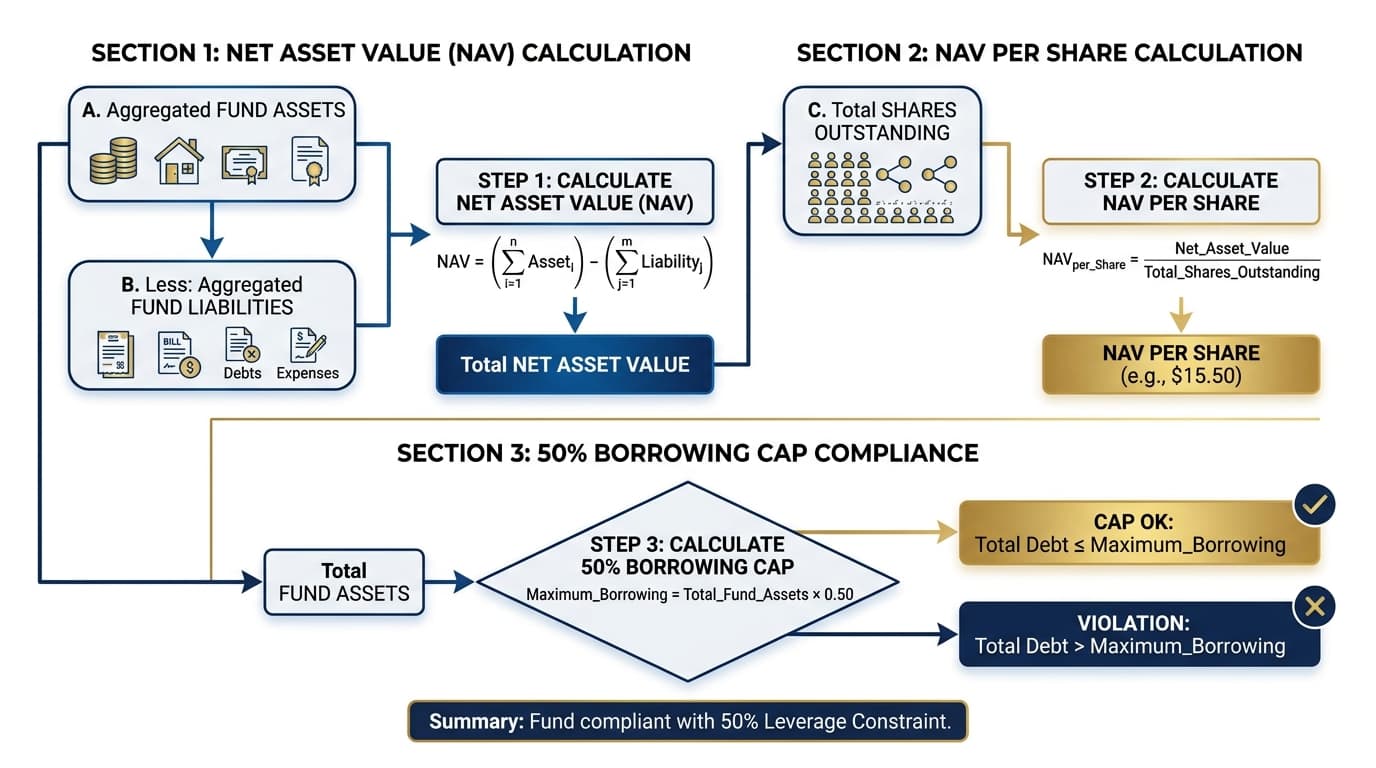
However, equity release refinancing must be checked against the HMRC 50% cap. The higher mortgage balance increases total scheme borrowing, which must remain within 50% of net asset value. For more on this calculation, see our guide to the SSAS 50% LTV cap.
Refinancing to Fund a New Property Acquisition
This is one of the most powerful growth strategies for established SSAS schemes. By refinancing Scheme Property A to extract equity, the trustees generate the deposit for the purchase of Scheme Property B — without needing large new member contributions.
The sequence typically works as follows:
- Obtain updated valuation of Scheme Property A
- Apply for a refinancing of Scheme Property A at a higher LTV to release equity
- Use the released equity as deposit for Scheme Property B
- Simultaneously (or sequentially) obtain a new mortgage for Scheme Property B
This needs careful coordination to ensure the HMRC borrowing cap is respected across both properties simultaneously. The combined mortgage balances must not exceed 50% of total scheme net assets.
See also: Multiple member SSAS pooling for how combined assets increase the scope for this strategy.
Early Repayment Charges: A Key Consideration
Before refinancing, check whether your existing SSAS mortgage has early repayment charges (ERCs). These can significantly erode the benefit of refinancing, particularly in the early years of a fixed rate term.
ERCs in SSAS mortgages typically range from 1-5% of the outstanding balance, declining over the fixed rate period. On a £300,000 mortgage, a 3% ERC = £9,000 — which needs to be weighed against the interest rate saving.
If ERCs make early refinancing uneconomical, consider arranging for a product transfer or additional borrowing with the same lender instead.
The Refinancing Process for SSAS
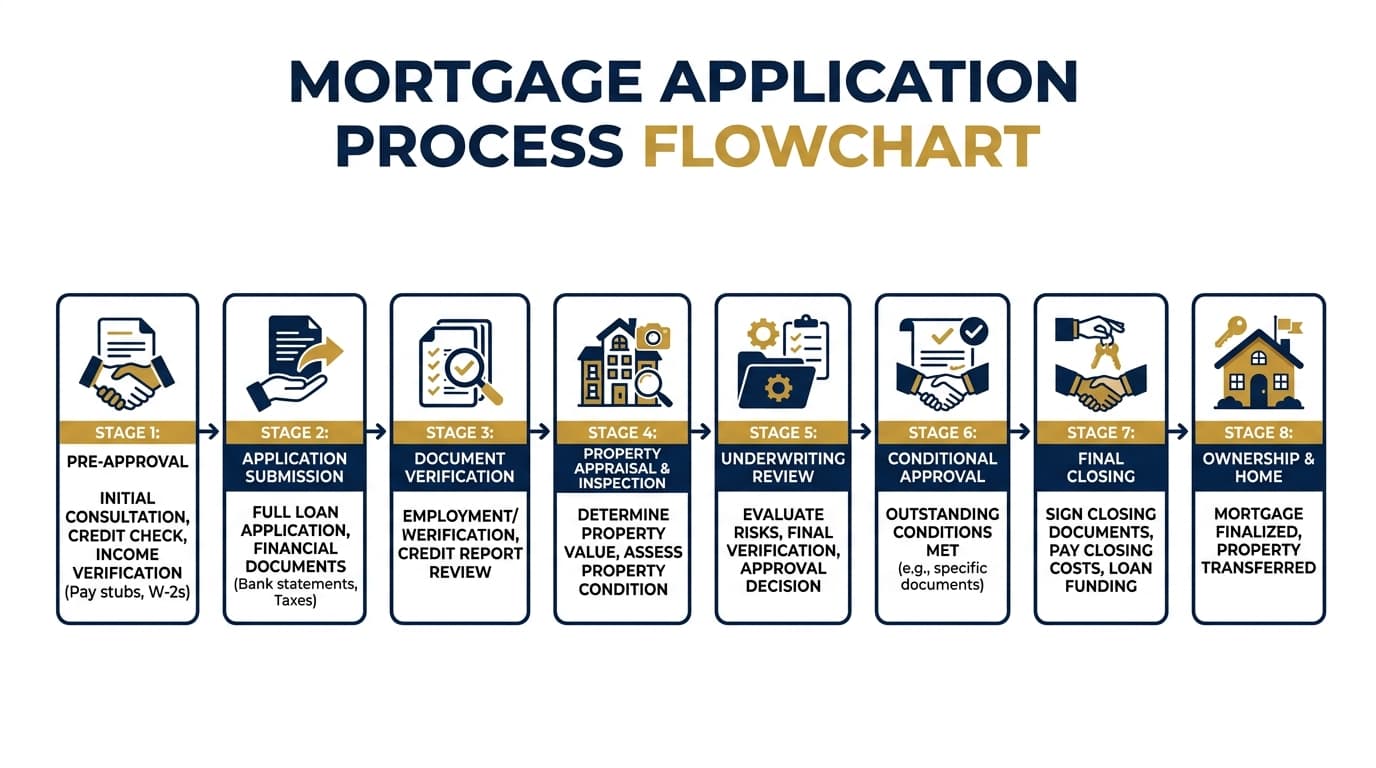
The process for SSAS refinancing broadly mirrors the initial mortgage application process, but with some differences:
- The property is already owned by the SSAS, so no purchase contract is needed
- An updated RICS valuation will still be required by the new lender
- Scheme accounts may need to be updated if they're more than 12-18 months old
- Trustee minutes authorising the refinancing are required
- Legal costs are incurred for the lender's and the scheme's solicitors
Timeline for a straightforward SSAS refinancing: typically 6-10 weeks from initial enquiry to completion.
For a detailed overview of the overall mortgage process, see our guide to the SSAS mortgage application process.
Refinancing to Extend the Loan Term
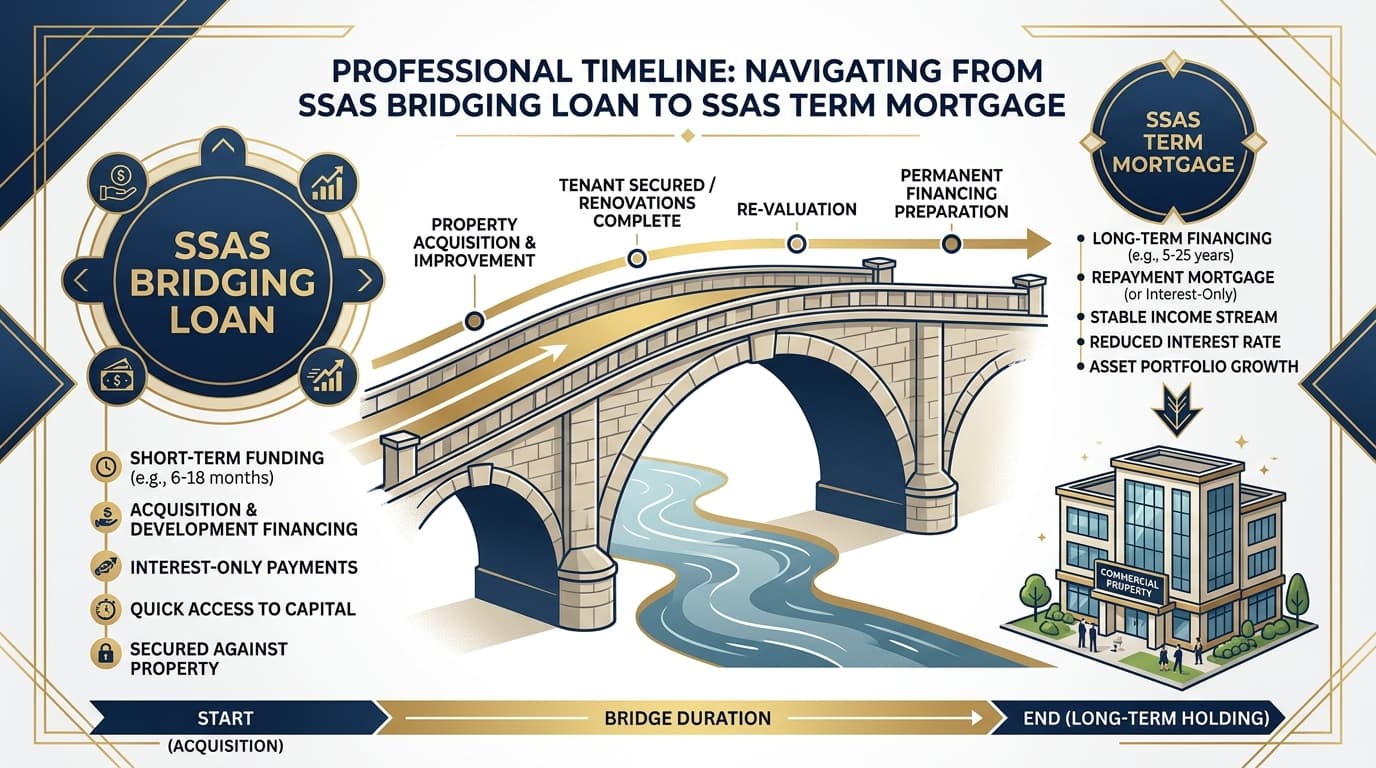
Some SSAS mortgages are arranged on relatively short terms (5-10 years) and require refinancing simply because the term expires. The scheme may not wish to repay the capital at this point, preferring to continue holding the property as a long-term pension investment.
In this case, a "term extension refinancing" is required — essentially a new mortgage arrangement to continue the borrowing for a further term. If property values and scheme assets have grown, the new arrangement may also create opportunity for better terms or equity release.
Tax Considerations When Refinancing
Refinancing an SSAS property doesn't typically trigger immediate tax consequences within the pension scheme — income and gains inside the SSAS are tax-exempt. However, trustees should be aware that:
- Arrangement fees charged by the lender reduce scheme assets
- Legal costs are a scheme expense
- If equity is released and used for a loanback to the employer, the loanback rules apply separately
Key Takeaways
- SSAS refinancing can be driven by rate improvement, equity release, or term extension — all legitimate strategies
- Equity release refinancing is a powerful tool to fund new property acquisitions without large new contributions
- Always check early repayment charges before initiating a refinancing
- The HMRC 50% borrowing cap applies to the combined new borrowing position post-refinancing
- The process typically takes 6-10 weeks and involves updated valuations, trustee minutes, and legal costs
Explore SSAS Refinancing Options
Our team has extensive experience structuring SSAS refinancings — from simple rate switches to complex equity release transactions funding multi-property acquisitions.
Contact us today to discuss your refinancing options, or visit our lender panel to see which specialists we work with.
About the Author
Matt Lenzie
Former Banker & Corporate Finance Partner
Matt Lenzie is a former banker and corporate finance partner with extensive experience in pension-backed property transactions. He founded SSAS Property Finance to help company directors and trustees navigate the complexities of commercial property acquisition through Small Self-Administered Schemes.