SSAS Mortgage Term Options: Choosing the Right Length
Written by Matt Lenzie
Former Banker & Corporate Finance Partner
SSAS Mortgage Term Options: A Practical Guide
The term of your SSAS mortgage — how long it runs before the loan must be repaid — is one of the most consequential decisions in structuring your pension property finance. A longer term means lower monthly interest payments and more flexibility; a shorter term means less total interest paid and earlier debt clearance. The right choice depends on your scheme's financial position, your retirement timeline, and your property strategy.
This guide explores the typical SSAS mortgage term options, the trade-offs between them, and the key factors to consider when choosing the right term for your scheme.
Typical SSAS Mortgage Term Ranges
SSAS commercial property mortgages are typically available on the following term structures:
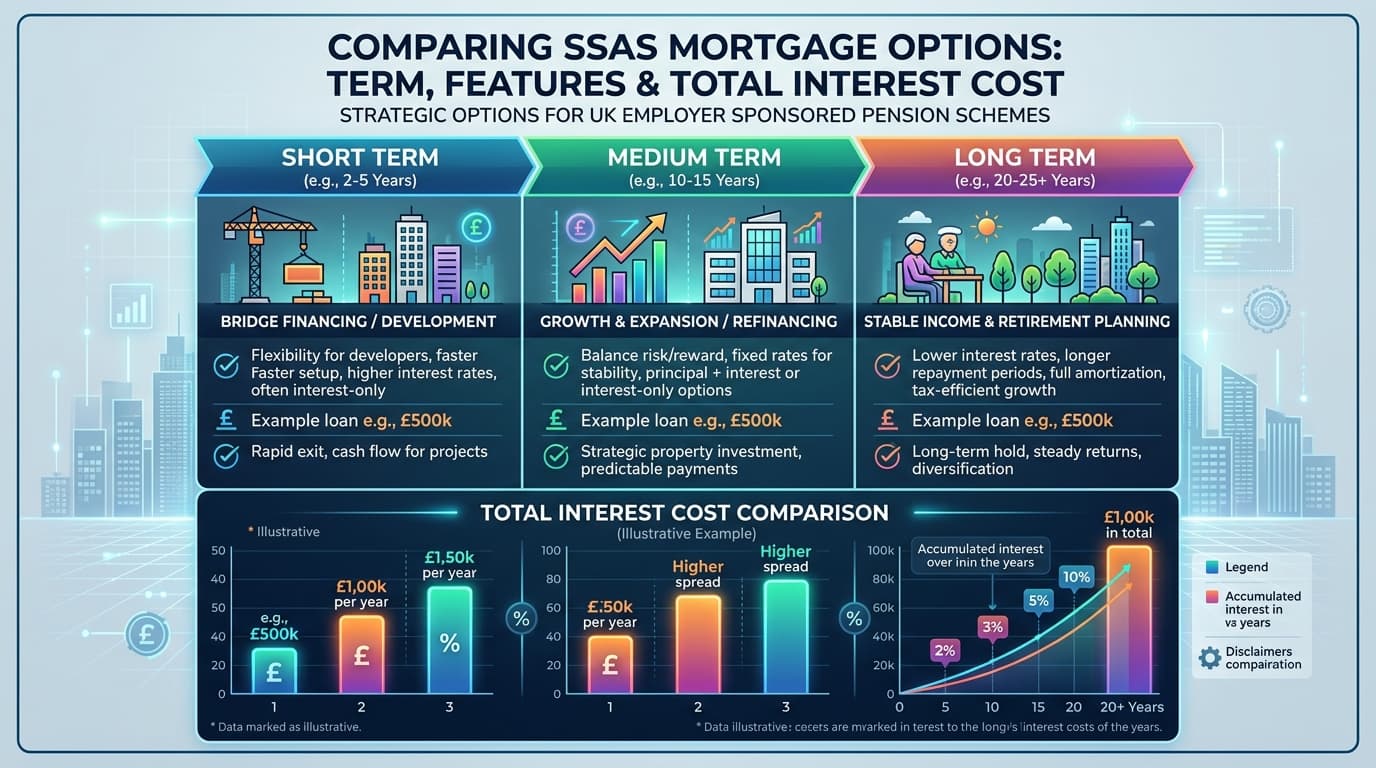
- Short term (2-5 years): Bridging finance and shorter commercial facilities, typically used for transitional or opportunistic investments
- Medium term (5-10 years): The most common term for SSAS commercial mortgages, offering a balance of stability and flexibility
- Longer term (10-25 years): Available from some lenders for larger facilities on prime commercial property, offering maximum term certainty
The maximum term available from any given lender depends on the property type, the scheme's age and retirement horizon, and the lender's internal criteria. Most SSAS lenders prefer terms that mature well before the anticipated wind-up of the scheme.
The Retirement Horizon Factor
One of the most important — and often overlooked — considerations in SSAS mortgage term selection is the age of the scheme members. Lenders will assess the expected retirement date of the principal members and will typically require the mortgage to mature within a defined period of the eldest member's expected retirement age.
This matters because if the scheme winds down while the mortgage is still outstanding, the lender needs to know there is a clear mechanism for repayment. A mortgage that matures before the scheme winds up is less risky from the lender's perspective than one that outlasts the scheme's active investment phase.
"We always stress-test the mortgage term against the member ages before advising on the right structure. A business owner who is 58 and wants a 25-year mortgage faces a different conversation than one who is 45. The term has to work for the scheme's whole lifecycle, not just the acquisition phase." — Matt Lenzie, Former Banker & Corporate Finance Partner
Shorter Terms: Pros and Cons
Pros
- Less total interest paid over the term
- Forces a decision point at maturity — review the investment and either refinance, sell, or repay
- May attract better interest rates if lenders see shorter-term lending as lower risk
- Consistent with an active investment strategy that anticipates portfolio change
Cons
- Higher monthly payments relative to longer-term products for the same loan amount
- Refinancing risk — if market conditions deteriorate at maturity, refinancing may be more expensive or unavailable
- Less certainty for longer-term scheme planning
Longer Terms: Pros and Cons
Pros
- Lower monthly interest payments, improving the scheme's cash flow position
- Greater certainty — the scheme has a long-term, committed financing facility
- More rental income surplus after mortgage servicing, available for reinvestment or contribution to other scheme costs
- Reduces refinancing risk during the investment holding period
Cons
- Higher total interest paid over the full term
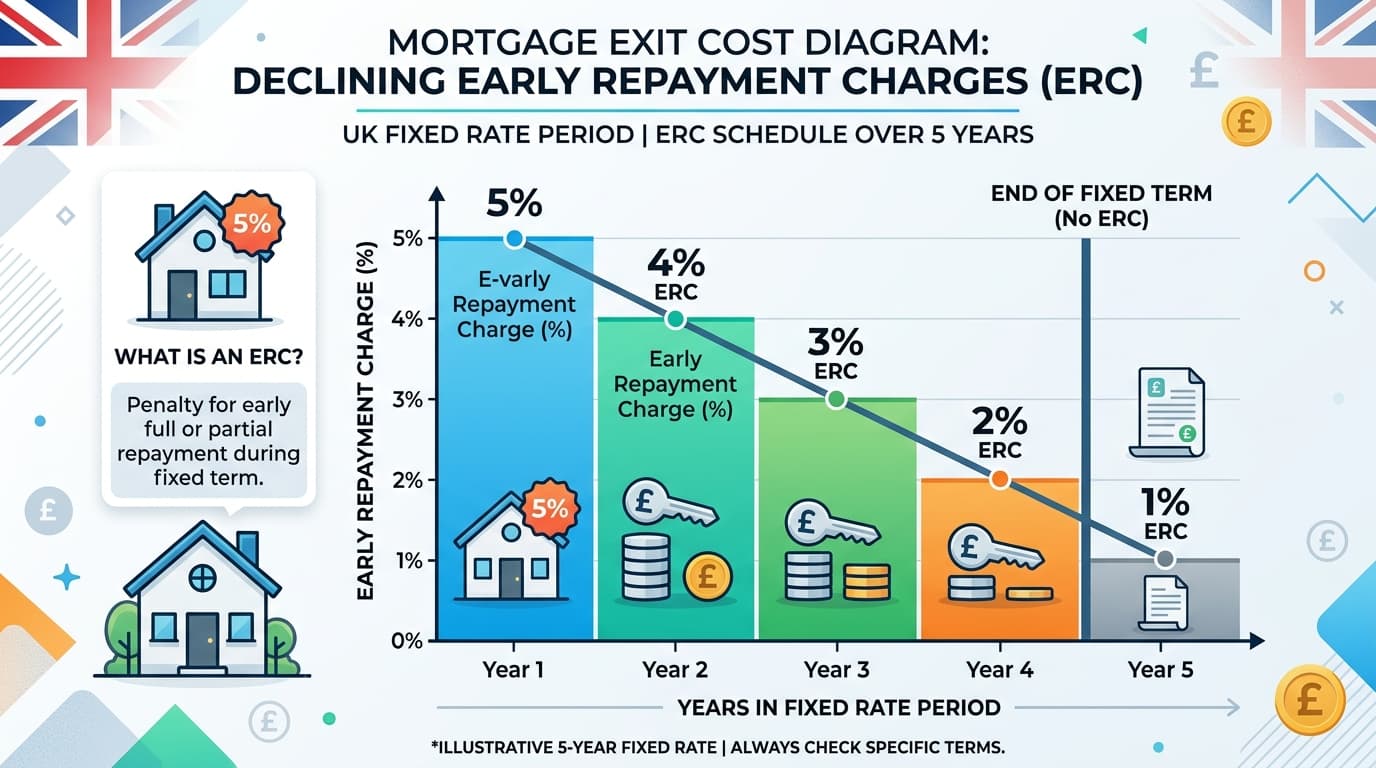
- Less flexibility if the scheme's strategy changes — earlier repayment may trigger ERCs
- May not be available for all property types or from all lenders
- Scheme members' retirement horizon may constrain the maximum available term
Interest-Only and the Term Decision
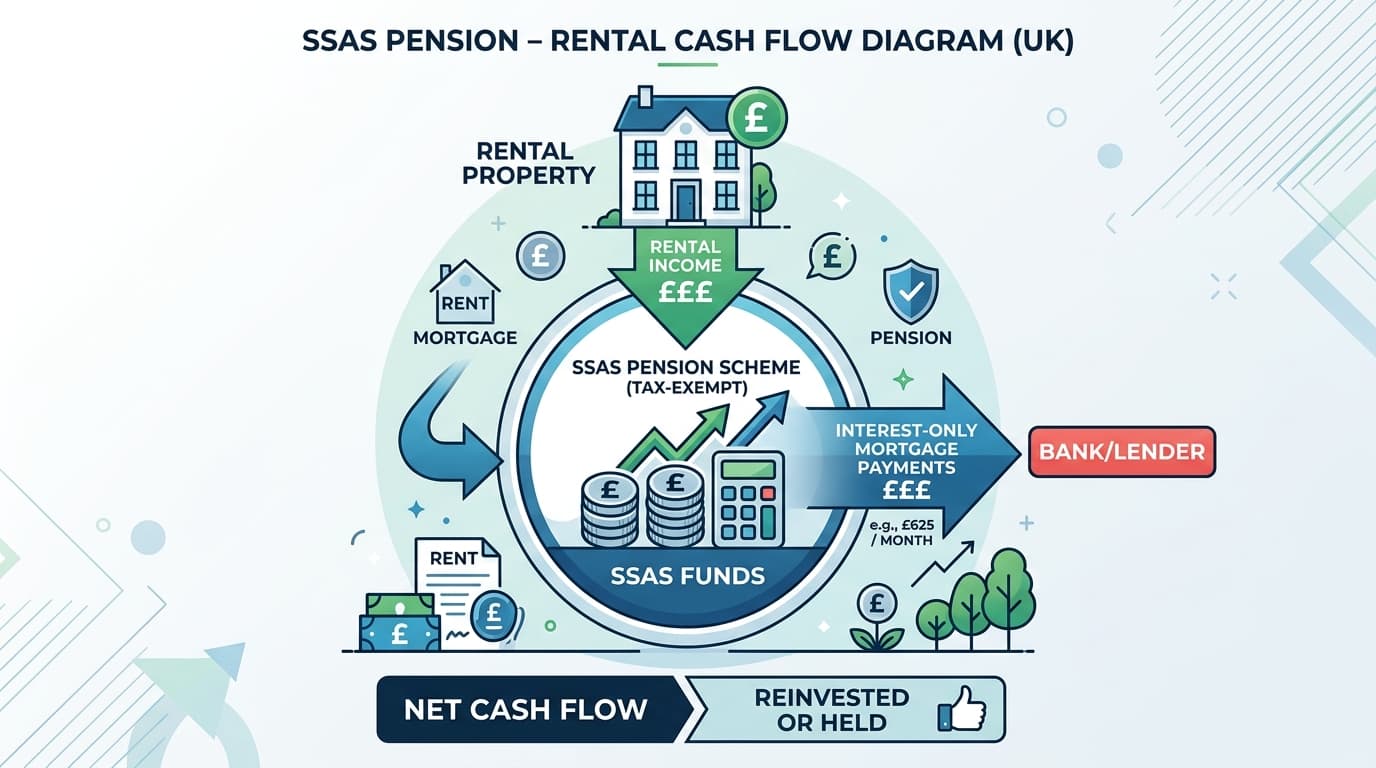
Because most SSAS commercial mortgages are structured on an interest-only basis, the term primarily determines the period over which you pay interest before needing to repay the capital. On an interest-only mortgage, the monthly payment is the same whether the term is ten or twenty years — only the total interest paid and the repayment date differ.
The longer the term, the more total interest is paid. A £250,000 interest-only loan at 7% per annum costs £17,500 per year in interest — over ten years that is £175,000; over twenty years it is £350,000. This comparison illustrates the cost of additional term flexibility.
Aligning the Term with the Property Strategy
The ideal term aligns with your scheme's property holding strategy:
- If you intend to hold the property until retirement and then sell, the term should extend to or beyond your retirement date
- If you expect to sell or refinance within five to seven years (perhaps as part of a business sale or property strategy), a shorter term or a variable rate product with limited ERCs is more appropriate
- If you are uncertain about the holding period, a medium-term facility (seven to ten years) with a variable rate or limited ERC structure provides flexibility
Renewing and Refinancing at Maturity
At the end of the mortgage term, the SSAS must either repay the loan (typically from the proceeds of a property sale) or refinance onto a new facility. Refinancing at maturity is common and, if approached at least twelve months before the existing facility expires, should not create significant time pressure.
The earlier you begin the refinancing process before maturity, the more options you have — and the less negotiating leverage the existing lender has to retain your business at potentially unfavourable terms.
Key Takeaways
- SSAS mortgage terms typically range from five to twenty-five years depending on property type, lender, and scheme circumstances
- Member ages and retirement horizons significantly influence the maximum available term
- Shorter terms mean less total interest but higher monthly pressure; longer terms offer lower payments but higher total cost
- On interest-only mortgages, monthly payments are the same regardless of term — only the repayment date and total interest differ
- Begin refinancing discussions at least twelve months before maturity to maximise options
Find the Right Term for Your SSAS Mortgage
Our team can help you model the right mortgage term for your scheme, taking into account member ages, cash flow requirements, and long-term property strategy.
Contact us today to discuss your SSAS mortgage requirements, or use our SSAS mortgage calculator to compare term options.
About the Author
Matt Lenzie
Former Banker & Corporate Finance Partner
Matt Lenzie is a former banker and corporate finance partner with extensive experience in pension-backed property transactions. He founded SSAS Property Finance to help company directors and trustees navigate the complexities of commercial property acquisition through Small Self-Administered Schemes.