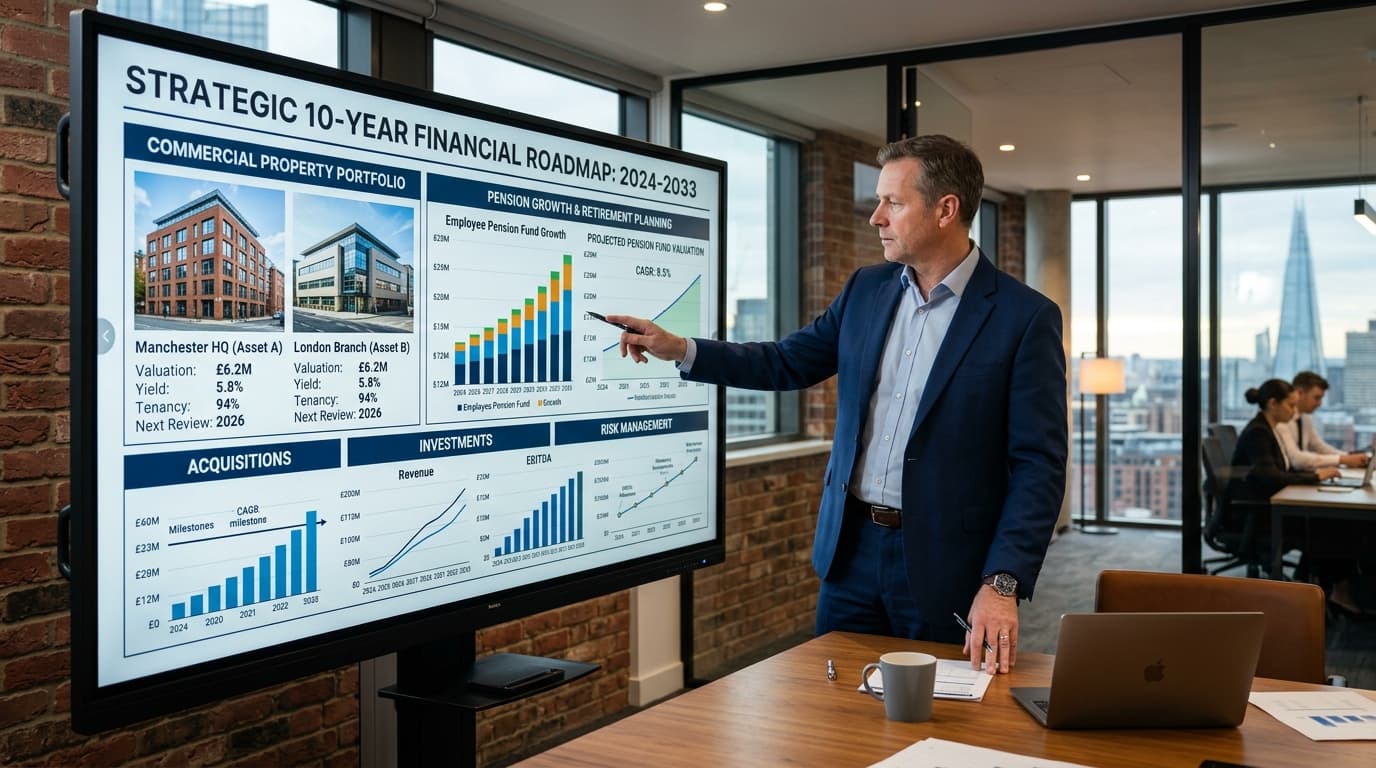
Combining Your SSAS with Other Investments: A Strategic Guide
Written by Matt Lenzie
Former Banker & Corporate Finance Partner
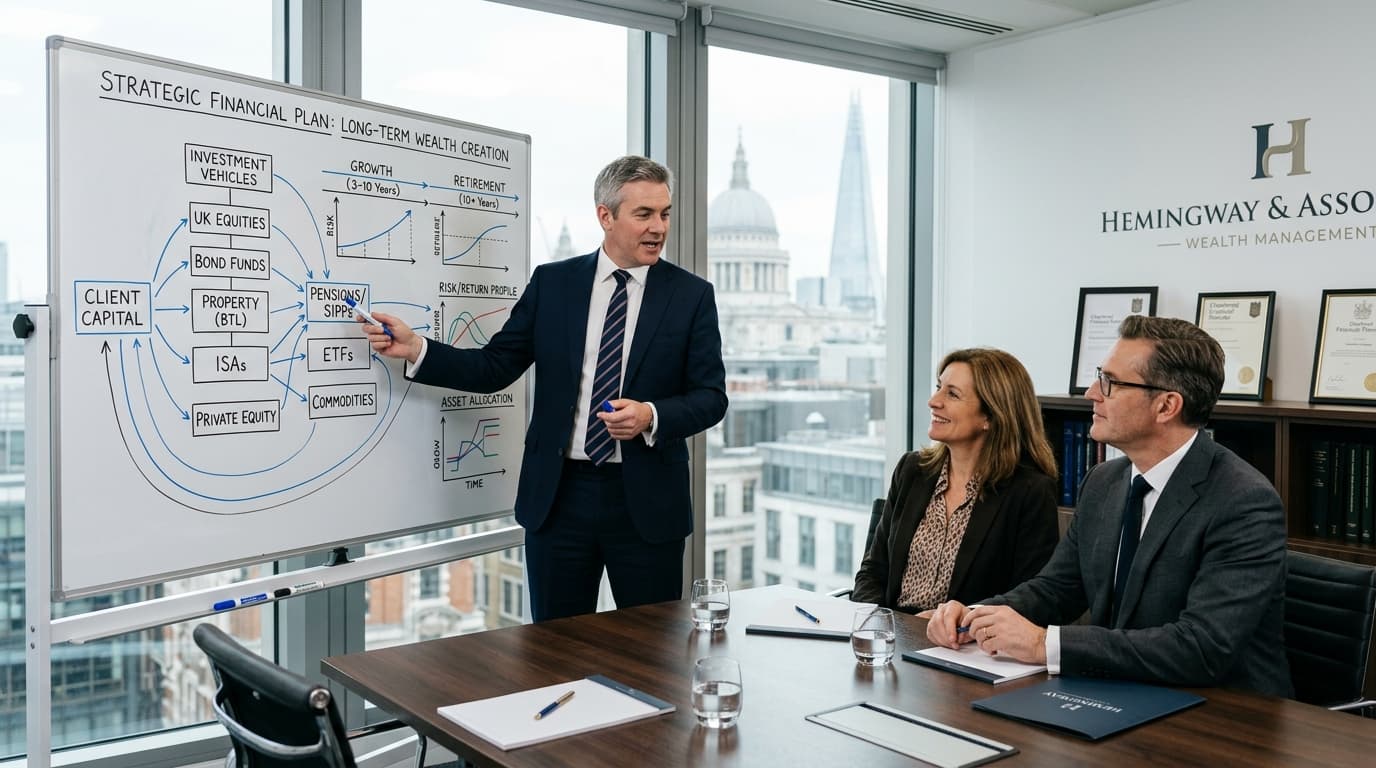
Combining Your SSAS with Other Investments: Optimising the Total Picture
For business owners who have established an SSAS and begun using it for commercial property investment, there is often a temptation to view the pension scheme as the complete answer to long-term wealth building. In reality, an SSAS works best as one component in a broader, coordinated investment strategy — one that integrates multiple vehicles and takes advantage of the specific characteristics of each.
This guide explores how to combine your SSAS with other common investment vehicles for optimum overall outcomes.
The SSAS as the Foundation
The SSAS should typically serve as the foundation of a business owner's investment strategy because it offers the most favourable tax treatment of any commonly available vehicle:
- Employer contributions are deductible against corporation tax
- Investment income (rent, dividends, interest) is tax-free within the scheme
- Capital gains are tax-free within the scheme
- Death benefits fall outside the estate for IHT purposes (subject to current rules)
For these reasons, maximising use of the SSAS — up to the annual allowance limits — before deploying capital into other vehicles makes financial sense for most business owners. But the SSAS has constraints: it cannot hold residential property, benefits cannot be accessed before age 57 (rising from 55 in 2028), and annual contribution limits apply.
Integrating ISAs: The Flexible Liquid Complement
Individual Savings Accounts (ISAs) are the natural complement to a SSAS strategy. Like a SSAS, ISAs shelter investment returns from income tax and capital gains tax. Unlike a SSAS, there are no restrictions on when funds can be accessed — they are immediately liquid.
The annual ISA allowance is currently £20,000 per person (so £40,000 for a couple). Over 20 years of maximising ISA contributions, a couple could shelter up to £800,000 in investments — a substantial supplement to the SSAS.
The optimal strategy: use the SSAS for the highest-return, most tax-inefficient investments (commercial property, high-income assets); use ISAs for more liquid, accessible investments (equity funds, bonds) that can be drawn on at any time without pension access age restrictions.
Buy-to-Let Property: A Personal Complement to SSAS Commercial Property
Many business owners combine their SSAS (which holds commercial property) with personally owned residential buy-to-let properties. These sit in different tax environments and serve different purposes:
- SSAS commercial property: tax-free income and growth, inaccessible until retirement age, cannot hold residential
- Personal buy-to-let: taxable income (at marginal income tax rates), subject to CGT on sale, accessible at any time but with associated costs of a sale
The tax environment for personal buy-to-let has deteriorated significantly since 2016 (Section 24 mortgage interest relief restriction, higher SDLT rates for additional properties). Despite this, residential property remains a viable investment for those who can service the higher tax burden from strong yields or target capital growth markets.
Some business owners hold buy-to-let properties in a limited company (an SPV) to restore the deductibility of mortgage interest and benefit from the lower corporation tax rate on rental profits. This structure requires its own planning and is distinct from both the SSAS and personal ownership.
"The clients who achieve the best long-term wealth outcomes are those who think about the total picture — SSAS, ISA, personal investments, and business assets — as an integrated strategy with each vehicle deployed for what it does best. The SSAS is the engine; the other vehicles are the support cast." — Matt Lenzie
Business Assets: Coordination with SSAS Strategy
For business owners, the business itself is typically the largest asset in the total portfolio. The SSAS strategy should be coordinated with the business exit plan:
- If the business is to be sold in 5-10 years, SSAS contributions from sale proceeds can maximise pension funding at the point of exit (subject to annual allowance rules and carry-forward provisions)
- Business Property Relief (BPR) can shelter business assets from IHT, complementing the SSAS's existing IHT advantages
- Enterprise Investment Scheme (EIS) and Seed EIS investments (made personally) provide tax relief that reduces the income tax bill — freeing up more cash for SSAS contributions
Venture Capital Trusts (VCTs)
VCTs offer 30% upfront income tax relief on investments up to £200,000 per year, tax-free dividends, and tax-free capital growth. For higher-rate taxpayers running profitable businesses, VCTs can be a useful supplement to the SSAS — particularly in years when maximum SSAS contributions have already been made.
VCTs are higher-risk investments (they invest in smaller, early-stage companies) and are typically less liquid than listed investments. But their tax profile makes them an attractive complement to the pension strategy for those who qualify.
Offshore Investments and Bonds
For high-net-worth individuals with international connections, offshore investment bonds provide a tax-deferred growth environment — similar in some respects to the SSAS wrapper. Gains and income roll up within the bond without immediate UK tax, with tax deferred until withdrawal.
Offshore bonds are complex, regulated instruments that require specialist advice. They are not a substitute for the SSAS (which has greater tax efficiency due to employer contribution deductibility and the IHT treatment of death benefits) but can be a useful additional vehicle for those with large, liquid investment portfolios.
A Practical Integration Example
Consider a married couple, aged 50, running a successful business with £2m in net assets. A coordinated wealth strategy might look like this:
- SSAS (2 members): £800,000 in assets (commercial property + liquid investments). Annual contributions of £60,000 (£30,000 each) from the business.
- ISAs (2 accounts): £400,000 in diversified equity funds. Annual top-up of £40,000 (£20,000 each).
- Buy-to-let SPV: £350,000 in a limited company holding two residential properties. Net rental income retained in the company.
- Business: £450,000 in business net assets, qualifying for BPR (IHT exempt).
- Total net wealth: £2,000,000 across four vehicles, each optimised for its specific tax and access characteristics.
Further Reading
For more on optimising long-term wealth building within an SSAS, read our guide on SSAS long-term wealth strategy. For a strategic view of how SSAS property investment fits into the overall picture, visit our SSAS property finance hub.
Key Takeaways
- The SSAS is the most tax-efficient vehicle and should anchor the overall investment strategy
- ISAs provide liquid, tax-efficient access to savings before pension age — a natural complement
- Personal buy-to-let or BTL SPV structures can work alongside the SSAS for residential exposure
- Coordinate SSAS strategy with business exit planning to maximise pension contributions at the point of sale
- VCTs and offshore bonds are supplementary vehicles for those with complex tax situations
Build Your Integrated Wealth Strategy
Our team helps business owners design comprehensive wealth strategies that integrate the SSAS with other investment vehicles for optimum outcomes. Get in touch to discuss your overall picture.
About the Author
Matt Lenzie
Former Banker & Corporate Finance Partner
Matt Lenzie is a former banker and corporate finance partner with extensive experience in pension-backed property transactions. He founded SSAS Property Finance to help company directors and trustees navigate the complexities of commercial property acquisition through Small Self-Administered Schemes.