How Much Can an SSAS Borrow?
Written by Matt Lenzie
Former Banker & Corporate Finance Partner

Understanding SSAS Borrowing Capacity
One of the most common questions we receive from SSAS trustees is: "How much can we actually borrow?" The answer depends on a combination of HMRC rules, lender policies, and the specific financial profile of your scheme. This guide breaks it all down.
In our experience, many trustees significantly underestimate — or overestimate — their borrowing capacity because they conflate two different calculations: the HMRC statutory cap and the lender's commercial underwriting assessment.
The HMRC Statutory Maximum
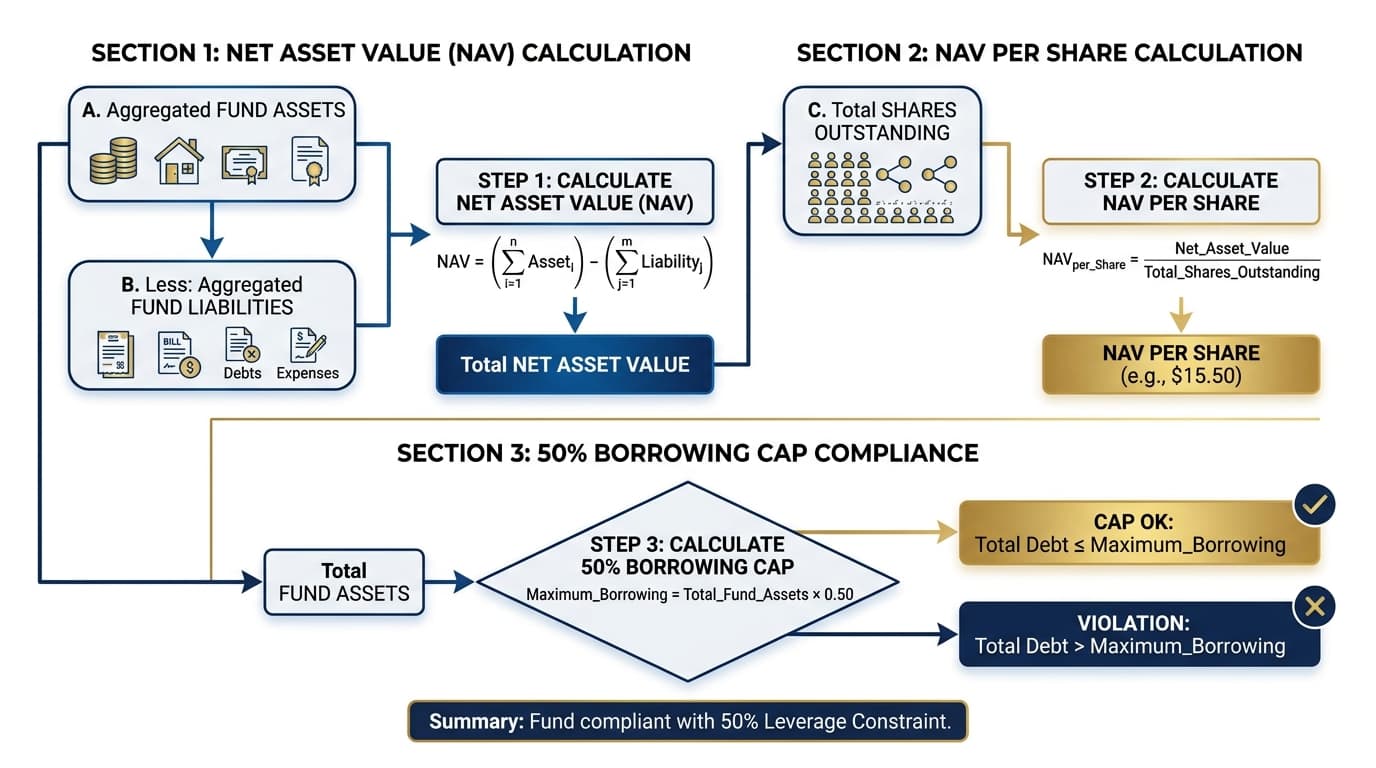
HMRC imposes a hard ceiling on SSAS borrowing. Your scheme's total outstanding borrowing cannot exceed 50% of the net market value of all scheme assets. This is sometimes called the "50% rule" or the LTV cap.
For a full explanation of how this calculation works, including what counts as borrowing and what counts as assets, see our dedicated guide to the SSAS 50% LTV cap.
The HMRC maximum is not what your lender will offer — it's the outer boundary that cannot be crossed. Lenders apply their own, usually more conservative, underwriting criteria within this envelope.
What Lenders Will Actually Offer
Specialist SSAS lenders assess your scheme's borrowing capacity based on several factors beyond the HMRC cap:
1. Property Value and Type
Most lenders will advance between 65% and 75% LTV against the value of the commercial property being purchased. The exact percentage depends on:
- The property type (office, industrial, retail, mixed-use)
- Location and liquidity of the asset
- Lease strength and tenant covenant quality
- Whether the property is owner-occupied by the sponsoring employer or third-party let
Matt Lenzie notes: "We see lenders offer 70-75% LTV for strong industrial assets with long leases to investment-grade tenants, dropping to 60-65% for secondary retail or properties with short or no leases."
2. Rental Income Coverage
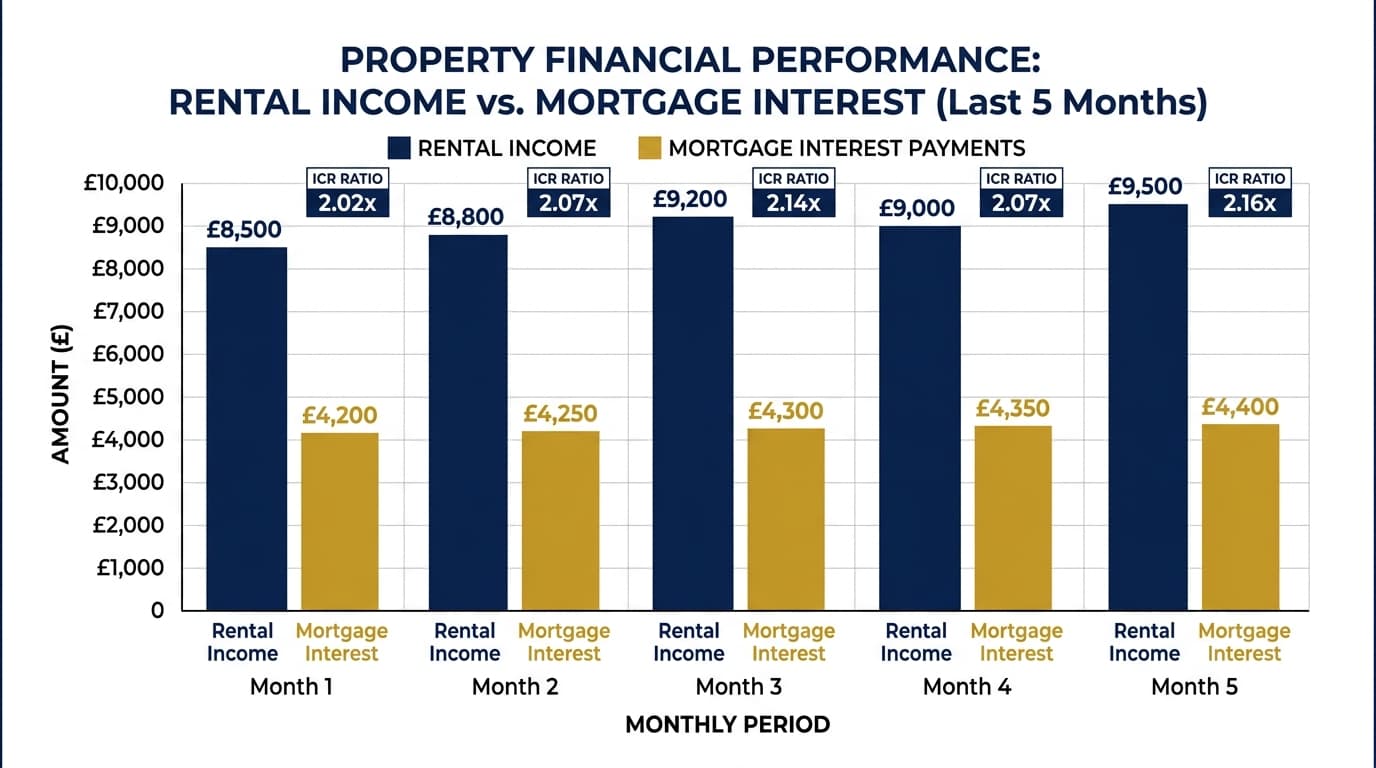
Lenders require that rental income from the property covers the mortgage interest by a comfortable margin — typically an Interest Coverage Ratio (ICR) of 125-150%. If the property is owner-occupied by the sponsoring employer paying a commercial rent to the SSAS, that rent is used for this calculation.
For more on this, see our guide to SSAS debt service coverage ratios.
3. Scheme Financials
Lenders will want to see:
- The most recent scheme accounts and actuarial valuation
- A breakdown of all current assets and liabilities
- Details of member contributions and expected future contributions
- Confirmation of the scheme's HMRC registration status
4. Sponsoring Employer Strength
Where the property is to be leased to the sponsoring employer, lenders pay close attention to the financial health of that business. They'll typically require:
- 3 years of company accounts
- Evidence the business can sustain the rent payments
- A formal lease agreement at arms-length commercial terms
Worked Example: Multi-Member SSAS
Let's look at a realistic example. A four-member SSAS has:
- Total scheme assets: £1,200,000 (including existing property at market value of £600,000 and cash of £600,000)
- Existing mortgage: £280,000
- Net asset value: £920,000
- HMRC maximum borrowing: £460,000 (50% of £920,000)
- Additional borrowing headroom: £180,000 (£460,000 minus £280,000 existing)
If the members want to buy a new property worth £500,000, they could theoretically borrow £180,000 from the scheme's HMRC headroom — but they'd also need to fund the remaining £320,000 from scheme cash or new contributions. In practice, lenders would assess the new property independently and might offer 65% LTV = £325,000 — but the scheme can't take all of that because the HMRC cap limits additional borrowing to £180,000.
This is why planning ahead with a specialist adviser is critical.
The Impact of Member Contributions
One powerful but underused lever is timing member contributions to increase scheme assets before applying for a mortgage. Every pound contributed increases net asset value, which in turn expands the HMRC borrowing envelope.
For example, if the four members in the example above each made a £25,000 pension contribution (£100,000 total), the HMRC maximum borrowing would increase by £50,000 (50% of £100,000). This could be the difference between being able to fund a target acquisition or not.
For a detailed breakdown of how to model this, see our SSAS borrowing power calculation guide.
Owner-Occupied vs Third-Party Let Property
Lenders typically distinguish between two scenarios:
Owner-Occupied (Sponsoring Employer as Tenant)
This is the most common SSAS property structure. The SSAS buys the business premises and leases them back to the company at a commercial rent. Lenders are comfortable with this model, but they'll scrutinise the employer's financial strength carefully. Interest rates tend to be slightly higher than institutional commercial mortgages, reflecting the concentration risk.
Third-Party Investment Property
Some lenders are happy for SSAS to buy commercial property let to third-party tenants. This can be attractive because the pension scheme isn't dependent on the sponsoring employer's fortunes. Underwriting focuses more on the property and tenant quality.
To explore SSAS property mortgage options across both scenarios, our team can introduce you to the right lender for your specific situation.
Maximum Term and Repayment
SSAS mortgages are typically available on:
- Interest-only basis for 5-25 years
- Capital and interest basis for 5-25 years
- Fixed rates for 2-10 years with variable thereafter
Some lenders require capital repayment rather than interest-only, which reduces the maximum loan size versus what the HMRC cap would otherwise permit.
Key Takeaways
- Your maximum borrowing is governed by the HMRC 50% cap on net scheme assets — this is the hard ceiling
- Lenders apply their own more conservative underwriting within that ceiling, typically 65-75% LTV on the property
- Rental income must cover interest by 125-150% to satisfy lender ICR requirements
- Timing member contributions can meaningfully increase your borrowing headroom
- Owner-occupied and third-party let properties are assessed differently by lenders
Find Out Exactly How Much Your SSAS Can Borrow
Every scheme is different. The fastest way to understand your specific borrowing capacity is to speak with a specialist who can review your scheme documents and model the numbers for your target property.
Get in touch with our team for a confidential assessment, or start with our SSAS mortgage calculator for a quick estimate.
About the Author
Matt Lenzie
Former Banker & Corporate Finance Partner
Matt Lenzie is a former banker and corporate finance partner with extensive experience in pension-backed property transactions. He founded SSAS Property Finance to help company directors and trustees navigate the complexities of commercial property acquisition through Small Self-Administered Schemes.